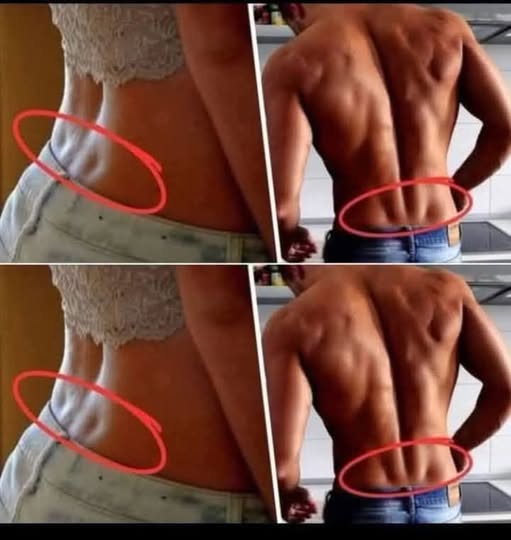
Many people have noticed two small indentations just above the lower back and wondered if they carry a special meaning. Often called **Venus dimples**, these natural features have been admired for centuries and are frequently associated with beauty, fitness, and good physical shape. While myths and social media have given them an almost legendary status, their true explanation is much simpler—and firmly rooted in human anatomy.
Venus dimples are small, symmetrical indentations that appear on the lower back, just above the pelvis. Their name comes from the Roman goddess Venus, a long-standing symbol of beauty. Although they have often been viewed as an attractive physical feature, these dimples are simply a natural variation in the way the body is built and are not a medical condition.
The indentations form where short ligaments connect the skin to the underlying pelvic bone, specifically the posterior superior iliac spine. Because this structure is determined largely by genetics, some people naturally develop these dimples while others never do. Like eye color or facial features, their presence is inherited rather than earned.
Although the term “Venus dimples” is most commonly used for women, men can have the same anatomical feature. In men, they are sometimes referred to as **Apollo dimples**, named after the Roman god Apollo. Regardless of the name, the underlying anatomy is identical.
One of the most common questions is whether exercise can create these dimples. The answer is generally no. Since they depend on bone structure and ligament attachment, no specific workout can produce them if the genetic foundation is absent. However, people who naturally have them may notice that the dimples become more visible when body fat decreases or overall muscle definition improves.
Contrary to popular claims, there is no strong scientific evidence that Venus dimples directly indicate better health, higher fertility, improved circulation, or superior physical performance. They are sometimes more noticeable in lean individuals, which may explain why they are often associated with fitness, but the dimples themselves are not a measure of someone’s overall health.
Good health depends on far more meaningful factors, including regular physical activity, balanced nutrition, adequate sleep, maintaining a healthy weight, and managing conditions such as high blood pressure or diabetes. Whether someone has Venus dimples has no impact on these important aspects of well-being.
The fascination with Venus dimples reflects our tendency to assign special meaning to unique physical features. While they can certainly be considered an attractive characteristic by many people, they are simply one of countless natural variations that make every body different.
Ultimately, having—or not having—Venus dimples says very little about your health or your appearance. They are a genetic feature, not an achievement or a flaw. The most valuable investment anyone can make is caring for their overall health and feeling confident in the body they naturally have.