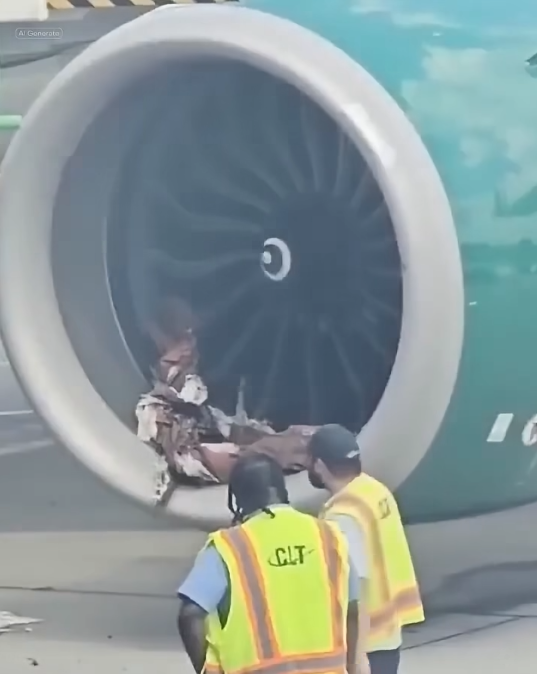
What should have been a routine departure quickly turned into an unexpected disruption before the aircraft even left the gate. There were no dramatic scenes or emergency evacuations, but a ground equipment mishap forced crews to halt operations immediately, delaying the flight for hours while safety procedures took priority. The incident served as a reminder that even seemingly minor events on the ground receive careful attention in commercial aviation.
The flight, scheduled to travel from Charlotte to New York’s LaGuardia Airport, was preparing for departure when a ground air-conditioning hose was accidentally drawn into the left engine of a Frontier Airbus A320neo. The powerful engine quickly damaged the equipment, prompting the flight crew and ground personnel to stop all departure activities while the aircraft was inspected.
Although the event caused significant disruption, no passengers or crew members were injured. Maintenance technicians immediately secured the aircraft and began evaluating the extent of the damage. Airport personnel established a safety perimeter while engineers carried out detailed inspections to determine whether the aircraft could safely continue its scheduled flight.
After reviewing the situation, Frontier Airlines decided to remove the aircraft from service and arrange a replacement. While the decision resulted in a delay of nearly nine hours, it ensured that passengers traveled aboard an aircraft that met all required safety standards. Although the lengthy wait was frustrating for travelers, the airline prioritized safety over schedule.
Incidents involving ground support equipment are uncommon but highlight the importance of strict operational procedures. Airports rely on detailed communication between flight crews, ramp workers, and maintenance teams to prevent equipment from entering hazardous areas around operating aircraft. Even small deviations from established procedures are treated seriously to minimize potential risks.
Following the incident, the damaged aircraft remained out of service while engineers completed a comprehensive inspection and any necessary repairs. Such reviews are a routine part of aviation safety and help determine exactly what occurred before an aircraft returns to normal operations.
While the delay affected passengers’ travel plans, the outcome demonstrated how multiple layers of safety work together throughout the aviation industry. From immediate engine shutdown procedures to maintenance inspections and the decision to replace the aircraft, each step was designed to protect passengers and crew.
Although the incident disrupted one flight, it also reinforced an important principle of modern aviation: when unexpected situations arise, operations stop until every safety concern has been fully addressed. The delay may have been inconvenient, but ensuring a safe journey remained the highest priority from beginning to end.