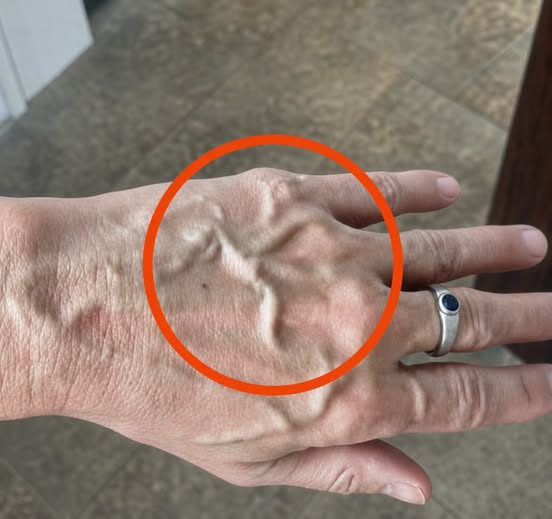
Your veins don’t just “show up” for no reason—and sometimes, they’re worth paying attention to. One day your skin looks smooth, and the next you’re staring at blue, twisted lines and wondering what changed. Is it fat loss, lifting, heat, aging, hormones…or something more serious? The difference between a harmless change and one that deserves medical attention can feel frighteningly thin. Before you ignore that new, bulging vein, it helps to understand what your body may be telling you.
Veins become more visible for many normal reasons. Losing body fat can reduce the layer of tissue covering superficial veins, making them easier to see. Intense exercise, especially strength training, temporarily increases blood flow and can make veins in the hands and arms appear more prominent. Hot weather can also cause blood vessels near the skin to widen as the body works to release heat.
Age can play a role as well. As skin becomes thinner and changes with time, structures underneath it can become easier to see. Hormonal changes can also affect veins and circulation. Pregnancy, for example, can increase blood volume and pressure on veins, making varicose veins more noticeable, particularly in the legs.
Sometimes the veins themselves are simply becoming varicose. These veins can look blue or purple, twisted, enlarged, or rope-like, most often on the legs. Weak or damaged valves can allow blood to pool in the veins, causing them to stretch and become more visible. For many people, varicose veins are mainly a cosmetic concern, although they can sometimes cause aching, heaviness, itching, cramping, swelling, or skin changes.
But some changes deserve more attention. A vein that suddenly becomes painful, warm, red, swollen, or tender should not simply be dismissed as a cosmetic issue. These symptoms can occur with inflammation or a blood clot, including thrombophlebitis. New or unexplained swelling and pain in an arm or leg also warrant medical evaluation, particularly when the change appears suddenly.
There are also situations where the warning signs become more urgent. Deep vein thrombosis can cause swelling, pain or cramping, warmth, and changes in skin color, although it can sometimes occur without obvious symptoms. If a clot travels to the lungs, it can cause a pulmonary embolism. Sudden shortness of breath, chest pain, fainting, rapid breathing, or coughing up blood requires emergency medical attention.
That doesn’t mean every newly visible vein is dangerous. In fact, many prominent veins have completely ordinary explanations, especially after exercise, weight changes, heat exposure, aging, or hormonal changes. The important thing is to pay attention to what is different about the change: whether it appeared suddenly, whether it is painful, whether there is swelling or redness, and whether other symptoms are occurring at the same time.
If a vein continues changing, becomes uncomfortable, or is accompanied by swelling, skin changes, or persistent leg pain, don’t try to diagnose it from appearance alone. A healthcare professional can examine the area and determine whether further evaluation is needed.
Your veins aren’t automatically a warning sign just because they’re suddenly easier to see. Sometimes they’re simply revealing what was already underneath your skin. But when a new change comes with pain, warmth, redness, swelling, or breathing or chest symptoms, that’s when ignoring it can become a mistake. Pay attention, know the warning signs, and when something doesn’t look or feel right, get it checked rather than guessing.