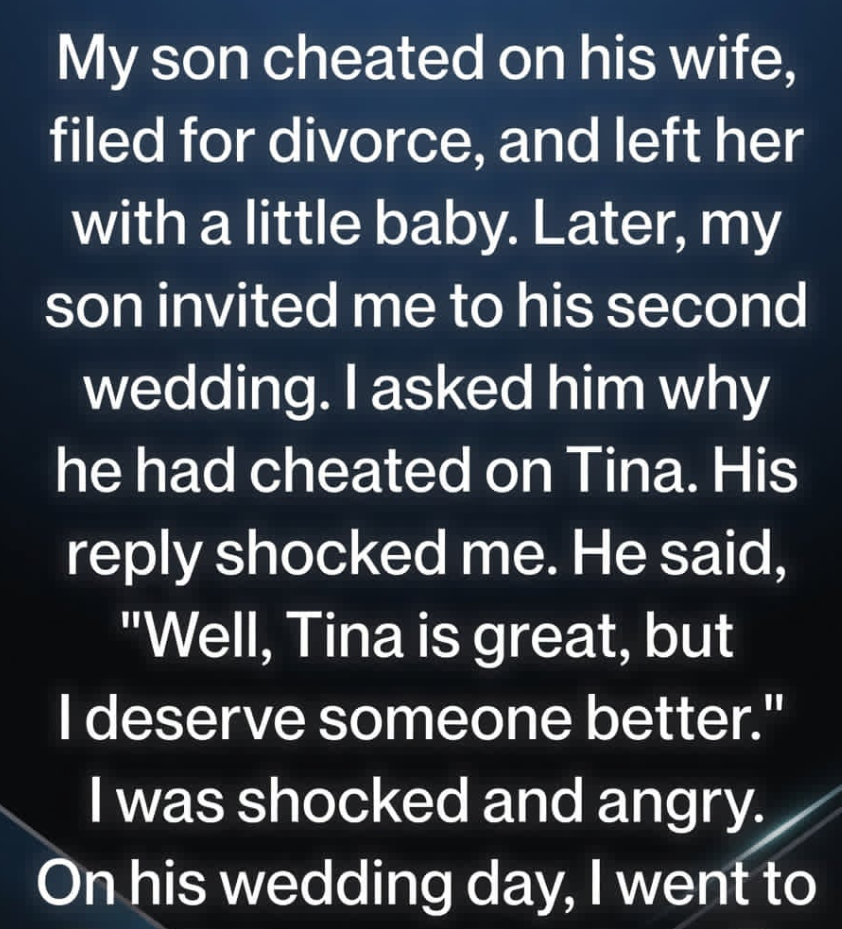
The call came the morning of my son’s wedding, and I stared at the screen without answering. Deep down, I already knew where I truly belonged. For years I had watched the damage build slowly—betrayal layered over betrayal, excuses replacing honesty, and quiet acts of cruelty hidden beneath smiles and carefully chosen words. Everyone around him called it a “fresh start,” a beautiful new chapter, but all I could see was the wreckage left behind to make that new beginning possible. As guests dressed in expensive clothes and gathered to celebrate his future, I found myself unable to ignore the woman and child he had left standing in the ruins of his past.
So while music echoed through the wedding venue and champagne glasses clinked together in celebration, I drove across town to a tiny apartment where Tina sat alone with swollen eyes and a baby balanced in her arms. The place smelled faintly of formula and exhaustion. Toys were scattered across the floor, laundry overflowed from a basket in the corner, and the silence in that room felt heavier than anything waiting for me at the ceremony. She looked shocked when she opened the door, as if she hadn’t truly expected anyone to choose her side. I didn’t bring flowers, gifts, or dramatic speeches. I only brought myself, a quiet apology for how things had unfolded, and a willingness to help carry a burden that should never have been hers alone.
While my son stood beneath polished lights exchanging vows with another woman, I rolled up my sleeves in Tina’s kitchen and began washing dishes stacked high in the sink. I warmed bottles, folded tiny baby clothes, and rocked my grandchild to sleep while Tina finally allowed herself to cry openly instead of swallowing the pain. There was no photographer capturing carefully staged smiles, no orchestra playing soft music in the background. Just the hum of an old refrigerator, the creak of the rocking chair, and the heartbreaking sound of a woman trying desperately not to collapse in front of her child.
As the hours passed, the walls she had built around herself slowly began to crack. She told me about the nights she spent waiting for calls that never came, the humiliation of watching social media fill with wedding photos while she struggled to buy diapers, and the loneliness of realizing people preferred a beautiful love story over an uncomfortable truth. She admitted she had stopped expecting kindness from anyone connected to my son. Listening to her, I felt a kind of shame that settled deep into my chest. Not because I was responsible for his choices, but because I had spent too long hoping he would somehow become better without ever forcing him to face what he had done.
At the wedding, I later learned, people kept asking where I was. Some assumed I was sick. Others whispered that we must have argued. My absence became its own kind of scandal, especially when my son eventually realized I wasn’t coming. His call arrived sharp with anger and disbelief. He demanded to know how I could “abandon” him on the most important day of his life. I remember gripping the phone tightly, hearing music and laughter in the background while Tina sat quietly nearby trying not to listen. I told him the truth as calmly as I could: I could not stand in a room celebrating love while pretending the pain left behind did not matter. I could not smile through vows built on broken promises and shattered trust.
His reaction was immediate. Rage poured through the phone, followed by accusations that I had chosen “them” over him. Then came the silence. Days turned into weeks with no calls. Holidays became awkward and uncertain. The distance between us widened so quickly it felt almost unreal, as though one honest decision had cut through years of fragile connection. Some nights, I still lie awake wondering whether I lost my son forever that day. I replay the conversation in my mind, questioning if there was some gentler way to say what needed saying, some path that could have preserved both truth and family.
But then I remember Tina standing in that cramped apartment doorway after I helped put the baby to sleep. I remember how exhausted she looked, how defeated, and how her voice trembled when she whispered a simple “thank you.” Not dramatic gratitude, not revenge, just relief that someone finally acknowledged her pain instead of pretending it didn’t exist. In that moment, I understood something I wish I had learned years earlier: love is not blind loyalty. Real love is not protecting someone from the consequences of their actions simply because they share your blood. Sometimes love demands disappointment. Sometimes it demands courage. And sometimes, the hardest form of love is standing against your own child when you know they have caused harm and refusing to call it acceptable just to keep the peace.
I still love my son. Nothing will erase that. But I also love the innocent people hurt by his choices. And if I had to choose again between applauding a beautiful ceremony and sitting beside a broken young mother who had no one left to lean on, I know exactly where I would be.