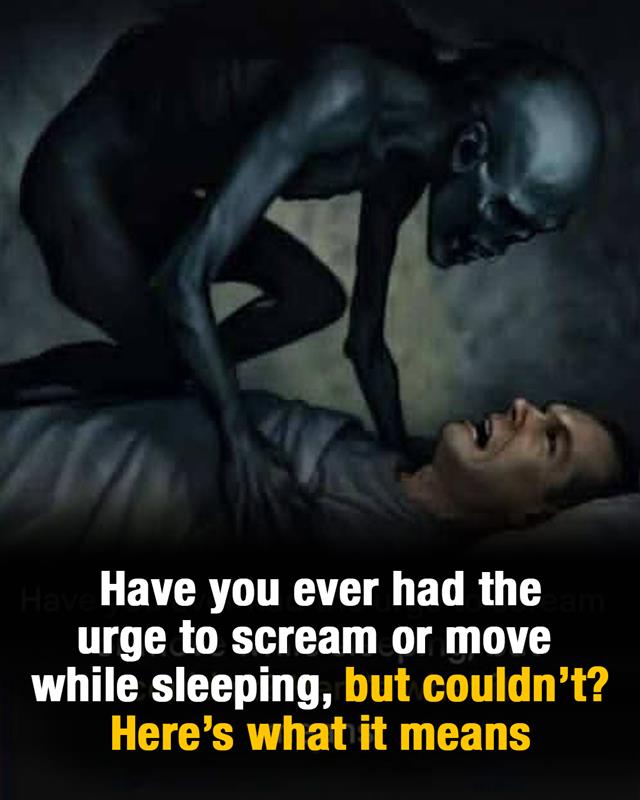
Sleep paralysis is one of the most frightening experiences a person can go through during sleep. It happens when someone suddenly wakes up but realizes they cannot move or speak. The person is fully aware of their surroundings, yet their body remains temporarily frozen. Many people describe intense fear as they try to move their arms, call for help, or sit up, only to discover that their body refuses to respond. The experience can feel so vivid and terrifying that it is often mistaken for something supernatural.
The reason sleep paralysis feels so disturbing comes from the way the brain and body function during sleep. During the REM stage of sleep—the phase where most dreaming occurs—the brain naturally paralyzes the body to prevent people from physically acting out their dreams. Normally, this paralysis disappears the moment someone wakes up. Sleep paralysis happens when the brain wakes before the body fully exits this REM state. As a result, the mind becomes conscious while the muscles remain temporarily locked.
Because the brain is awake but confused by the inability to move, many people experience hallucinations during sleep paralysis episodes. Some report feeling pressure on their chest, difficulty breathing, or the sensation that someone is standing nearby. Others claim to see shadowy figures, hear whispers, or sense an unwanted presence in the room. Although these experiences feel incredibly real, scientists believe they are caused by the brain trying to interpret fear and confusion while still partially influenced by dream activity.
Throughout history, different cultures have created supernatural explanations for sleep paralysis. In many places, people believed they were being attacked by spirits, demons, or ghosts during the night. Folklore from around the world describes creatures sitting on sleepers’ chests or haunting them while they lie helpless in bed. These stories developed because the experience feels so realistic and emotionally intense that people naturally searched for explanations beyond normal biology.
Modern medicine classifies sleep paralysis as a sleep-related condition known as a parasomnia. Researchers have found strong connections between sleep paralysis and stress, anxiety, sleep deprivation, and irregular sleeping schedules. People who are extremely tired, emotionally overwhelmed, or dealing with disrupted sleep patterns are more likely to experience it. Students under heavy stress, shift workers, and individuals struggling with insomnia often report episodes more frequently.
The emotional impact can continue even after the paralysis ends. Many people wake up with racing hearts, fear, and lingering anxiety that makes it difficult to fall asleep again. Some become afraid of going to bed altogether, especially if the episodes happen repeatedly. Unfortunately, this fear can worsen sleep deprivation and increase the chances of future episodes, creating a stressful cycle.
Despite how terrifying it feels, sleep paralysis itself is generally not physically dangerous. Understanding what causes it can often reduce some of the fear surrounding the experience. Experts recommend improving sleep habits, reducing stress, maintaining a consistent sleep schedule, and avoiding severe exhaustion whenever possible. During an episode, some people find that focusing on moving a small body part, such as a finger or toe, can help break the paralysis more quickly.
Sleep paralysis remains one of the clearest reminders of how powerful and complex the human brain truly is. The experience demonstrates how closely dreams, consciousness, and physical control are connected. While the event can feel deeply unsettling, science shows that it is a temporary biological phenomenon rather than something supernatural. For many people, learning the truth behind sleep paralysis helps replace fear with understanding and makes the experience far less overwhelming.