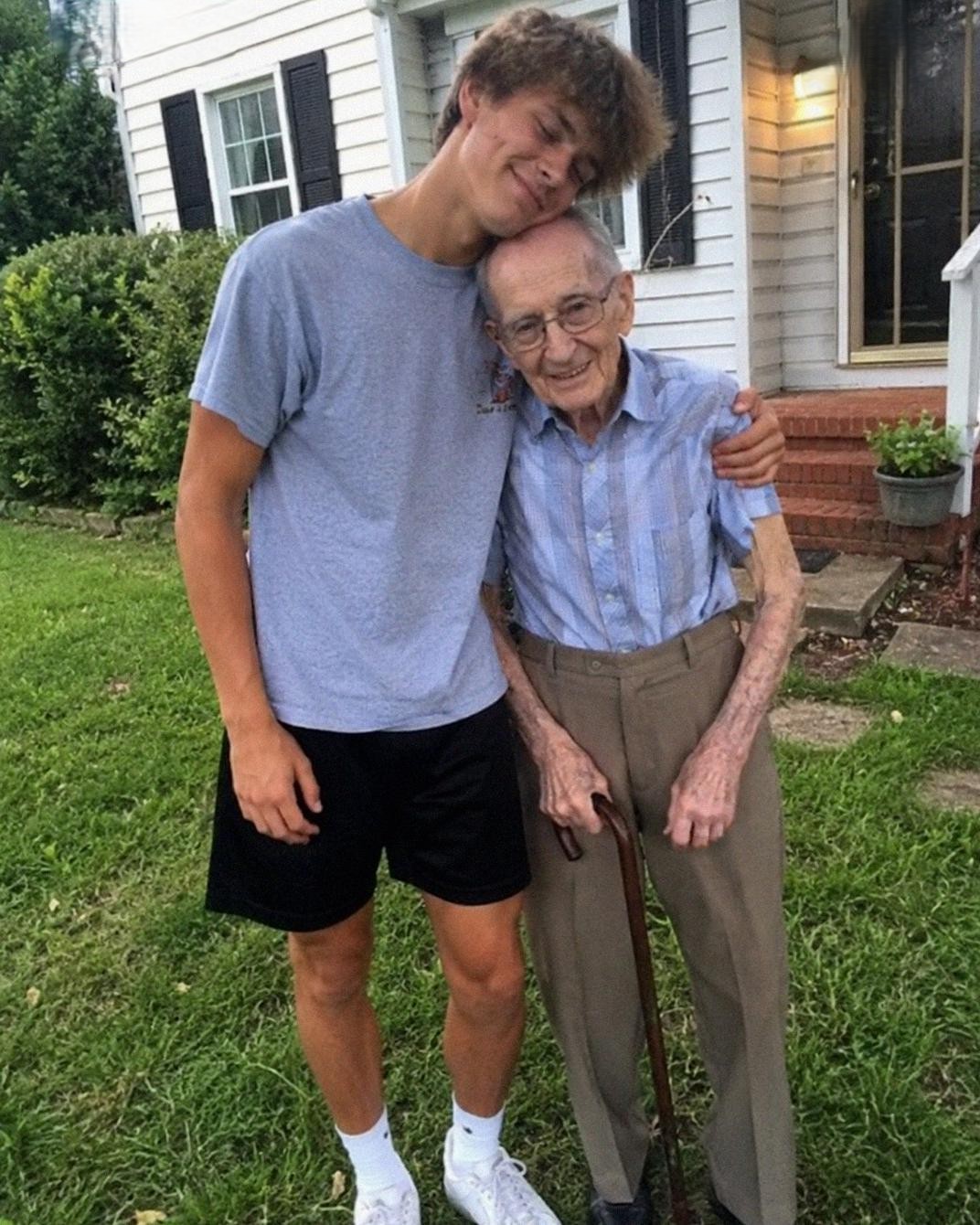
My name is Harold, a retired Marine living alone on a quiet suburban street where nothing much ever changes. My body may have aged, and my knees may ache from years of service, but my instincts never left me. That is why when I noticed the teenage boy across the street flashing S.O.S. in Morse code from his bedroom window late at night, I couldn’t simply ignore it. At first, I convinced myself it had to be some kind of prank. But the night the message changed into a desperate plea for help, I realized something was terribly wrong.
The new family had moved into the neighborhood during the summer. On the surface, they looked perfect—David and Sarah with their two children, Leo and Mia. Friendly smiles, clean yard, polite introductions. They even brought me homemade pie the first week they arrived. But over time, I started noticing cracks beneath the polished image. David treated his teenage son like a soldier in boot camp instead of a kid trying to grow up. Every afternoon I watched him force Leo through endless athletic drills in the yard, barking corrections and insults whenever the boy made the smallest mistake. Leo carried himself like someone already exhausted by life.
One day I tried stepping in gently. David had Leo throwing baseballs against the garage wall over and over after a bad practice. I offered the kid a few tips from my old coaching days in the Marines. Leo looked surprised anyone was speaking to him kindly, but after trying again, his throw improved. I gave him a thumbs-up, but David’s expression told me he didn’t appreciate interference.
Then things became strange.
Late one evening while sitting in my dark living room, I noticed a flashlight blinking from Leo’s bedroom window. Three short flashes. Three long. Three short.
S.O.S.
My heart immediately tightened. Morse code is something you never truly forget once it becomes part of your survival. I tried telling myself the boy was fooling around, but the signal kept appearing night after night. Eventually I confronted him near the mailbox and warned him not to joke about emergency signals. But Leo didn’t react like a teenager caught playing games. He looked exhausted—empty, almost defeated. Quietly, he told me to keep watching the window.
A few nights later, the signal returned.
This time it wasn’t S.O.S.
I grabbed a notepad and carefully decoded the flashes.
WE NEED YOUR HELP. COME INTO THE HOUSE.
The message sent a chill straight through me. Instinct took over before fear had time to settle in. I grabbed my cane and crossed the street.
Their front door stood open. The second I stepped inside, I heard shouting echo through the house along with the crash of something breaking. In the living room, chaos had exploded. A table lay overturned while David stood over Leo screaming about ruined opportunities, wasted sacrifices, and the future he had planned for his son. But Leo finally shouted back. He said he didn’t want the life his father demanded. He wanted to become an EMT. He wanted to help people.
David mocked him immediately, calling it a meaningless job beneath his potential. He insisted Leo become a surgeon, someone respected and successful. But what I saw wasn’t ambition anymore—it was control. David wasn’t trying to guide his son. He was trying to force him into becoming someone else entirely.
I stepped forward and slammed my cane against the floor hard enough to silence the room.
David stared at me in shock, demanding to know why I was inside his home.
I looked directly at him and said, “Because your son has been begging for help.”
The silence afterward felt heavy enough to crush the walls.
I told David exactly what he needed to hear. I explained that while he obsessed over titles, status, and prestige, his son was trying to choose a life with meaning. I spoke about my years in the Marines and reminded him that in moments of real crisis, nobody cared about ego. The people everyone remembered were the medics—the ones willing to kneel beside strangers during the worst moments of their lives. Leo wanted to become that kind of person, and instead of being proud, his father was tearing him apart.
For the first time since I’d met him, David looked uncertain. Truly uncertain.
I left after telling him something I learned long ago: pressure can create strength, but too much pressure eventually destroys whatever is underneath it.
About a week later, Leo knocked on my door.
His shoulders no longer sagged when he stood. He asked if I could teach him basic first aid and emergency response techniques. We spent hours talking about staying calm under pressure, helping injured people, and what it means to carry responsibility when lives are at stake.
Things slowly changed after that.
I still see David sometimes working quietly in his yard. He waves now, less arrogant than before. More thoughtful. Like a man finally realizing he almost lost his son without ever noticing it.
Then one night, just before bed, I noticed Leo’s bedroom light flashing again.
Out of habit, I decoded the message immediately.
THANK YOU.
I smiled, tapped my lamp once in reply, and for the first time in years, I slept peacefully knowing I had truly helped someone who needed it.