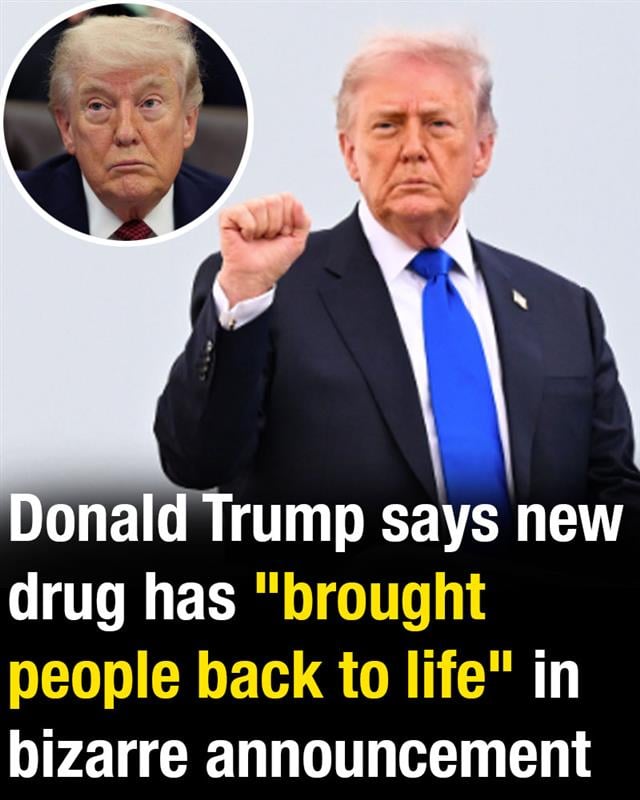
Trump’s words stunned the room into silence. A sitting president speaking with complete confidence, claiming that a mysterious drug could bring the dead “back to life,” instantly sent shockwaves far beyond the event itself. He insisted, “we know the drug works,” delivering the line with such certainty that millions watching were left unsure whether they had just heard a groundbreaking medical revelation, an exaggeration spiraling out of control, or something deliberately designed to provoke outrage and attention. Within hours, social media exploded into chaos. Clips of the speech spread at lightning speed, dissected frame by frame across television networks, podcasts, and online debates. Supporters praised him for speaking boldly about experimental medicine, while critics accused him of spreading dangerous misinformation that could prey on vulnerable families desperate for hope. The deeper people looked into the claim, the stranger and more unsettling the story became.
Trump’s suggestion that an unnamed treatment revived someone who had already received last rites immediately collided with established medical science. Doctors and researchers were quick to respond, emphasizing that no approved drug, and no verified experimental treatment anywhere in the world, has ever been proven capable of literally restoring life to someone who is truly dead. Medical professionals explained that there is a crucial difference between reversing cardiac arrest and resurrecting a person after death. In some emergency situations, patients whose hearts have stopped can occasionally be revived if intervention begins within minutes using CPR, defibrillators, oxygen support, or advanced trauma care. But physicians stressed that this is not the same thing as bringing back the dead after life has fully ended. To experts, Trump’s wording blurred a dangerous line between medical possibility and fantasy, creating confusion about what modern science can realistically achieve.
As outrage intensified, many observers began connecting Trump’s remarks to the Right to Try Act, the law he championed and signed during his presidency. The legislation was designed to give terminally ill patients access to experimental drugs that had passed basic safety testing but were not yet fully approved. For countless families facing devastating diagnoses, the law represented one final chance when traditional medicine had run out of options. That emotional reality is why critics reacted so strongly to Trump’s dramatic story. They argued that describing experimental treatments in near-miraculous terms risks exploiting the fears and hopes of dying patients who may cling to any possibility of survival. Medical ethicists warned that such rhetoric can distort public understanding, making desperate people believe breakthroughs already exist when they do not.
The controversy deepened because Trump never clearly identified the supposed drug, the patient involved, or any evidence supporting the claim. That absence of detail only fueled speculation. Some supporters insisted he was referring metaphorically to patients who appeared beyond saving before recovering unexpectedly. Others believed he was intentionally speaking in exaggerated terms to highlight experimental medicine and portray himself as a leader willing to challenge traditional institutions. Critics, however, saw something more troubling: a calculated attempt to blur truth and spectacle in a way that could undermine trust in medicine itself. In an era already overwhelmed by misinformation and conspiracy theories, many feared such statements could further erode the public’s ability to distinguish scientific reality from political theater.
Meanwhile, doctors across the country found themselves once again trying to calm frightened and confused patients. Some families reportedly contacted hospitals asking whether hidden “miracle drugs” were being withheld from the public. Physicians warned that false hope can carry real consequences, especially for terminally ill patients already navigating unbearable emotional pain. They emphasized that experimental medicine can sometimes extend or improve life, but it does not possess supernatural powers. Progress in science is slow, complex, and often uncertain, built through evidence rather than dramatic declarations.
What began as a single shocking statement quickly evolved into a larger battle over truth, power, and the influence of political language. Trump’s comments did more than spark another news cycle; they exposed how easily hope, fear, and authority can collide when medicine becomes entangled with politics. Whether people viewed his words as inspiration, recklessness, or deliberate provocation, one reality remained undeniable: the claim touched a nerve because it played directly into humanity’s deepest fear of death and its endless desire to believe that somewhere, somehow, a miracle might still exist.