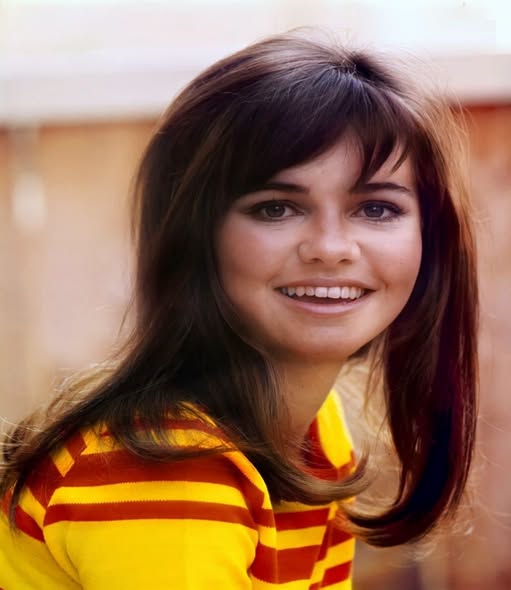
Sally Field is done pretending that aging in Hollywood is easy. Her face, her career, and her honesty all defy the quiet erasure that older women are often expected to accept. She was never supposed to remain at the center of the conversation for this long, never supposed to keep reinventing herself and proving that relevance does not have an expiration date. Yet she has. Decade after decade, she has continued to work, evolve, and challenge the assumptions placed on women as they grow older. And when she speaks about finding what is still alive inside you, her words carry the weight of someone who has spent an entire lifetime learning that identity cannot be reduced to youth, beauty, or the expectations of an industry.
Sally Field’s journey is a rare portrait of a woman who refused to be frozen in time. Early in her career, she was often associated with lighter, more youthful roles that made her familiar to television audiences. But she eventually outgrew the “cute” image that had helped introduce her to the public, not by rejecting those early years, but by refusing to let them become the final definition of who she was. She understood that staying in one place simply because people had become comfortable with that version of her would mean giving up control of her own story. Instead, she kept moving forward, even when the industry made that process difficult.
Each decade demanded something different from her, and Field repeatedly answered by reinventing herself. She moved from television comedy and youthful roles into increasingly complex dramatic performances, eventually becoming an Oscar-winning actress whose work carried enormous emotional weight. Rather than allowing success to become a comfortable stopping point, she continued accepting roles that challenged the image audiences already had of her. Her career became less about preserving a particular version of herself and more about discovering what she could still do next.
That evolution is especially meaningful in an industry that has often treated women as though their value decreases with age. Hollywood has historically celebrated youth while making older women fight harder for substantial roles, visibility, and opportunities. An actress can spend decades proving her talent and still find herself confronted with the assumption that the most important part of her career should have happened years earlier. Field’s continued presence challenges that idea simply by existing within it. She does not need to pretend she has not aged in order to remain relevant. Her career demonstrates that a woman can grow older without becoming invisible.
What makes her so compelling now is not some impossible claim of agelessness, but transparency. She does not pretend that the mirror is always kind or that comparisons with her younger self have completely disappeared. Aging can bring complicated feelings, including fear, loss, vanity, uncertainty, and the awareness that time is moving forward whether we are ready for it or not. But Field’s honesty allows those feelings to exist alongside gratitude, experience, confidence, and the knowledge that a person’s worth is not determined by looking exactly as they did decades earlier.
There is also something powerful about refusing to apologize for change. People often talk about aging as though it is a problem that must be solved, disguised, or defeated. Field’s example suggests another possibility: aging can be experienced honestly, without pretending that every part of it is comfortable. The goal does not have to be convincing the world that nothing has changed. It can instead be learning how to inhabit the person you have become, with all the history and contradictions that come with her.
Her career also proves that reinvention does not have to happen only once. A woman can change her identity, her priorities, her ambitions, and even her relationship with fame repeatedly throughout her life. The person who enters Hollywood as a young actress does not have to remain emotionally or professionally trapped in that era. Every new chapter can bring different kinds of work and different ways of being seen. Field has continued to demonstrate that experience can add layers to a performance rather than taking something away from it.
Perhaps that is why her presence carries a different kind of authority today. When a younger actress speaks about ambition, people may hear potential. When someone with Field’s decades of experience speaks about survival, reinvention, and finding meaning, there is history behind every word. She has lived through changing cultural expectations, shifting ideas about women, the rise and fall of different Hollywood eras, and the inevitable losses that accompany a long life. She understands that confidence is not the absence of fear. Sometimes it is simply the decision to keep moving despite it.
Her story offers an alternative to the idea that the best years of a woman’s life must happen early. Some chapters may be exciting because they are new. Others may become meaningful because they carry everything that came before them. Later life can contain deeper relationships, more self-knowledge, greater creative freedom, and a willingness to stop performing for people who will never be satisfied. The emotional weight of those years can make them more powerful, not less.
Sally Field was never meant to last this long according to the narrow rules Hollywood has historically imposed on women. She was never supposed to remain endlessly youthful, endlessly marketable, or endlessly trapped in the image that first made her famous. Instead, she did something far more difficult: she kept becoming someone new. Her face changed, her career changed, and her understanding of herself changed, but none of those changes erased the woman who came before.
In that sense, Field offers something Hollywood rarely gives older women: permission. Permission to keep changing, to remain visible, to acknowledge insecurity without surrendering confidence, and to understand that life does not become less meaningful simply because youth is gone. Her story suggests that the later chapters may carry some of the greatest emotional weight of all—not because they erase what came before, but because they finally allow a person to understand it. And perhaps the most powerful form of longevity is not looking unchanged, but remaining curious enough to discover who you can still become.