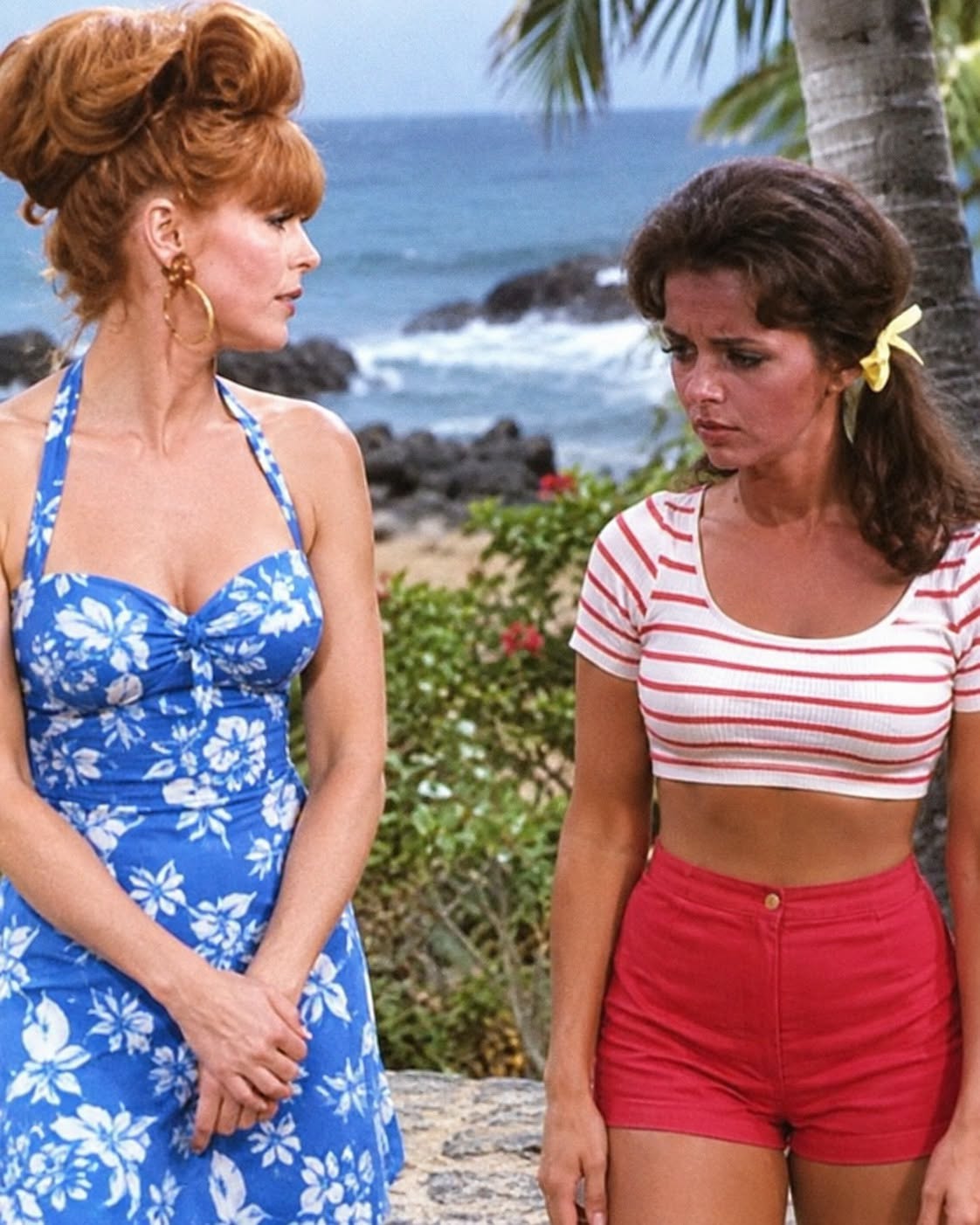
The Dukes of Hazzard made television magic out of beginnings that were, in many ways, just as unlikely as the adventures that later unfolded in Hazzard County. What eventually became one of television’s most recognizable shows began with performers who had to prove themselves, creative decisions that nearly looked very different, and a production that depended on an extraordinary amount of machinery simply to keep its famous action sequences moving.
According to behind-the-scenes accounts, teenage John Schneider had to be creative before he was even cast as Bo Duke. He was younger than the producers were looking for, so he reportedly bluffed his way through the audition by presenting himself as older and adopting a convincing Southern persona. Instead of allowing his age to become the reason he was rejected, Schneider leaned into the character he hoped to play.
That decision became a major turning point.
Schneider ultimately became closely associated with Bo Duke, one half of the mischievous Duke cousins whose adventures formed the heart of the series. His chemistry with Tom Wopat, who played Luke Duke, helped establish the easygoing rhythm that made the two characters feel less like carefully constructed television heroes and more like brothers who happened to find themselves in trouble every week.
Then there was Catherine Bach.
As Daisy Duke, Bach became one of the show’s most recognizable stars, but even her now-famous wardrobe was not initially accepted without resistance. The denim shorts that eventually became inseparable from the character reportedly faced objections from the network. The compromise involved pantyhose, allowing the costume to satisfy concerns while preserving the basic look that had already become part of Daisy’s identity.
What might have been a temporary production compromise instead became part of television fashion history.
The phrase “Daisy Dukes” eventually entered popular culture as a shorthand for the style itself, demonstrating how a costume decision made for one television character could eventually become a cultural reference far beyond the original show.
Then there was the General Lee.
The bright orange Dodge Charger was not merely another vehicle used in the production. It became one of the show’s most recognizable symbols, practically a character in its own right. Its color, Confederate battle flag imagery, distinctive numbering, and famous horn helped make it instantly identifiable whenever it appeared on screen.
Even the horn reportedly had an unlikely origin.
According to behind-the-scenes accounts, the memorable sound came from a chance encounter with a passing driver. What could have been an insignificant moment eventually became one of the most recognizable audio signatures associated with the series.
The General Lee’s importance went far beyond transportation.
The car represented speed, rebellion, comedy, and spectacle all at once. Whenever the familiar orange Charger appeared, viewers knew that a chase, jump, escape, or other piece of chaos was probably about to follow.
And those sequences came at an enormous practical cost.
The action-heavy nature of The Dukes of Hazzard demanded a seemingly endless supply of Dodge Chargers. Hundreds of cars were reportedly used during production because the show’s spectacular jumps and crashes could destroy vehicles that could not simply be repaired and returned to service.
For modern television audiences accustomed to computer-generated effects, the physicality of the series is part of what makes it so distinctive.
Cars really moved.
Cars really jumped.
Stunts had to be performed.
Vehicles had to be prepared, positioned, repaired, and sometimes replaced.
The production could not simply generate another General Lee with a few clicks. If a car was damaged beyond practical repair, another one had to be found and prepared for the next sequence.
That created an unusual relationship between the cast, crew, and machinery. The show depended on people who could perform the stunts safely while also maintaining the illusion that the Dukes were constantly escaping impossible situations.
But machinery alone could never have explained the show’s lasting appeal.
At its center was the chemistry between the performers.
John Schneider and Tom Wopat gave Bo and Luke an easy camaraderie that allowed the show to move naturally between comedy and action. Catherine Bach brought Daisy a combination of confidence, charm, and determination that made her more than a decorative presence in the story. The supporting cast added another layer of personality to Hazzard County, creating a world that viewers could recognize from week to week.
Sorrell Booke’s Boss Hogg became particularly important to that world.
Boss Hogg was loud, scheming, self-important, and constantly searching for ways to gain an advantage. Yet even his villainy reportedly had boundaries. Booke did not want the character to cross certain lines, particularly into murder or drug dealing.
That distinction helped preserve the unusual tone of the series.
Boss Hogg could be corrupt and ridiculous without becoming truly monstrous. His schemes were usually presented through comedy, exaggeration, and cartoon-like conflict. Viewers could root against him without feeling that the show had entered a much darker world.
That balance was essential to the show’s identity.
The Dukes of Hazzard was not trying to be a realistic crime drama. It was an exaggerated, colorful adventure series where authority figures could be crooked, cousins could escape seemingly impossible situations, and a bright orange Dodge Charger could launch into the air almost every week.
The show knew what it was.
That self-awareness helped create its charm.
The stories often followed familiar patterns. The Duke boys would become entangled in some scheme or injustice. Boss Hogg would have his own agenda. Rosco P. Coltrane would pursue the cousins with exaggerated determination. Daisy would become involved in the action. Then the General Lee would appear, engines would roar, and Hazzard County would become a blur of roads, dust, sirens, and spectacular jumps.
For viewers, that predictability was not necessarily a weakness.
It was part of the comfort.
People knew what kind of adventure they were going to get, but they still wanted to see how that week’s version would unfold. The familiar characters became companions, and Hazzard County became a place viewers could return to whenever they wanted an hour of uncomplicated entertainment.
That may explain why the series remained memorable long after its original run ended in 1985.
Television changes quickly. Shows arrive, become popular, and disappear. Characters that once seemed universally recognizable can fade from public memory within a few years.
But some series create a stronger emotional connection.
For many viewers, The Dukes of Hazzard became associated with a particular period of life. It might have been watched on Friday evenings with family, after school, or during a time when television offered a simple form of escape at the end of the week.
The opening notes, the sound of an engine, the sight of the orange Charger, and the familiar faces could immediately transport viewers back to that period.
Reruns helped preserve that connection.
New audiences could discover the show long after the original episodes had aired, while longtime fans could return to episodes they already knew. Reunions and fan gatherings extended the sense of community surrounding the series, proving that the affection for Hazzard County had not disappeared when the final original episodes ended.
For some fans, the nostalgia is as much about the era as the characters.
It recalls a time when television entertainment could feel more communal. Families might watch the same program together rather than each person watching something different on an individual device. A favorite show could become part of the weekly routine, something people discussed at school, at work, or around the dinner table.
That kind of shared television memory is difficult to recreate.
The show’s production history also contributes to its mythology. Stories about Schneider’s audition, Bach’s costume, the origin of the General Lee’s horn, the enormous number of Chargers used, and the boundaries placed around Boss Hogg’s behavior all make the series feel like more than a finished television product.
They reveal the improvisation and problem-solving that happened behind the scenes.
A hit show can look effortless when it reaches the screen. But behind every familiar scene are casting decisions, costume debates, mechanical problems, stunt planning, rewrites, compromises, and countless people trying to make an unusual idea work.
In that sense, The Dukes of Hazzard was a collection of unlikely decisions that somehow came together.
A teenager pretending to be older.
A costume compromise that became iconic.
A chance encounter that produced a famous horn.
A cartoonish villain with surprisingly specific boundaries.
And a production team willing to destroy and replace an extraordinary number of Dodge Chargers in the pursuit of spectacular action.
None of those elements alone could have guaranteed success.
Together, they helped create a television identity that audiences immediately recognized.
And yet, perhaps the strongest reason the series endured was simpler.
People liked spending time with the characters.
The action attracted viewers, but the personalities made them return. The cars were spectacular, but the relationships gave the show its heart. The chases created excitement, but the humor and chemistry made Hazzard County feel familiar.
That combination is difficult to manufacture.
You can build an impressive stunt.
You can find an unforgettable car.
You can write an outrageous scheme.
But you cannot easily manufacture chemistry between performers.
That chemistry is what allowed the show to become more than a collection of stunts.
Decades later, fans can still recognize the basic ingredients instantly: the orange Charger, the familiar faces, the country roads, the outrageous escapes, the exaggerated villains, and the sense that another adventure is always waiting around the next bend.
The world of Hazzard County may have been fictional, but the memories it created were real.
For many people, returning to the show is not simply about watching an old television series. It is about revisiting a particular feeling—a Friday evening, a familiar living room, a favorite character, and the anticipation of seeing what kind of trouble the Duke boys would find themselves in next.
That is the strange power of nostalgia.
The details may belong to another era, but the emotions remain surprisingly close.
The General Lee still represents motion.
The familiar characters still represent friendship and mischief.
The jokes still remind viewers of a particular kind of television comedy.
And the old episodes can still provide something increasingly rare: an uncomplicated hour of escape.
That may be why The Dukes of Hazzard continues to occupy a distinctive place in television history.
It was loud, exaggerated, occasionally chaotic, and built around an almost unbelievable number of destroyed cars.
But beneath all the jumps, chases, schemes, and comic villains was a simple formula that audiences understood immediately: familiar people, familiar places, and another adventure waiting to begin.
For many fans, returning to Hazzard County still means returning to those Friday evenings when the television came on, the engines roared, and that unmistakable orange car appeared on the screen.
For one hour, the outside world could wait.
The Dukes were back.