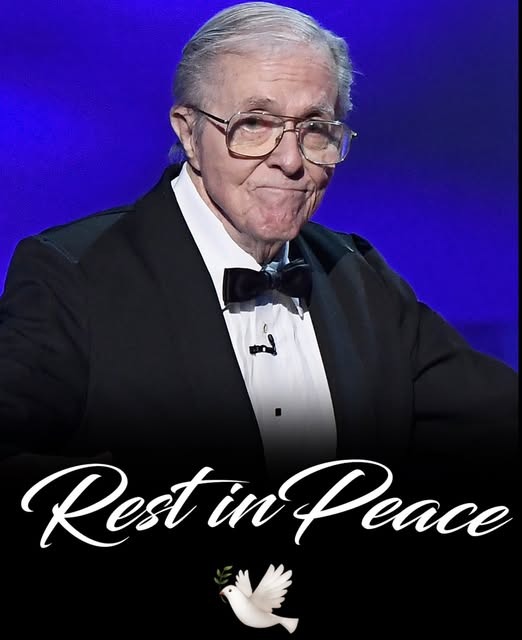
On screen, he was never the loudest. He was not required to be. He remained solid in the background, anchoring scenes with a serene vibe that made everything feel more real as others provided punchlines and fueled the turmoil. For many viewers, he was just a recognizable face who always deserved attention rather than demanding it, a part of the world they loved.
That presence is no longer there.
At the age of 89, Charles C. Stevenson Jr., a seasoned character actor whose career spanned decades of television and movies, passed yesterday. His family reports that he passed away on January 19 in Camarillo, California, from natural causes. His life was characterized by constancy, skill, and quiet effect rather than just fame.
His portrayal as Smitty the bartender is still one of his most well-known roles for Will and Grace viewers. He wasn’t the main attraction, but that was never the intention. Dramatic arcs and lengthy speeches weren’t necessary for Smitty. In the midst of the series’ fast-paced humor and emotional fluctuations, he was the solid presence behind the bar.
It’s the kind of function that keeps everything together yet is frequently disregarded in conversations about television.
One of the most significant sitcoms of its era, Will and Grace was renowned for its astute writing, audacious storytelling, and chemistry among its primary ensemble. The program had a lasting impression on television history and was nominated for numerous awards. Even little parts were important in that setting, and Stevenson knew exactly how to maximize them.
He made 12 appearances over several seasons; his last appearance was in 2020. Even though he was far into his late 80s at that point, he continued to contribute, act, and show up. Such longevity is uncommon and indicates something more profound than skill alone.
It demonstrates commitment.
However, his career didn’t start or finish with a single performance.
When Stevenson first appeared in a Voyagers episode in the early 1980s, his career in entertainment began. He then created a resume that represented the life of a real working actor. Finding employment on a variety of projects continuously rather than chasing headlines or depending on a single breakout role.
He made appearances in big-screen movies that many viewers would recognize right away. He played supporting parts in movies including Pleasantville, Ghost World, Ed Wood, Men in Black, and The Naked Gun. These didn’t have to be big sections, but they weren’t always. Actors such as Stevenson were used by directors to provide authenticity and texture to situations and to fill in the gaps between significant moments.
He had even more chances to make his mark on television.
He made appearances in numerous popular television shows throughout the years, such as Cheers, L A Law, Dynasty, Murder She Wrote, Family Matters, Everybody Loves Raymond, The Office, Weeds, My Name Is Earl, Las Vegas, and Curb Your Enthusiasm. This type of cinematography reflects endurance as well as experience.
He was a part of several television eras, changing with the times as viewers, fashions, and the industry did.
Not all actors are able to maintain their relevance without continuously reinventing themselves.
Stevenson stood out not only for his work ethic but also for his awareness of his place in the greater scheme of things. He didn’t strive to be the lead since he knew he wasn’t. Rather, he concentrated on fulfilling his role effectively and contributing dependability to each project he worked on.
This was aptly illustrated by a story his kid once told.
Stevenson had a running joke about his work since he frequently portrayed clergy or officiants in different plays. He would claim that all he did for a living was marry or bury people. In addition to being a humorous way to acknowledge the kinds of parts he was regularly assigned, it also provided insight into his character.
He didn’t think highly of himself.
He did, however, take his profession seriously enough to do it well. Directors relied on him to fill in the blanks when scenes needed something extra and to handle circumstances that weren’t always totally scripted. In a field where accuracy and timeliness are crucial, that level of confidence is not taken lightly.
It is merited.
Stevenson had a totally different existence prior to the success of his acting profession. Long before he set foot on a set, his time in the Navy during the Korean War probably influenced his discipline and outlook. Following his service, he attended the University of California, Berkeley to study English, laying the groundwork for his eventual switch into acting.
He didn’t follow a direct route to success in Hollywood.
It was constructed gradually through decisions that represented both aspiration and pragmatism.
He was a family man in addition to his career. He had five children from his multiple marriages, as well as grandkids and great-grandchildren who are currently carrying on his legacy. His personal life remained anchored in relationships that went well beyond the screen, even if his work put him in front of cameras and audiences.
Few people are able to sustain this balance between their personal and professional lives over an extended period of time, despite the fact that many strive for it.
There aren’t many loud or dramatic reactions as word of his dying spreads. They are more contemplative and calmer. People recall where they saw him, attempting to place his face, and discovering how many projects he was involved with without them even understanding it at the time.
The legacy of a character actor is like that.
You recognize them even if you can’t always recall their name right away. You recall how they infused a scene with a sense of completion, plausibility, and groundedness.
That kind of presence was Stevenson’s.
He wasn’t trying to get attention. He was contributing to the construction of the surrounding world.
And by doing this, he joined something greater than any one performance or position.
A new level of respect has emerged when viewers reflect on the series and movies he worked on. Not only for his actions, but also for the consistency with which he carried them out. For the modest talent, professionalism, and dependability that characterized his career.
Certain actors have famous moments that people remember.
Others are remembered for something equally significant but less evident.
They improve everything in their immediate vicinity.
Among those actors was Charles C. Stevenson Jr.
Furthermore, such a legacy is difficult to erase.