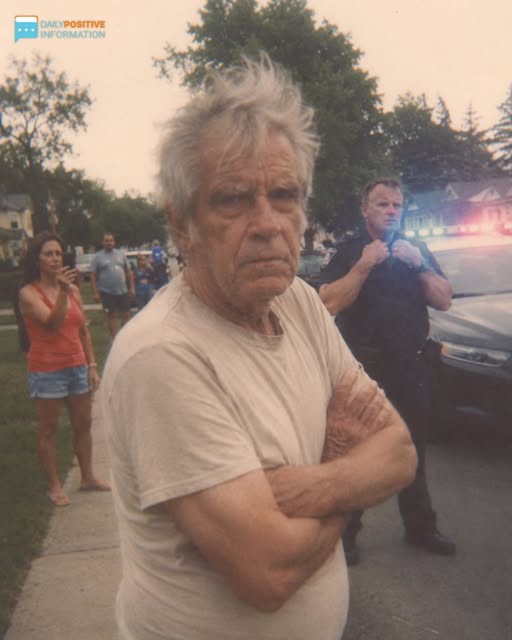
My name is Pete. I’m forty-two years old, married to a woman far wiser and kinder than I ever deserved, and the father of two kids who somehow still think I’m smart enough to help them with math homework. I have a solid job, a comfortable house, and for most of my adult life, I convinced myself that my father was perfectly fine living alone three hours away in the same old house where I grew up.
That was the version of reality I needed.
And I believed it so completely that I never stopped long enough to wonder if it was actually true.
My father’s name is Walter. He’s seventy-two years old, broad-shouldered and weathered in the way men become after a lifetime of fixing things with rough hands instead of conversations. After my mother died twenty-six years ago, he never remarried. Never moved. Never even replaced the faded yellow kitchen curtains she picked out sometime in the early nineties.
The sunlight had bleached those curtains from bright gold to the pale color of old paper, but Dad kept them hanging there like sacred relics. Maybe to him, they were.
I visited twice a year. Stayed a weekend, maybe a little longer. We’d eat dinner together, watch baseball, complain about grocery prices, talk about my kids and the weather and how fast time seemed to move.
But we never talked about the garage.
The One Rule I Obeyed My Entire Life Without Ever Asking Why
Every family has those silent rules nobody explains out loud. The doors you don’t open. The subjects you don’t mention. The spaces you somehow learn to avoid without ever being told directly.
In our house, the garage was all three.
I think I was eight or nine when I first noticed it. Dad would disappear through the side door carrying old blankets or bags of feed, and if you stood quietly enough near the wall, you could hear sounds coming from inside — soft scratching, whining, the scrape of metal bowls across concrete floors.
Then silence again.
When I was nine, two stray dogs chased me halfway down our street. They never bit me, but I still remember the panic exactly — my lungs burning, sneakers slamming against hot pavement, the sound of barking getting closer behind me while my chest felt ready to explode.
After that, barking behind closed doors always made my entire body tense.
Dad knew.
He saw it happen back then, and after that he never once tried forcing me near the garage. He’d come back into the house smelling like sawdust and dog shampoo, pat my shoulder, and say quietly:
“Just leave that one alone, Pete.”
So I did.
For thirty-three years, I did exactly that.
Even as an adult, during visits home, if I heard faint barking or nails tapping against concrete late at night, I’d pull the blanket tighter around myself and remind myself that whatever happened in that garage was Dad’s business, not mine.
At the time, I told myself I was respecting his privacy.
Looking back now, I realize I was mostly avoiding something uncomfortable.
There’s a difference between those two things, and I’ve had to live with that realization.
The Morning Everything Finally Broke Open
Last Thursday began like every other visit.
I stood in the kitchen with coffee in my hand while Dad stared out the sink window the way he always does in the mornings — not really looking at anything, just existing inside that quiet little world he built for himself after Mom died.
Then shouting erupted outside.
“Walter! Open that garage right now! We know what you’re hiding in there!”
Dad frowned slightly, took one more sip of coffee, and set the mug down with the calm patience of a man who refuses to let panic rush him.
“Who in God’s name starts screaming this early?” he muttered.
By the time we stepped onto the porch, Mrs. Donnelly was already standing at the curb with her phone raised, recording everything like she’d spent years waiting for this exact moment. Mr. Grayson stood beside her with crossed arms and the smug expression of someone already convinced he knew the truth. Mrs. Perez lingered awkwardly near her mailbox, twisting her hands nervously, looking uncertain but unwilling to leave.
A sheriff’s cruiser sat crooked along the curb.
Two deputies waited near the gate — one young, one older with the tired face of a man who had spent decades dealing with humanity at its worst.
The younger deputy cleared his throat.
“Sir, we’ve received multiple complaints from neighbors. Residents say you’ve been bringing dogs home from shelters, but nobody ever sees the animals leave. There are concerns… and some allegations involving money.”
Dad exhaled slowly through his nose.
“So that’s the story now?”
“We’ve all noticed the same thing, Walter,” Mrs. Donnelly snapped while still filming.
Mrs. Perez spoke quietly.
“I only mentioned the barking stopped sometimes. I never actually accused—”
She stopped immediately when Mrs. Donnelly glared at her.
Standing there on the porch, I felt something unexpected rise inside me.
Doubt.
Because the truth was, I had heard those same sounds over the years. I had slept thirty feet from that garage and never once asked a question.
The older deputy stepped forward.
“Walter, we need access to the garage.”
“You got paperwork?” Dad asked calmly.
The deputy unfolded a warrant.
“We do.”
Dad nodded once, reached into his flannel pocket, and pulled out his keys.
Nobody spoke while he walked toward the garage.
The entire street seemed frozen.
The only sounds were the jingle of keys and the scrape of Dad’s boots against the driveway.
At the garage door, he paused and looked back at everyone standing there.
“Fine,” he said quietly. “But watch carefully.”
Then he opened the door.
What Was Inside That Garage Changed Everything
The garage door rose slowly.
First darkness.
Then strips of light.
Then the full room revealed itself.
The younger deputy stepped inside and stopped so suddenly it looked like he’d walked into invisible glass.
The older deputy removed his hat immediately.
There were no cages.
No filth.
No neglect.
Instead, the entire garage had been transformed — slowly, lovingly, carefully — into a series of sleeping spaces built by hand from smooth wood. Each space was large enough for an old dog to stretch comfortably. Every bed held folded blankets, fresh water bowls, food dishes, and small framed photographs resting gently against the back wall.
Above every sleeping space was a painted name.
And a year.
Daisy. 2004.
Ranger. 2008.
Millie. 2011.
The room didn’t feel like a garage anymore.
It felt like a sanctuary.
At the far wall hung a massive board covered in photographs of dogs — old dogs, limping dogs, cloudy-eyed dogs, mutts no shelter visitor probably looked at twice.
Under every photo, Dad had written small notes in careful block letters.
“Waited at shelter 417 days.”
“Adopted after eleven months.”
“Stayed here until the end.”
The younger deputy whispered softly:
“These aren’t missing dogs.”
Dad stood near the doorway with his hands resting at his sides.
“Nobody wanted the old ones,” he answered gently.
The older deputy blinked hard and looked away for a second.
Outside, the entire street had gone completely silent.
Then Dad added quietly:
“I wasn’t about to let them die alone.”
Twenty-Six Years of Love Nobody Ever Saw
I walked slowly through the garage, trying to absorb what I was seeing.
In one corner stood shelves filled with collars, toys, tags, and old blankets labeled carefully with masking tape and names. A chewed tennis ball. A frayed rope toy. A cracked rubber duck.
Objects that only matter when the love connected to them mattered deeply too.
On the workbench sat several notebooks tied neatly together with twine.
I opened one.
The handwriting was unmistakably Dad’s.
Neat. Steady. Patient.
“Rosie only ate half her dinner tonight. Hand-fed the rest.”
“Benny likes the blue blanket better.”
“Sat with Louie until after midnight. Didn’t want him scared.”
“Tucker spent twenty minutes sleeping in the porch sun.”
“Stayed beside Duke until he settled and finally went quiet.”
I stared at those pages for a very long time.
Twenty-six years.
My father had spent twenty-six years quietly bringing home old shelter dogs nobody else wanted. The sick ones. The dying ones. The frightened ones. The animals abandoned because they were inconvenient or expensive or too close to the end.
And all this time, while I visited twice a year pretending everything was fine, he was building this hidden world of tenderness inside a garage thirty feet from my bedroom.
“Why didn’t you ever tell me?” I finally asked.
Dad shrugged lightly.
“Wasn’t something I needed to talk about.”
“You built all this yourself?”
“Took a while,” he answered simply.
Behind me, the older deputy asked carefully:
“You work with the shelters directly?”
“A few of them,” Dad said. “I take the dogs nobody else picks.”
The deputy swallowed hard and nodded silently.
From the doorway, Grayson spoke again, though now his voice sounded much smaller.
“And the money?”
Dad turned slightly toward him.
“Shelters sometimes charge fees. I pay them.”
Nobody had anything left to say after that.
The Corner That Completely Broke Me
Then I reached the far corner.
One sleeping space sat empty.
Its blanket folded perfectly.
A lamp glowing softly above it.
And beside the bed sat a framed photograph.
My mother.
She smiled exactly the way I remembered her in the kitchen — flour dusted lightly on her cheek, caught mid-laugh while cooking.
I stood there staring at her face until my eyes blurred.
“Dad…”
He walked over and stood beside me quietly.
“After your mother died,” he said softly, “the house got too quiet.”
That was all.
Seven words.
But they rearranged twenty-six years of my life instantly.
All this time, I told myself Dad was okay. That he liked solitude. That he was just private.
But really, I had simplified his grief into something easier for me to live with.
“You stayed up with them?” I asked quietly. “All these years?”
“Some of them got nervous at night.”
“And you remembered every name.”
“Somebody should,” he answered. “Those old dogs just needed to know kindness still existed.”
I looked at him.
“You couldn’t tell your own son?”
Dad gave me that old look he used whenever I complained dramatically as a teenager.
“You never asked, Pete.”
And the worst part was…
He was right.
The Street Had to Face What It Had Become
Outside, the deputies spoke to Dad a few more minutes, but now their voices carried respect instead of suspicion.
The younger deputy stood staring quietly at one empty sleeping space for a long time before asking softly:
“You did all this alone?”
“Mostly,” Dad answered.
When we stepped back outside, Mrs. Donnelly had lowered her phone completely.
“Walter,” she said weakly, “I didn’t understand. I’m sorry.”
Dad looked at her for a long moment.
He didn’t rush to comfort her.
Didn’t soften the moment.
He simply let the apology sit where she placed it.
Mrs. Perez stepped forward quietly.
“I should’ve spoken up sooner.”
Grayson stared at the grass.
“I was wrong.”
“Yes,” Dad said calmly. “You were.”
No anger.
No cruelty.
Just truth.
And somehow that hit harder than yelling ever could.
The deputies left.
Neighbors slowly disappeared back into their homes.
Dad walked back into the garage, picked up a towel, and calmly resumed cleaning water bowls like the morning hadn’t exploded around him.
Standing Alone Inside That Garage, I Finally Understood My Father
After he went inside, I stayed there reading notebook after notebook.
Dad documented everything.
One dog loved jazz music.
Another refused eating unless Dad sat beside him.
One terrified mutt hid inside a toolbox for three straight days before trusting anyone enough to come out.
Dad wrote every detail down like every life deserved remembering.
Because to him, they did.
When he returned carrying grilled cheese sandwiches, I was standing before the wall of photos wiping tears off my face.
He handed me a sandwich without commenting on it.
We stood side by side eating quietly.
“How long were you planning on doing this alone?” I finally asked.
Dad chewed thoughtfully.
“Until I couldn’t anymore.”
I looked at him carefully.
“I’m not leaving tomorrow.”
That surprised him.
“You’ve got work, Pete.”
“I’ll figure it out.”
“You’ve got a family.”
“My wife,” I said, “will be the first person telling me to stay.”
He studied my face for several seconds.
“I can help you,” I continued. “We can improve this place. Coordinate with more shelters. Build intake spaces. Handle paperwork. You shouldn’t carry this alone anymore.”
Dad glanced toward Mom’s photo before looking back at me.
“You sure?”
I nodded.
“Yeah. I am.”
The Next Morning, I Brought Lumber
I woke before he did.
Drove to the hardware store when it opened.
Filled the truck with lumber and tools.
When I pulled back into the driveway, the sun was barely rising.
Dad walked into the garage and found me kneeling beside one sleeping space with a drill already in my hand.
I looked up at him.
“Just making room,” I said quietly. “In case another one needs a place to stay.”
Dad stood there silently in the doorway of the room he spent twenty-six years building one board at a time.
Then he nodded slowly.
The kind of nod a man gives when something he secretly needed finally arrives.
I think about Mrs. Perez a lot now.
Not Mrs. Donnelly.
Mrs. Perez.
Because she sensed something felt wrong about the accusations and stayed quiet anyway because silence was easier.
I did the same thing for thirty-three years.
The dogs were never disappearing.
They were being loved.
Quietly.
Faithfully.
Patiently.
My father looked at the forgotten creatures of the world and decided they still deserved warmth, comfort, names, blankets, music, and someone willing to sit beside them when the night got frightening.
He did it because after Mom died, the silence inside the house became unbearable.
And because he is the kind of man who answers pain by creating kindness.
I only wish I had walked through that garage door sooner.
Not because I was curious.
But because I could have helped carry some of it.
I could have been one of the people Dad wrote about in those notebooks — someone who stayed awake beside an old dog so it wouldn’t die alone.
Now I will be.
Starting now.