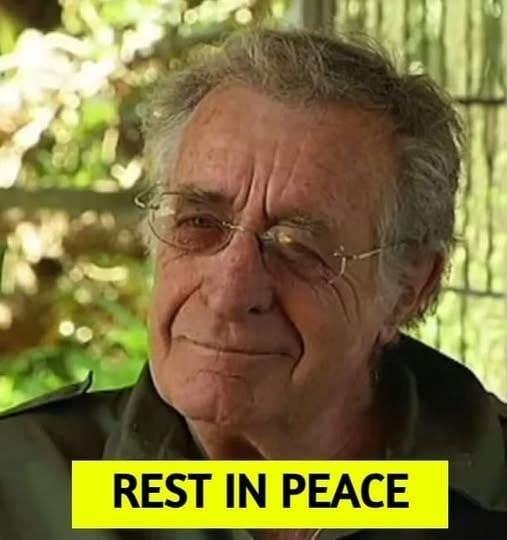
The abrupt and incredibly ironic death of an absolute titan of industry—a guy who deliberately ridiculed the idea of mortality for the better part of five decades—has left the world’s film business in a state of deep, unwavering grief. He consistently survived the kinds of catastrophic, metal-mangling situations that would instantly claim an ordinary life, skillfully avoiding death through thousands of well-planned, high-stakes movie spectacles. However, the renowned Mad Max daredevil and cinematic pioneer passed away at the age of 85 in an extremely lonely, devastatingly commonplace car accident on a public road rather than in a blaze of meticulously manufactured Hollywood glory. A stunt icon who spent his life bending the laws of physics, wrestling deadly apex predators, and voluntarily setting his own body on fire for the amusement of a worldwide audience is being honored with tributes, heartfelt memories, and historical retrospectives that are currently pouring in from every corner of the international filmmaking world.
For a guy who had turned the skill of defying gravity into a highly acclaimed professional career, Grant Page’s final, sad moments on earth were tragically ordinary. The 85-year-old stunt master suddenly faced the uncompromising, unscripted lethality of real-world vehicular danger while driving alone through the vast, rural expanses of New South Wales, Australia. This was the exact kind of catastrophic impact he had spent his entire adult life painstakingly engineering for the safety of rolling cameras. Within minutes of the first impact, elite emergency medical services and highway rescue teams raced to the isolated collision site, deploying cutting-edge life-saving equipment. But the famed actor, who had miraculously survived numerous high-speed, on-screen head-on accidents and explosive vehicle rollovers, was unable to recover from the extreme trauma of this last, real-life blow. In the end, the man who appeared to be completely immortal to generations of devoted moviegoers was unable to avoid the abrupt, brutal finality of a typical traffic accident.
A vast, overwhelming wave of profound grief has swept through Australia’s elite cinema community and reverberated throughout the global entertainment landscape in the terrible, hollow days that followed the formal confirmation of his loss. In a heartfelt public statement, his son Leroy recalled a fiercely energetic father who was still bursting with contagious energy, actively creating intricate new cinematic concepts, and remaining incredibly driven to push creative boundaries until the very moment of his final drive. A completely fearless professional with an almost supernatural, instinctive brilliance behind the wheel of any high-performance machine has been described by visionary film directors, prominent cinematic reviewers, and longtime industry colleagues. He was widely hailed as a visionary outlaw who would voluntarily slide down collapsing cliff faces while engulfed in roaring flames, leap precisely between fast-moving muscle cars on dusty desert highways, and turn early Australian action cinema into a visceral, extremely risky art form that redefined international filmmaking standards.
Heroes like Grant Page relied solely on human bravery, flawless mathematical timing, and an unwavering tolerance for extreme physical danger long before modern computer-generated imagery and sophisticated digital special effects took over the Hollywood studio system, turning contemporary action films into sterile, pixelated environments. When a script called for a car to fly over a ravine or explode into a spectacular fireball during the heyday of practical effects, a real person had to get into the driver’s seat, grab the steering wheel, and actively hope that their safety rigging would withstand the violent impact. Over the course of his illustrious, multi-decade career, Page not only participated in this high-risk industry but completely transformed it by developing extremely complex mechanical safety protocols and cutting-edge stunt choreography techniques that saved the lives of hundreds of actors and fellow stunt performers.
His ground-breaking work on George Miller’s original, dystopian classic Mad Max irrevocably changed the landscape of filmmaking by giving the picture a level of automotive realism that viewers around the world had never seen before. The bone-shattering collisions and furious, rubber-burning pursuits that were shown on film were all real, carried out by Page and his close-knit group of rogue Australian drivers who had little regard for their own safety. This unvarnished, unadulterated approach to practical filmmaking solidified the franchise’s legendary cult status and made Page a highly sought-after creative force, drawing the interest of well-known international directors who were desperate to replicate some of his chaotic magic in their own high-profile studio productions. He changed the stuntman’s function from that of an unidentified, throwaway body to that of a highly esteemed, essential creative collaborator in the narrative process.
Beyond his renowned work with explosive structural drops and high-performance cars, Page’s insatiable thirst for adrenaline drove him to master a wide range of perilous disciplines, frequently taking part in highly publicized stunts that straddled the boundary between pure madness and cinematic entertainment. He swam through churning, razor-sharp ocean reefs, performed prolonged full-body burns that required him to stay completely enveloped in roaring chemical fires for minutes at a time while performing physically, and participated in meticulously staged underwater sequences with live, unpredictable sharks. His body turned into a live, breathing canvas of historical wounds, each one signifying a unique, valiant triumph over a situation that ought to have logically led to death.
Grant Page’s enormous cultural legacy continues to roar forward like a finely tuned V8 engine that utterly refuses to die, even though the physical engine of his incredible life has finally come to an abrupt, sad halt on a quiet New South Wales highway. His four loyal sons, a network of incredibly loving ex-partners, and several generations of incredibly inspired filmmakers, stunt coordinators, and thrill-seekers who still regard his legendary body of work as the pinnacle of action filmmaking are his heirs. For centuries to come, action directors will be guided, inspired, and challenged by the fundamental blueprints he lay down in the mud and asphalt of early independent film. The memory of the wild, uncompromising Australian daredevil who voluntarily risked everything for the sheer joy of the show endures as a potent, timeless testimony to the ultimate raw power of human daring in an industry increasingly dominated by artificiality and computerized perfection.