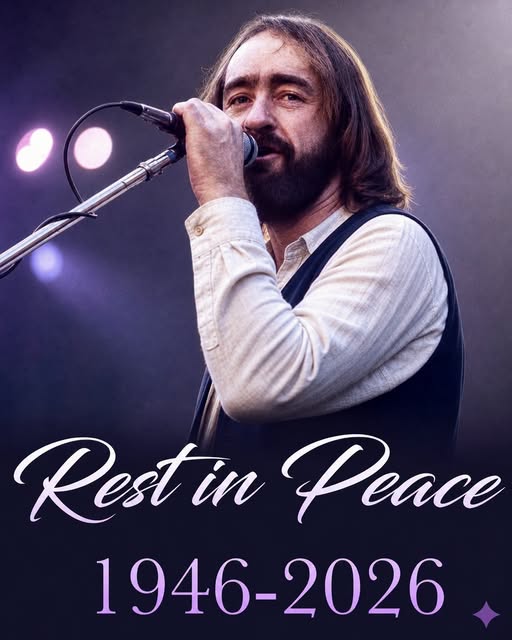
The news slipped out like a whisper, but the loss is thunder. A quiet architect of classic rock, whose songs shaped generations without ever demanding the spotlight, has left the stage for good. No scandals. No spectacle. Just a life poured into melody, soul, and truth. His passing at 79 closes a chapter the world barely realized it was reading until the final page turned.
Dave Mason came of age in England’s fertile rock scene, a time when young musicians were breaking old rules and searching for new ways to blend sound, feeling, and experimentation. Drawn early to the crossroads where blues, rock, and gentle psychedelia met, Mason developed a style that could be both restrained and deeply expressive. As a key member of the pioneering band Traffic, he helped carve out a sound that felt daring yet instantly familiar, music that could stretch into experimentation without losing its emotional center. His guitar work and songwriting never seemed desperate to announce themselves. Instead, they slipped into the listener’s memory and stayed there.
That understated quality became one of Mason’s greatest strengths. While other artists chased louder moments and bigger headlines, he understood the power of a melody that could quietly grow more meaningful with time. His playing carried warmth and precision, while his songwriting often found emotion in places that did not need exaggeration. Decades could pass, musical fashions could change, and yet the songs remained capable of bringing listeners back to a particular place, person, or feeling.
Away from the Traffic spotlight, Mason’s collaborations and solo career revealed just how deeply he valued musical connection over celebrity. He worked alongside some of the era’s most respected artists, continually searching for chemistry rather than simply collecting famous names. His solo recordings gave him room to explore another side of his voice, proving that his identity was never limited to one band or one period of rock history. He was an artist who kept moving, learning, writing, and playing because the music itself remained the point.
There was an emotional precision to Mason’s best work. He favored songs that spoke softly but stayed with you, the kind you might hear during a late-night drive, while sitting alone with old memories, or years after first discovering them. They did not need to dominate the room. Sometimes they only needed to be there.
Recognition came gradually, almost reluctantly, as though the wider world eventually had to acknowledge what musicians and devoted listeners had understood for years. Honors and tributes could never fully measure a career built on influence rather than spectacle. Mason’s greatest achievement was not simply the number of records he made or artists he worked beside, but the way his music became part of people’s lives without asking for anything in return.
Now, with his passing at 79, the stage has gone quiet. But the music remains. His true legacy rests where he always wanted it to be—not in headlines, awards, or memories of fame, but in the hearts of those who press play and simply listen. Because some artists leave behind a career. Others leave behind a feeling. Dave Mason leaves behind both.