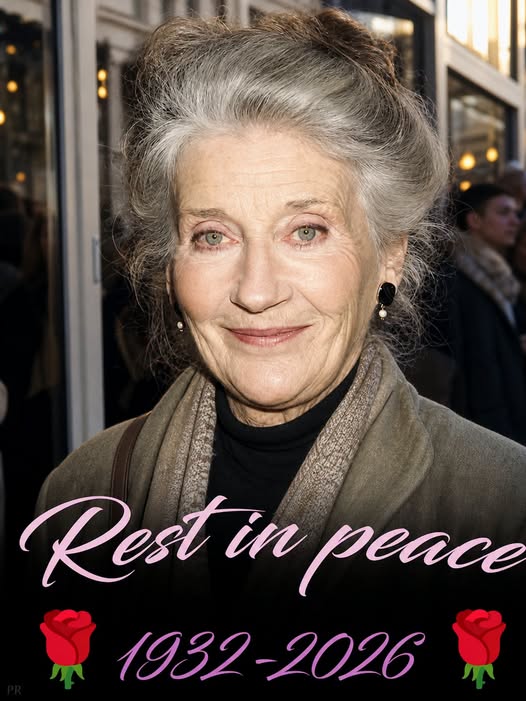
Phyllida Law’s final day was heartbreakingly beautiful. A legendary actress, a devoted mother, and a quiet force in British drama, she slipped away “supremely peacefully” at home, surrounded by the family she loved most. There were no flashing cameras, no theatrical farewell—only the comforting presence of the people whose lives she had shaped with extraordinary love and unwavering grace. It was an ending as gentle as the woman herself.
To many, Phyllida Law was a beloved actress whose familiar face brought warmth and authenticity to every role she touched. But to Emma Thompson and Sophie Thompson, she was something even greater: the steady heart behind two of Britain’s most celebrated performers. Behind Emma’s brilliance and Sophie’s remarkable career stood a mother whose own talent was matched only by her generosity, encouraging creativity while quietly sacrificing her own ambitions whenever her family needed her most.
Long before audiences recognized her on screen, Law dreamed of becoming a stage designer in Glasgow. The theater captivated her imagination, not because it promised fame, but because it offered a place where stories could come alive. Life eventually led her in a different direction, and she discovered that her greatest gift was not behind the scenery, but standing within it—bringing characters to life with remarkable subtlety and emotional truth.
Her career unfolded slowly rather than spectacularly. She became the kind of actress audiences trusted instinctively, slipping effortlessly into British homes through unforgettable appearances in Midsomer Murders, Waking the Dead, Doc Martin, and countless other television dramas. Viewers often felt they knew her, even if they couldn’t immediately recall her name. That rare familiarity became one of her greatest strengths: she never demanded attention, yet she was impossible to forget.
On film, she continued that quiet magic. Whether charming audiences in Nanny McPhee, moving hearts in The Winter Guest, or appearing in a variety of deeply human roles throughout her career, Law possessed an extraordinary ability to make every character feel authentic. She didn’t rely on grand performances; instead, she mastered the small gestures—a glance, a smile, a pause—that revealed an entire emotional world.
Her influence reached far beyond acting. Awarded an OBE for her contributions to drama and charitable work, Phyllida devoted herself to causes she believed in with the same humility that defined her career. She also became an accomplished author, writing tender, deeply personal memoirs that reflected on family, aging, creativity, and the beautifully imperfect journey of an ordinary life lived extraordinarily well.
Those closest to her often spoke not first about her achievements, but about her kindness. She had a remarkable way of making people feel heard, whether they were fellow actors, young performers finding their confidence, or strangers whose paths crossed hers for only a moment. Her generosity was rarely publicized because it was never performed—it was simply who she was.
In 2020, she appeared in Then Came You, what would become her final screen role. It felt less like a farewell than another gentle chapter in a lifetime devoted to storytelling. Even as her career drew to a close, she continued doing what she had always done: serving the story with quiet dignity rather than seeking the spotlight.
Today, her legacy lives in more than awards or an extraordinary filmography. It lives in the performances of her daughters, in the countless actors she inspired, in readers touched by her memoirs, and in audiences who still find comfort in the characters she portrayed. Her influence was never measured by noise or celebrity, but by the lasting impression she left on people’s hearts.
Phyllida Law spent a lifetime proving that greatness does not always announce itself loudly. Sometimes it arrives with kindness, endures through resilience, and departs with remarkable peace. Though her final curtain has fallen, the warmth she gave to the world will continue to echo far beyond the screen.