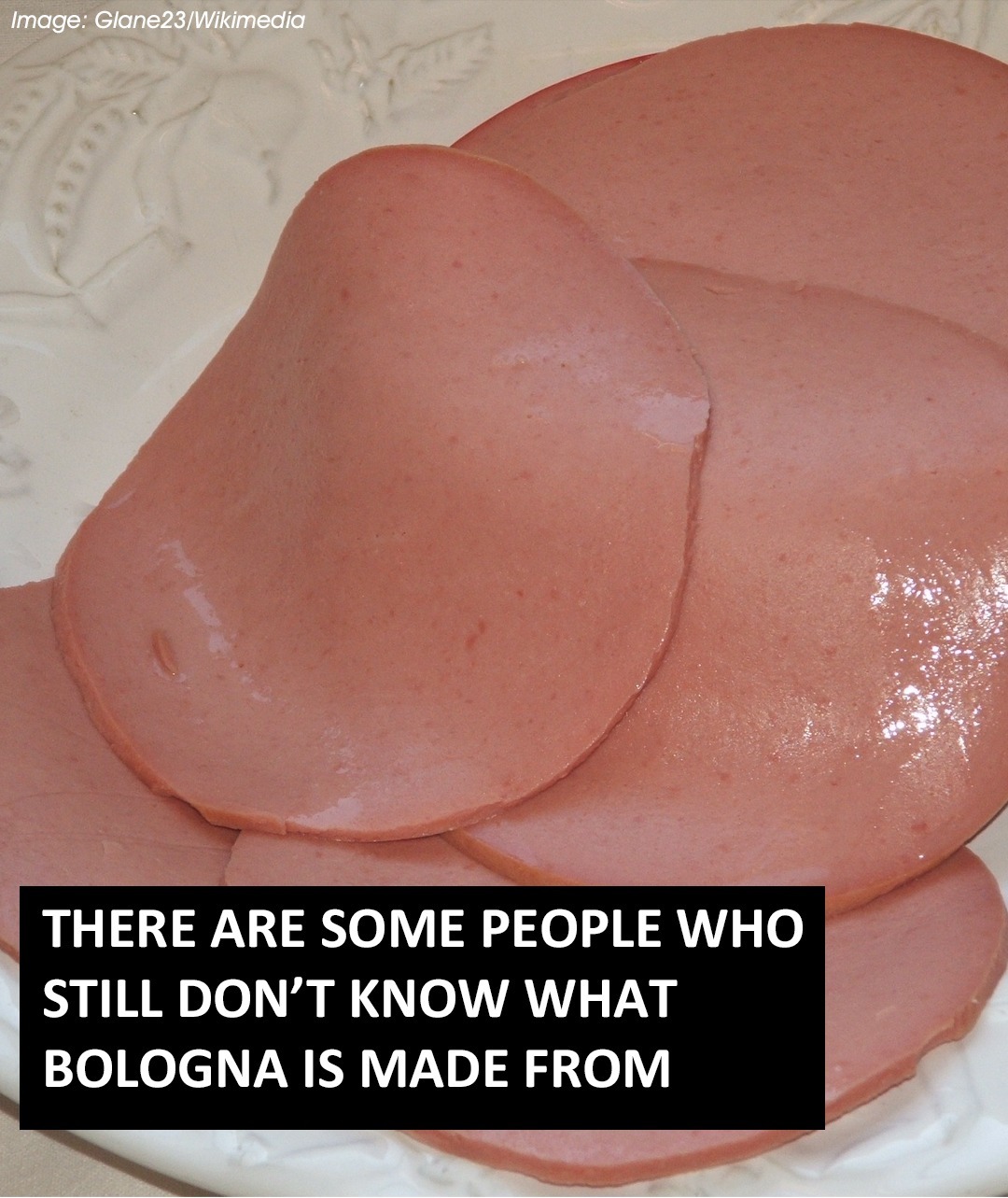
Bologna hides a secret most people never stop long enough to question. It sits quietly in grocery coolers across the country, stacked in plastic packages beside turkey and ham, waiting to be tossed into lunchboxes or slapped between slices of soft white bread. People joke about it constantly. They call it “mystery meat,” wrinkle their noses at its smooth pink color, and repeat old horror stories about scraps, leftovers, and things nobody wants to imagine eating. Yet despite all the mockery, millions of people still buy it every year without hesitation.
That contradiction is what makes bologna strangely fascinating.
Because the truth behind that perfectly round slice is both less horrifying and far more interesting than most people assume.
Modern bologna is not random “meat mush” created from whatever happens to be left on a factory floor. In reality, it is part of a centuries-old sausage tradition built around preservation, texture, and efficiency. Most commercial bologna today is made from beef, pork, chicken, or a combination of meats that are finely ground and blended with fat, spices, salt, and curing ingredients. The mixture is emulsified until smooth, giving bologna its signature uniform texture, then packed into casings, cooked carefully, and often lightly smoked.
The result is engineered consistency.
That smoothness people find suspicious is actually intentional. Unlike coarse sausages filled with visible chunks of meat and fat, bologna is designed to feel even and soft in every bite. It’s food manufacturing focused on predictability: same texture, same flavor, same appearance every single time.
And despite decades of urban legends, food regulations in countries like the United States heavily control what can legally go into commercially sold bologna. The nightmare stories about beaks, hooves, and random animal remains survive mostly because processed foods naturally trigger suspicion when their ingredients are hidden inside a smooth final product. People fear what they cannot identify visually. A steak looks honest because you can recognize it immediately. Bologna feels mysterious because the original cuts disappear into the process.
But mystery does not automatically equal danger.
In fact, bologna’s roots connect directly to something far more respected: Mortadella.
Its Italian ancestor, mortadella, comes from Bologna and has been celebrated for centuries as a rich, flavorful sausage. Traditional mortadella includes carefully seasoned pork, visible cubes of fat, black peppercorns, and sometimes pistachios folded throughout. In Italy, it is not viewed as cheap junk food at all. It is craftsmanship. Culture. Pride.
American bologna evolved from that tradition but changed dramatically over time. As industrial food production expanded, companies streamlined the product for mass affordability and long shelf life. Visible texture disappeared. Flavor became milder. Uniformity became more important than artisanal character. The result was the familiar neon-pink sandwich meat associated with school cafeterias and quick lunches.
And somehow, during that transformation, bologna developed an identity crisis.
People continued eating it while simultaneously treating it like a culinary punchline.
Part of that comes from class perception. Bologna became associated with economic practicality — inexpensive, filling, accessible food for working families trying to stretch grocery budgets. Over time, society often mocked the very foods tied to survival and affordability. Fancy cured meats became sophisticated. Bologna became “cheap.” Yet nutritionally and structurally, the gap between them is often smaller than people imagine.
Of course, none of this magically turns bologna into a health food.
Most varieties are still processed meats containing sodium, preservatives, and added fats best consumed in moderation. Reading the ingredient label reveals exactly what it is: emulsified meat, seasonings, curing agents, sweeteners, and stabilizers carefully balanced for flavor and texture. Honest? Yes. Glamorous? Not exactly.
But maybe that honesty is what makes bologna oddly enduring.
It doesn’t pretend to be artisanal luxury. It doesn’t market itself as organic perfection harvested from mountain farms at sunrise. Bologna survives because it delivers something simple and familiar: salty comfort, childhood nostalgia, quick sandwiches after school, late-night snacks eaten standing in kitchen light.
And perhaps that is the real secret hiding inside those smooth pink slices.
Not horror.
Not mystery.
Just the strange human habit of mocking the very comforts we quietly keep returning to generation after generation.