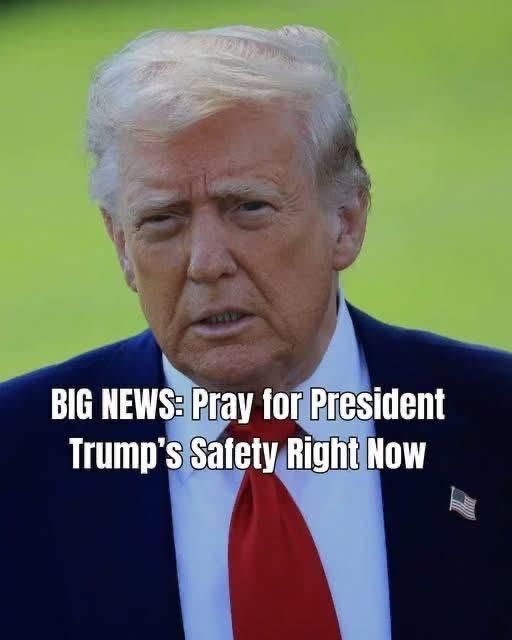
The United States’ political landscape abruptly and dramatically changed when federal prosecutors filed their broad indictment. This was a direct, focused legal attack against a former US president, not a collection of insignificant procedural details or bureaucratic errors. A turning point in American history is represented by the allegations brought forth, which include conspiracy to defraud the federal government, conspiracy to hinder an official action, obstruction of justice, and conspiracy to violate constitutional rights. Federal investigators contend that these claims, which are presented with careful and thorough legal clarity, create a story that goes far beyond conventional political play and into the realm of systematic criminal activity.
In order to fully understand the scope of this legal dispute, one must return to the unstable environment that characterized the United States in the last few weeks of 2020. Partisan tensions were like a high-voltage wire, shattering the country. assertions of extensive electoral fraud started to increase while ballots were still being processed in crucial jurisdictions. These assertions were reinforced by constant repetition on social media, in interviews on television, and in large-scale public gatherings. Millions of supporters received a single, powerful message: the election had been rigged and the democratic process had been compromised.
But the indictment offers a startling, contradicting look into what was going on behind the scenes. The former president was repeatedly warned by senior campaign advisors, cybersecurity specialists, high-ranking government officials, and legal counsel that there was no reliable evidence to back up these widespread fraud allegations, according to evidence presented by the prosecution. The public messaging did not change in spite of these internal warnings; on the contrary, it became more intense. This documented divergence forms the basis of the government’s fraud accusation, which holds that the former president continued to promote his public statements as the focal point of a calculated attempt to reverse the certified results despite being fully aware that they were unfounded. The indictment depicts these acts as a purposeful and systematic attempt to mislead the American people as well as the same government institutions entrusted with the peaceful transfer of power, rather than just as the rough and tumble of political pressure.
The case’s scope additionally include the events of January 6, which was normally a day of procedural and symbolic certification but instead became the focus of heated political maneuvering. The goal, according to the prosecution, was to prevent or seriously postpone the joint session of Congress. Several separate yet coordinated branches of action were purportedly involved in this endeavor. The gathering of “alternate electors” in a number of crucial swing states was one such branch. Even though their states had already certified their results in favor of Joe Biden, these people signed official-looking documents claiming their legality. According to the accusation, this was a deliberate attempt to cause disorder, provide political pressure a justification, and possibly pave the way to change the outcome of the election rather than a symbolic protest.
At the same time, the case exposes a vigorous push to force state-level officials, such as electoral boards, secretaries of state, and governors, to reject or reconsider results they had previously approved. The indictment combines urgent communications, private meetings, and public phone calls to create a mosaic of a coordinated effort to persuade local officials to either reject established counts or locate missing ballots. These attempts are closely connected to the obstruction charges. The ultimate goal, according to the prosecution, was to interfere with the joint session of Congress. The indictment asserts that the former president’s constant insistence that the certification may be canceled played a crucial part in fostering the unstable atmosphere that ultimately erupted into violence, even though it does not specifically accuse him of violating the Capitol.
The conspiracy to violate civil rights, a law that originated in the post-Civil War era and was first designed to protect the voting rights of recently freed slaves, is one of the case’s most legally unique elements. Prosecutors contend that attempts to invalidate legitimate election results in this day and age amounted to an attempt to deny millions of voters the integrity and worth of their ballots. Even if this legal application is unconventional, it shows how seriously the government takes the purported interference with citizens’ fundamental democratic right to choose their own leaders.
The accused has insisted that his acts were completely legal throughout these proceedings. He contends that rather than attacking the democratic process, he was actively defending election integrity and speaking up for voters’ rights. He has continuously portrayed the investigations and ensuing indictments as political persecution, a concerted effort by the federal establishment to silence him and the populist movement he stands for. Many of his supporters share this opinion, seeing the allegations as the most recent development in a long-running conflict between Trump and the institutional establishment. Many of them believe that the federal court system is fundamentally biased. On the other hand, his detractors contend that no president, past or current, should be exempt from accountability due to the fundamentals of the rule of law. For them, the lawsuit is about upholding the fundamental, non-negotiable norms that keep the American political process running smoothly rather than party politics.
The legal system, which must navigate a situation of extraordinary political volatility, is caught between these two sharply divided parties. Maintaining the integrity of the evidence, handling witness testimony, and carrying out a complex legal strategy under the relentless scrutiny of a public that has already formed its opinions are all difficult balancing acts. Legally speaking, conspiracy accusations are frequently strong because the government only needs to demonstrate that an agreement was made and that overt actions were taken to carry it out, not necessarily that the conspiracy was successful in achieving its final purpose. As a result, internal correspondence—emails, texts, statement drafts, and confidential memos—will probably serve as the trial’s furnace.
However, the prosecution still faces formidable obstacles. In order to prove that the former president truly understood his fraud charges were untrue and continued with them, they must prove intent beyond a reasonable doubt. His defense would probably center on his subjective belief, claiming that he genuinely thought there were anomalies. The basis of the government’s criminal accusations may be undermined if the defense can raise even the slightest doubt about his mental condition.
The nation must deal with the inevitable reality of hearings, motions, and an unparalleled barrage of media coverage as the indictment advances to the next stage. The trial won’t take place in a vacuum; rather, it will take place in front of a country that is already overrun with prejudice, noise, and contradicting facts. Beyond the political rhetoric and partisan soundbites, the case ultimately compels a deep national reflection on a straightforward but crucial question: where exactly is the line between aggressive political pressure and criminal conduct when a president refuses to accept the outcome of the election and uses all of his office’s resources to contest it? In the upcoming months, this answer will only be decided by the courts. The country is preparing for a protracted period of conflict regardless of the outcome. Seeing the collision of justice and politics in real time is a historic phenomenon that will change the course of the nation for future generations. It is unprecedented for an American president to face such serious allegations.