Every night, millions of people climb into bed believing that simply getting enough sleep is the key to waking up refreshed. Yet one often-overlooked detail may play a much larger role than many realize: the position you sleep in. For some individuals, especially those who experience nighttime heartburn or acid reflux, the way the body is positioned during sleep can influence comfort, digestion, and the quality of rest. While no single sleeping position is perfect for everyone, medical experts have found that one simple adjustment may help reduce troublesome symptoms for many people.
Most conversations about healthy sleep focus on the number of hours spent in bed. While getting seven to nine hours of sleep is certainly important for most adults, the posture your body maintains throughout the night can also affect how you feel the next morning. Sleep position influences everything from breathing and spinal alignment to circulation and digestive comfort. For people who regularly wake with heartburn, a sore throat, or an acidic taste in the mouth, changing sleeping positions may provide noticeable relief.
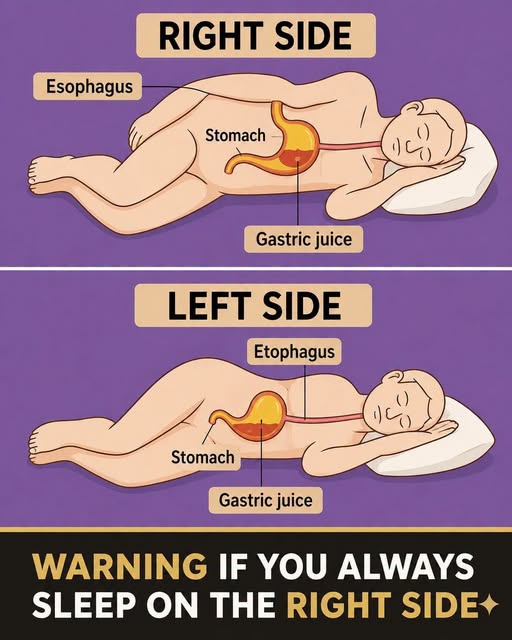
One position that has received considerable attention from sleep specialists and gastroenterologists is sleeping on the left side. This recommendation is based largely on the body’s anatomy. The stomach naturally sits slightly to the left side of the abdomen, while the connection between the stomach and the esophagus is positioned in a way that allows gravity to help keep stomach contents where they belong when lying on the left side.
For individuals living with gastroesophageal reflux disease (GERD) or frequent acid reflux, this natural positioning may reduce the amount of stomach acid that flows back into the esophagus during sleep. Since acid reflux often becomes worse when lying flat, using gravity to your advantage can help decrease irritation, reduce nighttime discomfort, and improve overall sleep quality.
Many people with reflux describe waking suddenly because of burning sensations in the chest, coughing, or a feeling of acid reaching the throat. Others experience hoarseness, frequent throat clearing, or interrupted sleep without immediately realizing acid reflux may be contributing to the problem. Sleeping on the left side does not cure GERD, but research suggests it may reduce the frequency and severity of reflux episodes for some individuals.
By comparison, sleeping on the right side may allow stomach contents to move closer to the lower esophageal sphincter—the muscular valve separating the stomach from the esophagus. In people prone to reflux, this position may make it easier for acid to travel upward, particularly after large evening meals or alcohol consumption. However, this does not mean right-side sleeping is harmful for everyone. Many people sleep comfortably on their right side without experiencing digestive symptoms.
Comfort remains an important part of healthy sleep. The best sleeping position is ultimately one that allows you to rest comfortably while supporting your individual health needs. People with shoulder pain, certain heart conditions, pregnancy, sleep apnea, or musculoskeletal problems may receive different recommendations from their healthcare providers depending on their specific circumstances.
Sleep position works best when combined with other healthy bedtime habits. Eating smaller dinners, avoiding heavy meals shortly before bedtime, limiting alcohol late in the evening, maintaining a healthy body weight, and using supportive pillows and a comfortable mattress can all contribute to better sleep and fewer nighttime digestive symptoms. For some individuals with persistent reflux, slightly elevating the head of the bed may provide additional relief by helping gravity keep stomach acid from moving upward during the night.
It’s also important to recognize when lifestyle adjustments are not enough. Frequent heartburn, chronic reflux, difficulty swallowing, unexplained weight loss, persistent coughing, or symptoms that regularly interrupt sleep should be evaluated by a healthcare professional. While sleeping position may ease symptoms, ongoing digestive problems can sometimes indicate an underlying medical condition that requires diagnosis and treatment.
Healthy sleep is about much more than simply closing your eyes for eight hours. The position you choose, the habits you practice before bedtime, and your overall health all work together to determine how restorative your nights truly are. A small change, such as sleeping on your left side if you struggle with nighttime reflux, may help many people wake feeling more comfortable and better rested.
The body often gives subtle signals when something isn’t quite right. Paying attention to those signals—and making simple, evidence-based adjustments when appropriate—can improve both sleep quality and everyday well-being. Sometimes a better night’s sleep begins not by adding another routine, but by making one thoughtful change to the way you settle into bed each night.
:::