# Farrah Fawcett’s Greatest Worry Was Her Son: The Painful Story Behind Her Final Years
Farrah Fawcett faced one of the most difficult battles of her life when she was diagnosed with cancer. But behind the headlines, the hospital visits, and the public attention surrounding her illness, there was another source of heartbreak that continued to weigh on her: the future of her only son, Redmond O’Neal.
To millions of people, Farrah was an unforgettable Hollywood star, admired for her beauty, talent, and iconic performances. But to Redmond, she was something much more personal. She was his mother, the person who repeatedly tried to guide him through addiction, personal struggles, and periods of instability.
As her own health deteriorated, Fawcett reportedly became increasingly concerned about what would happen to her son when she was no longer there to protect him.
Her story was not simply about a famous actress confronting a life-threatening illness. It was also about a mother trying to prepare her child for a future she desperately wished she could be part of.
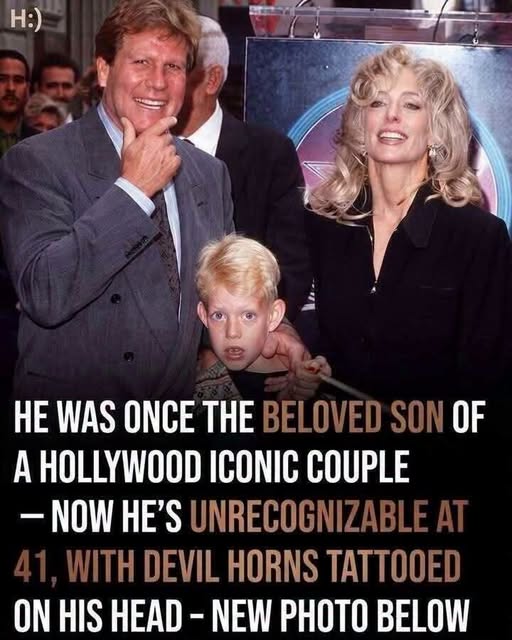
Redmond grew up in a household connected to Hollywood fame. His parents, Farrah Fawcett and actor Ryan O’Neal, were recognizable figures whose personal lives attracted enormous public attention. Growing up around celebrity brought opportunities and privileges, but it also meant living under a level of scrutiny that few children experience.
Behind the public image, the family faced difficulties of its own. Redmond’s relationship with his parents was complicated by family tensions and his struggles with substance abuse. As he grew older, his personal problems became increasingly visible, attracting media attention and public discussion.
For Farrah, however, he was never simply another celebrity headline.
He was her son, and she continued trying to help him despite the emotional and practical difficulties involved. Like many parents dealing with a child struggling with addiction, she faced the painful reality that love and support could not automatically make the problem disappear.
There were periods of hope, followed by further challenges. The uncertainty surrounding Redmond’s future became especially difficult as Farrah began facing her own serious medical battle.
In 2006, Fawcett was diagnosed with anal cancer. Her fight against the disease would become a deeply personal and difficult chapter of her life. Although she had spent decades in front of cameras, she eventually allowed audiences to see parts of her medical journey through the documentary *Farrah’s Story*.
The documentary offered a glimpse into the emotional and physical challenges she experienced while pursuing treatment. It also revealed a woman determined to keep fighting, even when the circumstances became increasingly difficult.
Yet, alongside her struggle for survival, her concerns about Redmond remained.
She reportedly worried about whether he would be able to manage his life without her guidance and support. The thought of leaving him behind while he was still dealing with personal difficulties was particularly painful.
As a mother, she wanted to make sure that he would have some form of protection and financial support after her death. But she also understood that simply leaving someone a large inheritance does not necessarily solve the problems they are facing.
According to accounts of her estate arrangements, Fawcett included provisions intended to provide for Redmond while limiting the possibility that an unrestricted inheritance could contribute to destructive decisions.
The intention was to create a measure of security for her son, even if she could no longer be physically present to help him.
It was a difficult balance. She wanted him to have support, but she also wanted to protect the future she hoped he could build for himself.
On June 25, 2009, Farrah Fawcett died at the age of 62 after her battle with cancer.
Her death marked the end of an extraordinary career and left behind family members who had to continue without her. For Redmond, the loss was deeply personal. One of the people who had repeatedly tried to support him through his most difficult moments was suddenly gone.
In the years that followed, his struggles continued to attract public attention. Legal problems and substance-abuse issues became part of the headlines, creating a public picture that often focused on his difficulties rather than the complicated human story behind them.
But those headlines could never fully explain the relationship between mother and son.
They could not capture the private conversations, the efforts to help, the moments of hope, or the emotional weight of a mother who wanted desperately to see her child find stability.
Farrah’s story also highlights something that many families understand through personal experience: addiction affects more than the individual struggling with it. It can create uncertainty, fear, exhaustion, and heartbreak for parents and loved ones who want to help but cannot control every outcome.
A parent can offer encouragement, treatment opportunities, financial safeguards, and unconditional love. But recovery is rarely a simple or predictable journey.
Fawcett’s final years were therefore marked by two difficult battles: the fight against a serious illness and the emotional struggle of worrying about the child she would eventually have to leave behind.
Her legacy remains connected to her remarkable career, but her story as a mother reveals another side of her life—one far removed from Hollywood glamour.
She wanted her son to have a future. She wanted him to be safe, supported, and capable of finding his own way.
And perhaps the most heartbreaking part of her story is that she could make plans, leave protections, and offer all the love she had, but she could not guarantee what would happen after she was gone.
Farrah Fawcett’s life reminds us that even the most celebrated people face deeply personal struggles that fame cannot solve. Behind the photographs and public appearances was a mother who loved her son and hoped he would eventually find peace.
Her greatest concern was never the spotlight or the attention surrounding her name.
It was the future of the child she would always love, even when she could no longer be there to guide him.