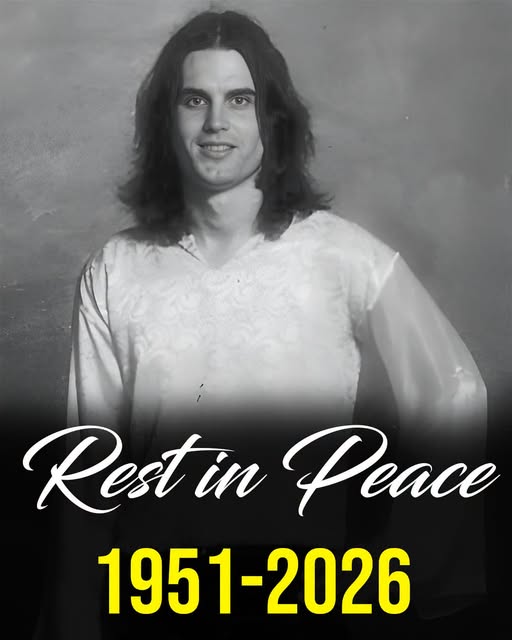
The news hit like a chord you never want to hear. Christopher North, the Hammond B3 King of Ambrosia, is gone at 75, and the silence he leaves behind feels almost unreal, as if someone pulled the power from a stage mid-performance. Fans are stunned into stillness. Bandmates are left searching for words that don’t quite exist. And somewhere in that shared shock, the story of how a dimly lit room, a bottle of wine, and a roaring organ once helped shape a piece of rock history begins to feel even more distant, almost like a memory the world is afraid to let fade.
He wasn’t just a keyboardist sitting quietly behind the front line of the band. Christopher North was the atmosphere itself, the unseen current that ran through every note Ambrosia played. His Hammond B3 didn’t simply accompany the music—it expanded it, breathed into it, gave it depth and weight. Where others might have filled space, he built entire emotional landscapes. His swirling organ textures and soulful piano lines didn’t sit on top of songs like decoration; they lived inside them, weaving through every chorus and bridge until the music felt larger than the sum of its parts.
In the hands of Ambrosia, soft rock could have stayed soft, but North helped turn it into something cinematic, something wide and emotionally charged. Tracks like “Biggest Part of Me” and “How Much I Feel” didn’t just become hits—they became moments people attached themselves to. First dances under low lights, long drives where the road felt endless, quiet heartbreaks that needed a voice without words. His playing is embedded in those memories, even for listeners who never knew his name until much later.
The band often spoke about how naturally he seemed to disappear into the music while still shaping everything around him. There’s an image they’ve returned to over the years: North alone in a dim room, the glow of his Hammond organ cutting through the dark, a bottle of wine nearby, and music already spilling out of him long before anyone else arrived. It wasn’t performance at that moment—it was immersion, as if he was building a world from sound that he would eventually invite others into.
Even as illness began to cast its shadow over his later years, those who knew him say he never truly left the music. He stayed connected to the band’s legacy, to the fans who kept the songs alive, to the recordings that continued to find new listeners decades later. There was a quiet consistency in that—an understanding that music doesn’t end when a tour stops or a life slows down. It continues elsewhere, carried forward by memory and replay and rediscovery.
Now, with his passing at 75, that continuity feels heavier, more significant. The organ lines he once played don’t vanish; they linger in every record, every vinyl crackle, every digital stream. Each time a listener presses play on an Ambrosia song, they step unknowingly into that same sonic space he once filled alone, and then shared with the world. And in that space, Christopher North’s presence doesn’t disappear—it echoes, steady and unmistakable, as if the music itself is still remembering him.