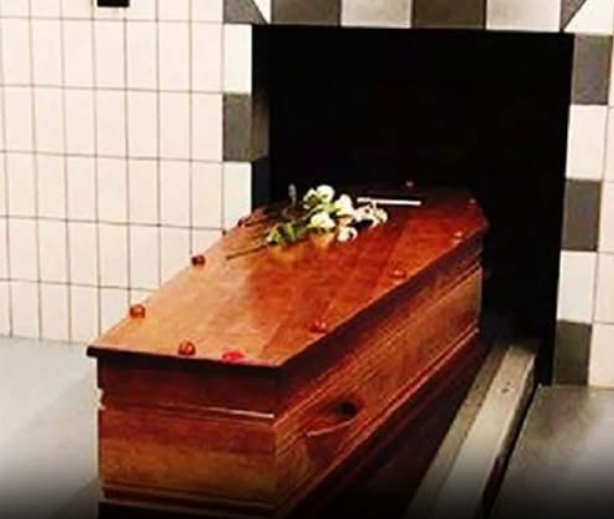
Fear often grows fastest in silence, especially when it surrounds something as emotionally heavy as cremation. For many families, the hardest worry is not just loss itself, but the unsettling thought that follows: What if the ashes they receive are not truly their loved one’s? It is a fear rooted less in fact and more in imagination, but one that can feel very real in moments of grief. Former funeral workers have begun speaking more openly about what actually happens behind the closed doors of crematoriums, and their accounts often challenge the assumptions people carry with them.
In reality, modern cremation facilities operate under strict systems designed to prevent exactly the kind of mistake people fear. From the moment a body enters the facility, identity becomes the most important responsibility in the entire process. A unique identification tag—often made of heat-resistant metal—accompanies the deceased at every stage. It is not simply attached once and forgotten; it follows the individual through each transfer point, like a permanent thread of identity that is never allowed to break. Alongside this, documentation is continuously verified: names, case numbers, signatures, and time logs are checked and rechecked by multiple staff members, ensuring that every record aligns perfectly before anything proceeds.
What many people outside the profession don’t realize is how deeply emotional awareness is built into these procedures. Staff are trained to avoid clinical detachment in the way outsiders might expect. Instead of thinking in abstract terms like “remains” or “cases,” they are encouraged to recognize the human life behind every file. The language itself matters, because it reinforces attention, responsibility, and respect. A person arriving for cremation is still treated, in every practical sense, as someone’s parent, child, spouse, or sibling—not as an anonymous task.
Even the steps that might seem purely technical are handled with care and caution. Personal belongings are not simply discarded or mixed in; they are removed according to strict policies, documented, and returned to families whenever possible. Medical implants or devices are identified in advance to prevent risks during the cremation process, including rare but serious safety hazards. The chamber itself is not left unattended or uncontrolled; it is monitored throughout, ensuring both technical precision and dignified handling from start to finish.
When the process is complete, what remains is carefully gathered and processed according to regulated procedures. The ashes are placed into clearly labeled containers, matched again with their identification records, and accompanied by official certification that traces every step of the journey. For families, this moment often marks the end of a long and painful waiting period, but for staff, it represents the final confirmation that every safeguard has worked as intended.
Behind all of this structure is a quieter truth: the system is built not only on regulation, but on trust. Every protocol exists because the emotional weight of the task demands absolute care. While grief may create fears of error or uncertainty, the actual process is designed to minimize those risks through repetition, verification, and accountability.
In the end, cremation is not treated as a simple procedure, but as a final responsibility carried out under layers of oversight. And within those layers, the goal remains consistent and deeply human—to ensure that what is returned to a family is not just correctly identified, but handled with the dignity that matches the life it represents.