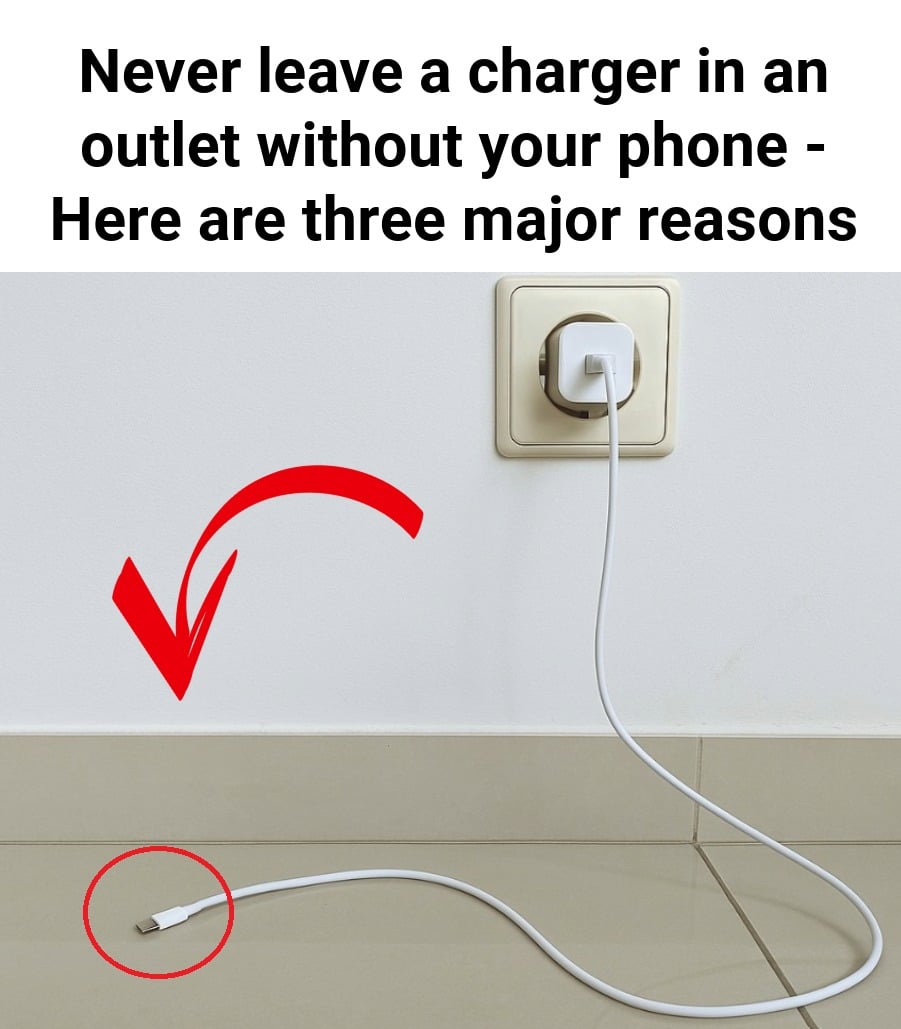
You yank the phone free, grab your keys, and rush out the door.
The charger stays behind, hanging silently in the outlet like it always does. Most people barely notice it anymore. It has become part of the background of modern life — as ordinary and invisible as light switches or door handles. We assume that once the phone is disconnected, the charger becomes harmless too. In reality, that small plastic block is still quietly working long after you stop thinking about it.
Even with nothing attached, a plugged-in charger is still drawing electricity.
The amount is usually small, almost microscopic for a single device, which is why most people never feel concerned. But the charger remains active internally every second it stays connected to the outlet. Tiny electrical components continue converting energy, generating slight heat, and slowly aging over time. The process is subtle enough to ignore, yet constant enough to matter when multiplied across dozens of devices and millions of homes.
Modern life is filled with these silent energy leaks.
Phone chargers. Laptop adapters. Smart speakers. Coffee machines glowing with standby lights. Televisions waiting for remote signals. Individually, each one consumes only a small amount of electricity. Together, they create what energy experts often call “phantom load” or “vampire power” — energy used by electronics even when they appear inactive.
One forgotten charger will not suddenly double your electricity bill. That part is often exaggerated online. But the larger issue is cumulative habit. A house filled with permanently plugged-in devices slowly wastes energy every hour of every day. Scale that globally across millions of households, and the impact becomes surprisingly significant both financially and environmentally.
But electricity use is only part of the story.
Chargers are still electronic devices, and like all electronics, they slowly wear down with time and heat. Even when idle, internal components experience stress simply from remaining powered continuously. Higher-quality chargers usually manage this safely for long periods. Cheap, counterfeit, or damaged chargers, however, can become far less predictable.
That’s where the real concern begins.
Low-quality chargers are often manufactured with weaker insulation, poor heat management, or cheaper internal materials. Left plugged in constantly, especially in warm environments or overloaded outlets, they may overheat gradually without obvious warning signs. Most will never cause serious problems. But electrical fires caused by faulty chargers and damaged power accessories are real enough that safety experts consistently warn against treating them carelessly.
The danger increases further when chargers become physically damaged — bent cables, cracked plastic, exposed wires, or loose connections. Many people continue using chargers long after wear becomes visible because the device “still works.” But internally, aging components may already be degrading in ways impossible to see from the outside.
Even the outlet itself experiences long-term stress.
Outlets loosen gradually from years of constant plugging and unplugging. A charger left hanging permanently in the wall can slowly weaken the socket connection over time, particularly if the charger is heavy or frequently bumped. Loose electrical connections create more heat, more instability, and greater potential for malfunction.
None of this means every plugged-in charger is secretly waiting to burn down a house. The risk from a single modern charger is generally low, especially if it’s certified, undamaged, and manufactured properly. But the habit of leaving chargers connected indefinitely combines small inefficiencies with small risks that quietly accumulate over years.
And perhaps that’s why the habit matters psychologically too.
Unplugging devices becomes a tiny form of awareness in a world filled with invisible consumption. It takes only a second, costs nothing, and reinforces the idea that convenience does not always need to become permanent waste. For people trying to lower electricity use, reduce unnecessary heat generation, extend device lifespan, or simply create safer habits around electronics, unplugging chargers is one of the easiest changes possible.
What makes the issue unsettling is not dramatic danger, but invisibility. The charger looks inactive. Silent. Dead. Yet energy is still moving through it constantly while nobody is paying attention.
That tiny plastic brick sitting quietly in the wall may seem insignificant. But multiplied across modern life, it becomes part of a much larger story about the hidden ways our everyday habits continue consuming energy, aging devices, and shaping the spaces we live in long after we stop noticing them.