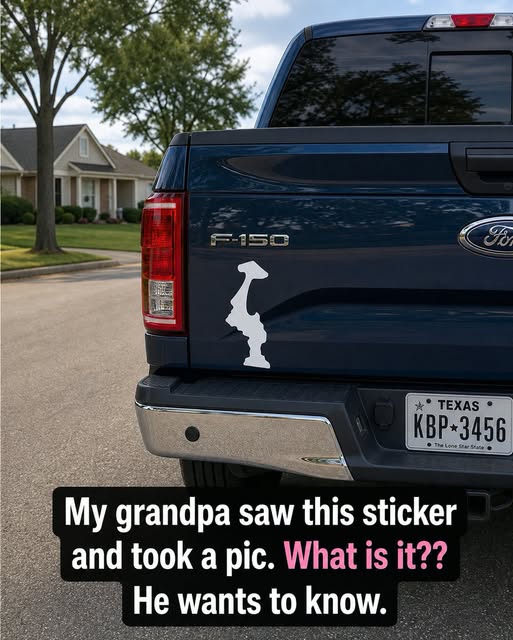
The first time you see it, you think someone messed up. An upside-down Washington State, slapped crooked on the back of a car, drifting down some distant highway. For a second, it looks like someone installed a sticker backward or simply wasn’t paying attention. But it isn’t a mistake. It’s a quiet confession. A homesick joke. A love letter in vinyl. People leave Washington, sometimes for work, family, opportunity, or a completely different life, but Washington doesn’t quite leave them.
That strange little decal can say something without using a single word. To the person driving the car, it may represent a place they once called home. To everyone else, it may look like nothing more than an unusual sticker. But those who recognize the meaning often understand immediately that the upside-down shape carries something deeper: a connection to a place that remains part of someone’s identity even after they have moved thousands of miles away.
The inverted outline has become a moving postcard from the Pacific Northwest, carried on bumpers and tailgates far from the Cascades and coastline. Instead of hanging on a wall, the image travels. It appears on cars crossing unfamiliar states, parked outside grocery stores, sitting in office parking lots, or traveling down highways where the landscape looks nothing like Washington.
For those who once called Washington home, flipping the state on its head can capture the strange feeling of life turned in a new direction. The map is literally reversed, yet the emotional connection remains. Everything around them may have changed—the weather, the landscape, the people, the routines—but some part of them still orients north and west.
That is what makes the symbol so interesting.
It is playful, imperfect, and deeply personal—exactly how memory works.
Nobody needs to explain the sticker to the person who placed it there. They already know what it means to them. Maybe it reminds them of a childhood home. Maybe it represents the city where they met their spouse. Maybe it brings back memories of rainy mornings, mountain drives, or summers spent near the water.
For someone else, it might simply be a reminder of the place where they grew up and thought they would stay forever.
Life, of course, has a way of changing those plans.
People leave Washington for countless reasons. They take jobs in other states. They move closer to family. They follow relationships. They chase opportunities. They seek warmer weather. They simply want to experience something different. Sometimes the decision is exciting. Sometimes it is painful. Sometimes it is both.
Moving away does not necessarily mean letting go.
In fact, distance can make a place feel even more important.
When you’re living somewhere every day, the familiar details can become invisible. The rain becomes something to complain about. Traffic becomes routine. The mountains become part of the background. Ferry rides become transportation rather than an experience.
But after leaving, those ordinary details can become memories you desperately want to experience again.
Suddenly, the rain feels nostalgic.
The smell of wet pavement feels familiar.
A mountain silhouette in a photograph can bring back an entire chapter of life.
And a simple outline of the state on the back of a car can become enough to trigger all of it.
Without any official group, organization, or rulebook behind it, the symbol remains open to interpretation. There is no single definition everyone has to follow. That may be part of its charm. People can attach their own meaning to the image without needing permission from anyone else.
Some see distance.
Some see perspective.
Some see a life turned upside down.
Some simply see Washington from a different angle.
And others see a reminder of trailheads, ferry rides, wet sidewalks, evergreen forests, coffee shops, gray skies, and mountain silhouettes appearing at dusk.
The meaning depends on the person looking at it.
That flexibility makes the decal feel less like a traditional emblem and more like a personal memory.
It is not necessarily about politics, geography, or even state pride in the conventional sense. It is about belonging.
The kind of belonging that survives distance.
The kind that can remain even when someone has not lived in Washington for years.
The kind that can be carried across the country on the back of a car.
There is also something fitting about the fact that the symbol moves. Washington itself becomes part of the journey. The state outline travels into places where people may not recognize it immediately. A driver in another part of the country might see the shape and wonder why it is upside down. Someone else may recognize it instantly.
That is when the sticker becomes a conversation starter.
On road trips and in parking lots, it can spark unexpected exchanges between strangers who recognize the shape and the stories it carries. Someone may point at the decal and say, “Are you from Washington?” Suddenly two people who had never met have a shared point of connection.
They may compare hometowns.
They may talk about weather.
They may remember favorite roads.
They may laugh about how much they miss the rain—or how little they miss it.
A tiny piece of vinyl can create a conversation that otherwise never would have happened.
That is a remarkable amount of emotional weight for something so small.
Perhaps that is because maps have always carried more meaning than geography. A map can represent home, distance, childhood, family, memories, and the places that shaped us. We often think of maps as tools for finding where we are going, but emotionally they can also tell us where we came from.
The upside-down Washington decal plays with that idea.
It takes a familiar shape and changes its orientation, creating something slightly strange. The viewer has to pause. The brain expects the state to look a certain way, and when it doesn’t, curiosity takes over.
Then comes recognition.
Oh.
Washington.
Upside down.
Why?
And that question opens the door to the story behind it.
Maybe the driver moved away.
Maybe they are a Washington native living across the country.
Maybe they simply like the design.
Maybe the decal carries a personal meaning that no one else will ever know.
That uncertainty is part of what makes it interesting.
Not every symbol needs a universal explanation.
Sometimes the most meaningful symbols are the ones whose significance belongs primarily to the person carrying them.
The decal can also represent the strange relationship people have with the places they leave behind. We often imagine moving away as a clean break, but it rarely works that way. A person can build a completely new life while still carrying pieces of the old one.
They can have a new address and still think about the old neighborhood.
They can make new friends while remembering childhood ones.
They can learn new roads while automatically remembering how to get home.
They can live somewhere sunny and still occasionally miss the rain.
Home is not always the place where you currently live.
Sometimes home is the place your memory returns to without being asked.
That is why the upside-down Washington decal can feel like more than a quirky design. It becomes a small declaration that distance has not erased belonging.
The state may be behind them geographically, but emotionally, it remains present.
Every highway mile creates more distance, yet the symbol stays attached to the vehicle, quietly traveling with them.
There is something almost poetic about that.
A map that normally tells you where a place is has become a reminder that a place can remain with you even when you are far away from it.
And maybe that is the real reason people notice these decals.
They recognize something familiar in the idea.
Everyone has a place they miss.
Everyone has a landscape that feels like home.
Everyone has a smell, sound, road, building, or ordinary routine that can suddenly transport them backward through time.
For some people, that place is Washington.
For others, it is somewhere completely different.
But the emotion is universal.
In the end, that upside-down decal is less a map and more a mirror. It reflects distance, memory, identity, and the complicated feeling of leaving somewhere without completely leaving it behind.
Washington may be upside down on the bumper.
But for the person driving that car, it may still point toward home.