I accidentally served a quiche that left my friends with an evening none of us will ever forget. It wasn’t the kind of food poisoning that sent people rushing to the hospital or calling an ambulance, but it was bad enough that dinner ended with everyone clutching their stomachs instead of asking for another slice. As the evening wore on, the cheerful conversation faded into uncomfortable silence, and more than one person glanced suspiciously toward my kitchen. I replayed every step of the recipe in my mind, trying to figure out what had gone wrong. The vegetables were fresh. The cheese smelled perfectly normal. The pastry had baked beautifully. The eggs looked completely fine. So how had something so ordinary turned into such an unpleasant experience?
For days afterward, I kept thinking about those eggs. I couldn’t shake the feeling that I had missed some obvious warning sign. The shells hadn’t been cracked. There was no unpleasant odor when I opened them. The yolks looked bright, and the whites appeared perfectly normal. Everything suggested they were safe to use. Yet something clearly hadn’t been right.
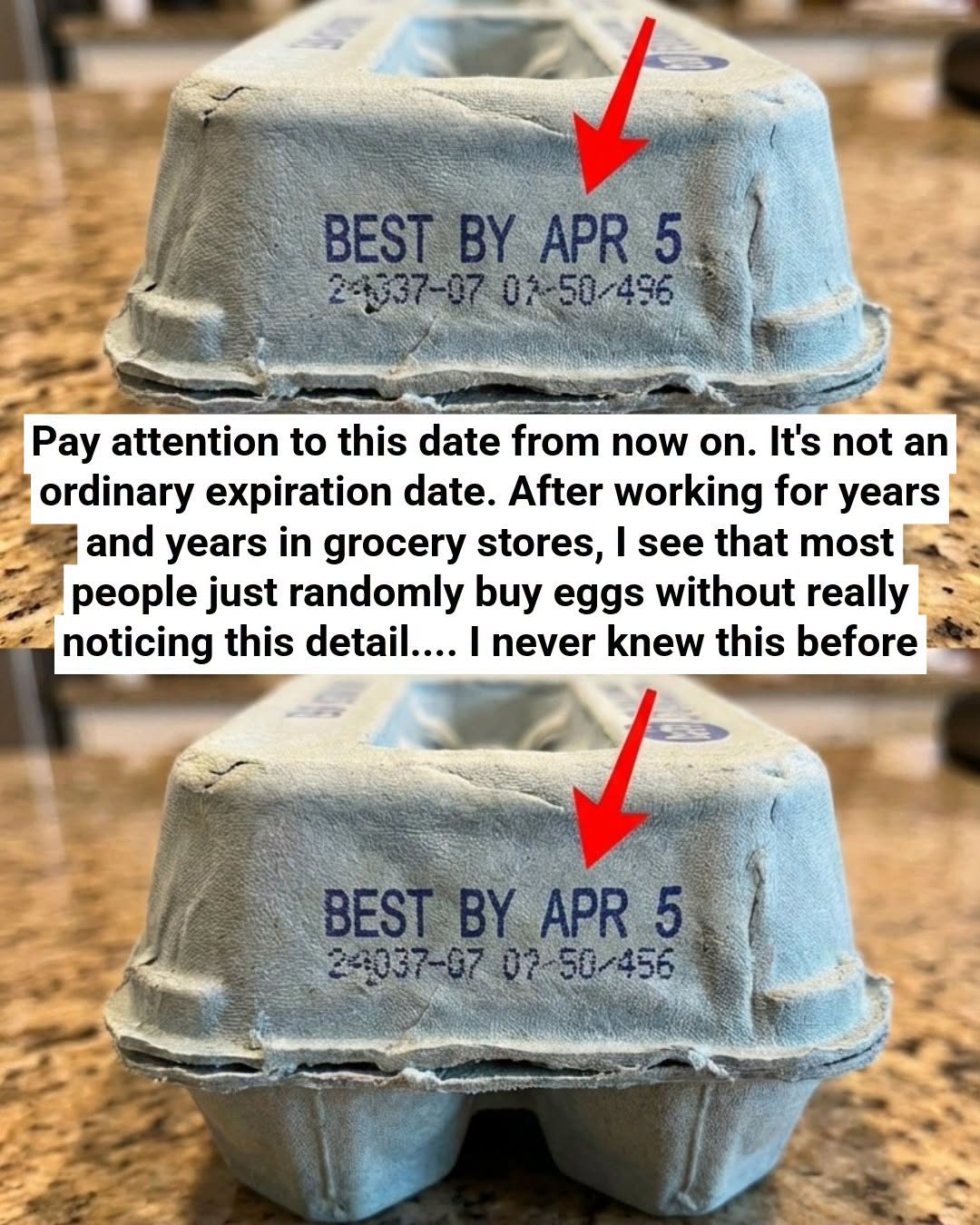
Determined not to repeat the mistake, I started learning more about how eggs are labeled. Like many shoppers, I had always focused almost entirely on the large “sell by” or “best by” date printed on the carton. If that date hadn’t passed, I assumed everything inside was perfectly fresh. It turns out the story is a little more complicated than that.
What I discovered first was a small three-digit number quietly stamped on the side of the carton. I’d seen it countless times before without giving it a second thought. Those tiny numbers are known as the Julian pack date, and they represent the day of the year the eggs were packed. Instead of showing a calendar month and day, the number counts sequentially from 001 for January 1 through 365 (or 366 during leap years) for December 31.
Once I understood that system, everything suddenly made much more sense. A carton marked with a Julian date of 032, for example, indicates the eggs were packed on the 32nd day of the year. Comparing those numbers between cartons often gives a much clearer picture of freshness than simply looking at the larger “sell by” date, especially when several cartons remain well within their recommended selling period.
That realization completely changed the way I shop. Instead of grabbing the first carton within reach, I now compare the Julian dates and choose the most recently packed eggs whenever possible. The process takes only a few extra seconds but often results in noticeably fresher eggs.
The difference became surprisingly obvious once I started paying attention. Fresher eggs tend to have thicker, firmer whites that hold their shape better in the pan. Their yolks usually appear rounder and stand higher rather than spreading out quickly. Whether frying, poaching, or baking, the results often look and perform better when the eggs are especially fresh.
Of course, freshness isn’t determined by the pack date alone. Proper refrigeration plays an equally important role. Eggs should be kept consistently cold after purchase, ideally remaining refrigerated until they’re ready to be used. Temperature fluctuations can shorten shelf life even when the carton’s printed dates suggest plenty of time remains.
While researching egg cartons, I also noticed another code I’d ignored for years: the plant number. Printed with a “P” followed by several digits, this identifier tells consumers which processing facility packaged the eggs. Most of the time it goes unnoticed, but during food recalls, that small number becomes incredibly important because it allows shoppers to quickly determine whether their eggs are included in the affected batches.
Then there are the USDA grades. Grade AA, Grade A, and Grade B primarily describe interior quality and shell appearance rather than food safety. Grade AA eggs generally have the firmest whites and highest-quality appearance, making them especially popular for frying and poaching. Grade A eggs, the most common choice found in grocery stores, also provide excellent quality for everyday cooking and baking.
Learning about marketing labels proved equally interesting. Cartons proudly displaying phrases such as “cage-free,” “free-range,” “pasture-raised,” “organic,” or “vegetarian-fed” often attract attention, but each term carries its own specific definition. Some labels are regulated with established standards, while others may communicate less information than shoppers assume. Understanding what each claim actually means helps consumers make choices that best match their priorities rather than relying solely on attractive packaging.
One simple habit I also adopted was checking eggs at home before using them. If I’m ever uncertain about an older carton, I perform a quick freshness test by placing an egg in a bowl of cold water. Very fresh eggs usually sink and rest flat on the bottom. As eggs age, the air pocket inside gradually enlarges, causing them to stand upright or eventually float. While floating doesn’t automatically mean an egg is unsafe, it’s generally a good indication that the egg is quite old and deserves closer inspection.
Of course, the most reliable safety checks remain surprisingly straightforward. Cracked shells, unpleasant odors after cracking, unusual discoloration, or abnormal textures are all good reasons to discard an egg immediately. No printed code can replace common sense when something clearly appears or smells wrong.
The experience taught me something much broader than how to read an egg carton. It reminded me that many of the small details printed on everyday food packaging exist for a reason. Information that seems unimportant at first glance often becomes valuable once we understand what it actually tells us.
Now grocery shopping looks a little different than it used to. I spend a few extra moments examining cartons, comparing Julian dates, checking shells for damage, and making sure everything appears properly refrigerated. It isn’t because I’ve become obsessed with eggs. It’s because a little knowledge can prevent unnecessary problems before they ever reach the dinner table.
Fortunately, my friends eventually forgave the unfortunate quiche. We laugh about it now, though they’re still quick to ask whether I’ve “checked the eggs” whenever I volunteer to cook. I happily assure them that I have—and then probably check the carton one more time just to be certain.
These days, when I pick up a carton of eggs, I don’t just see breakfast ingredients. I see useful information quietly printed in small numbers that I once overlooked entirely. A quick glance at those codes takes only seconds, but it helps me serve meals with a little more confidence and a lot less worry.
In the end, learning how to read an egg carton wasn’t about becoming an expert. It was about understanding that safe, enjoyable cooking often begins long before we crack the first egg into the mixing bowl. A few extra moments of attention at the grocery store can make all the difference between a memorable meal for the right reasons—and one your guests remember for reasons you’d rather forget.