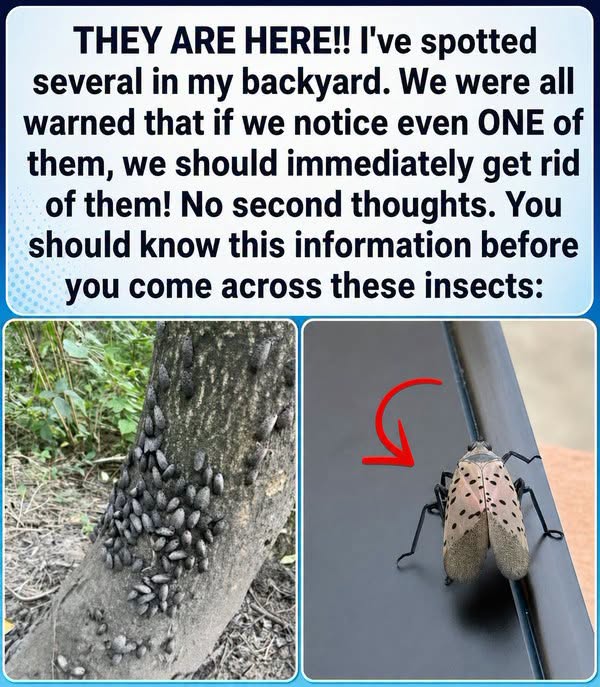
This Gray-and-Red Insect in Your Yard May Be an Invasive Pest
If You’ve Spotted a Gray Insect With Bright Red Markings Crawling Around Your Trees, Patio, or Garden, Here’s Why You Should Take a Closer Look.
You step outside to enjoy your yard and notice something unusual crawling along a tree trunk. Its body is gray, its legs are dark, and bright red markings stand out against its wings or abdomen.
At first, you might mistake it for an ordinary beetle. But depending on its appearance and location, it could be an invasive insect that deserves your attention.
One possibility is the spotted lanternfly, an invasive pest that has caused concern among homeowners, gardeners, and agricultural communities in parts of the United States.
However, several insects have similar colors, so identifying the species correctly is important before taking action.
1. Could It Be a Spotted Lanternfly?
<AsyncImageGroup query={[“adult spotted lanternfly gray spotted wings red hind wings close up”,”spotted lanternfly nymph black body bright red white spots close up”]} aspectRatio=”5:4″ layout=”bento” numPerQuery={1}/>
The spotted lanternfly (Lycorma delicatula) is native to parts of Asia and has become an invasive pest in areas where it has established populations.
Adult spotted lanternflies have distinctive grayish forewings covered with black spots. Their hindwings display striking red, black, and white markings that become especially visible when the wings are spread.
You may encounter them on tree trunks, vines, outdoor furniture, or other surfaces.
Young spotted lanternflies look different. Their early stages are black with white spots, while later nymphs develop noticeable red markings.
If your insect matches these features, it may be worth checking your local agricultural or environmental authority’s identification guide.
2. Why Can This Insect Be a Problem?
Spotted lanternflies feed on plant sap using specialized mouthparts. They are particularly associated with the tree of heaven, although they also feed on numerous other plants, including grapevines, fruit trees, and ornamental trees.
Heavy infestations can stress plants and affect agricultural production.
As they feed, these insects excrete a sugary substance called honeydew. This sticky residue can accumulate on leaves, patio furniture, vehicles, and other surfaces. It can also encourage the growth of black sooty mold.
Although the severity of damage varies by plant and infestation, large populations can create significant problems for vineyards and some other crops.
3. How Do Invasive Insects Spread?
Invasive insects can spread when people unintentionally transport them or their eggs.
Egg masses may be deposited on trees, outdoor equipment, vehicles, trailers, and other surfaces. If these objects are moved to new locations, the insects may travel with them.
This is one reason agricultural authorities sometimes issue guidance about inspecting vehicles and outdoor items in affected areas.
If you suspect an invasive pest, avoid transporting potentially infested materials to another location until you have checked local recommendations.
4. What Should You Do If You Find One?
If you believe you have spotted a spotted lanternfly, take a clear photograph before deciding what to do.
Confirm its identity. Compare the insect with an official identification guide or contact your local agricultural extension service.
Check local reporting guidance. Reporting requirements and recommended responses vary by region.
Avoid moving potentially infested items. Inspect vehicles, outdoor equipment, and other objects if local authorities advise it.
Follow official control recommendations. Do not apply pesticides indiscriminately, particularly near children, pets, pollinators, or edible plants.
In some affected U.S. regions, authorities recommend killing confirmed spotted lanternflies and removing egg masses. In other locations, identification and reporting may be the first priority.
5. Not Every Gray-and-Red Insect Is an Invasive Pest
<AsyncImage query=”gray red black insect on green garden leaf close up natural photography” aspectRatio=”16:9″ width=”100%”/>
Color alone is not enough to identify an insect.
Several harmless native insects and other species can display combinations of gray, red, black, and white. Mistaking one for an invasive pest could lead to unnecessary concern or the destruction of beneficial wildlife.
Look for the insect’s body shape, wing markings, size, and life stage. If you are unsure, a photograph and your location can help an expert narrow down the possibilities.
The Bottom Line
A gray-and-red insect in your yard could be a spotted lanternfly, but it could also be another species entirely.
The spotted lanternfly is worth recognizing because it can damage certain plants and spread through the movement of infested materials. Still, accurate identification is the first step toward an appropriate response.
If you see an unfamiliar insect with striking red markings, don’t panic. Take a photograph, check a reliable local identification resource, and follow your area’s guidance before deciding what to do.