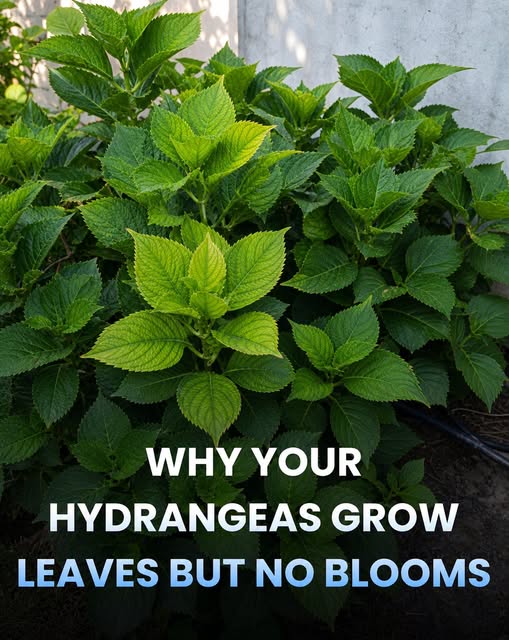
Your hydrangeas are not failing you.
You might be failing them.
One “routine” pruning session at the wrong moment can quietly erase an entire season of flowers, and the frustrating part is that you may not realize what happened until summer arrives.
The buds were there.
The plant was preparing.
Everything looked healthy.
Then the shears came out.
And suddenly, the flowers you were expecting never appeared.
Before you blame the nursery, the weather, the fertilizer, or the soil, take a closer look at **when and how you are pruning**.
Because with hydrangeas, timing can matter more than almost anything else.
### The biggest mistake: pruning without knowing your variety
Hydrangeas don’t all bloom the same way.
Some varieties produce flower buds on **old wood**—growth that developed during the previous season.
Others produce flowers on **new wood**—growth that develops during the current growing season.
That difference completely changes how you should prune.
If your hydrangea blooms on old wood and you cut it back aggressively in late winter or early spring, you may be removing the very stems carrying the flower buds for the coming summer.
The plant may survive.
It may even grow beautifully.
But when July arrives, you may be staring at a large, healthy green shrub with almost no flowers.
That’s when gardeners often assume something went wrong with the soil.
Maybe it needs more fertilizer.
Maybe it didn’t get enough sun.
Maybe the winter was too cold.
But sometimes the real culprit is sitting in the garden shed.
The pruning shears.
### Old wood means hidden flowers
This is why hydrangeas can be so frustrating.
The flower buds you want may already be sitting on the plant months before you expect to see flowers.
They can be small.
Easy to overlook.
And completely vulnerable to a well-intentioned pruning session.
You look at the shrub and think:
“It needs cleaning up.”
You remove long stems.
You shorten branches.
You make the plant look neat.
It looks fantastic.
And then summer arrives.
Nothing.
The plant didn’t fail.
You simply removed its future flowers.
That’s why pruning should never begin with the assumption that every hydrangea needs to be cut back.
First ask:
**What kind of hydrangea is this?**
That single question can save an entire season of blooms.
### Some hydrangeas are much more forgiving
Hydrangeas that flower on new wood are generally more tolerant of pruning because their flower buds develop on the current season’s growth.
That means pruning at the appropriate time can stimulate fresh growth without necessarily sacrificing the coming season’s flowers.
But even then, “more forgiving” doesn’t mean “cut everything.”
Heavy pruning can still produce problems.
You may encourage lots of leafy growth at the expense of the shape and structure you actually want.
And if you remove too much healthy wood, the plant has to spend energy replacing it.
So even with new-wood bloomers, pruning should have a reason.
Remove what is damaged.
Remove what is dead.
Improve the structure when necessary.
Control size when appropriate.
But don’t assume the plant needs to be reduced simply because pruning season has arrived.
### The safest approach is often the lightest one
Walk around your hydrangea before touching it.
Look at the stems.
Look for dead wood.
Look for broken branches.
Look for crossing or rubbing stems.
Look for weak growth.
Look for obvious structural problems.
Then ask whether each cut is actually necessary.
If a branch is healthy, productive, and growing in a useful direction, there may be no reason to remove it.
This is where experienced gardeners often behave differently from beginners.
Beginners sometimes prune because they believe pruning itself is good for the plant.
Experienced gardeners prune because something needs to be changed.
That’s an important distinction.
Pruning is not a chore that has to be completed simply because the calendar says so.
It is a tool.
Use it when the plant needs the tool.
### Don’t confuse dead flowers with dead branches
Another common mistake is removing far more than necessary when cleaning up spent blooms.
Dead flower heads can make a hydrangea look messy, but removing them doesn’t mean cutting deep into the plant.
Depending on the type of hydrangea, spent blooms can often be removed with relatively light cuts.
The goal is to clean up the plant while protecting healthy growth and future buds.
And sometimes, especially in colder climates, leaving old flower heads through winter can provide some protection for developing buds.
They may also add winter interest.
So there is no universal rule that every faded flower must immediately disappear.
Sometimes doing less is actually better.
### Timing matters enormously
For many old-wood hydrangeas, pruning immediately after flowering is a safer strategy than waiting until late winter or early spring.
Once flowering has finished, the plant has an opportunity to produce new growth that will mature and develop next year’s buds.
That is why the phrase **“prune after flowering”** is so important for many traditional old-wood types.
The exact timing depends on the variety, climate, and what you’re trying to accomplish.
But the basic principle remains:
Don’t blindly prune at the moment when you are most likely to remove next year’s flowers.
### Late-season pruning can create problems too
Another temptation is to do a major cleanup late in the growing season.
The garden is getting messy.
Summer is ending.
The hydrangea is enormous.
You want to make everything neat before winter.
But cutting aggressively late in the season can interfere with the plant’s natural preparation for the next cycle, particularly for varieties that set buds on old wood.
A few necessary cuts are one thing.
A major haircut is another.
If you’re unsure, identify the variety first.
A few minutes of research can prevent months of disappointment.
### Don’t prune just because the plant looks big
This is one of the hardest lessons for gardeners to accept.
A large hydrangea is not necessarily an unhealthy hydrangea.
Sometimes it is simply a large hydrangea.
Gardeners often feel compelled to make shrubs smaller because the plant has outgrown the space they originally imagined.
But aggressive pruning every year can become a cycle.
Cut it hard.
It grows back vigorously.
Cut it hard again.
And eventually the gardener wonders why the plant never seems to bloom properly.
Instead of repeatedly fighting the plant, consider whether the location and variety are appropriate for the space.
The best pruning sometimes happens before the plant is even planted:
**choose the right variety for the space.**
### Your tools matter too
When you do prune, use clean, sharp tools.
A dull blade can crush rather than cleanly cut a stem.
Dirty tools can potentially spread pathogens between plants.
Clean cuts heal more effectively than ragged, damaged ones.
You don’t need a complicated collection of equipment.
A properly maintained pair of bypass pruners is often enough for many routine cuts.
The goal isn’t to make pruning complicated.
It’s to make every cut deliberate.
### And don’t forget the weather
Even perfect pruning cannot protect a hydrangea from every environmental problem.
Late freezes can damage developing buds.
Extreme cold can injure old wood.
Drought can stress the plant.
Excessive moisture can create root problems.
Too much shade can reduce flowering.
So if your hydrangea doesn’t bloom, don’t automatically assume pruning was responsible.
Look at the whole picture.
But if you know you cut an old-wood variety back heavily just before the growing season, you may have your answer.
The plant may be perfectly healthy.
It simply has to grow new stems before it can produce flowers again.
### The most beautiful hydrangeas aren’t necessarily the most heavily pruned
There’s a temptation to believe that gardening is about constant intervention.
Trim this.
Cut that.
Shape this.
Remove those.
But hydrangeas often reward restraint.
A healthy shrub with strong structure and abundant buds may need surprisingly little intervention.
Sometimes the best thing you can do is walk away.
Let the plant grow.
Let it develop.
Let it keep the stems it has carefully produced.
Then make only the cuts that actually serve a purpose.
That mindset changes everything.
Pruning stops being a yearly ritual.
It becomes a decision.
You walk around the plant.
You observe.
You identify what needs to go.
And you protect everything that doesn’t.
### When summer finally arrives
Then comes the moment that makes all that restraint worthwhile.
The first flowers begin opening.
Then another.
Then another.
Suddenly the shrub that looked ordinary weeks earlier begins filling with enormous blooms.
The stems bend under the weight.
The colors deepen.
The plant becomes the centerpiece of the garden.
And you realize something important.
The flowers weren’t created by the pruning.
They were created by the plant.
Your job was simply not to remove them before they had the chance to appear.
That may be the real secret to successful hydrangea pruning.
Don’t ask:
**“How much can I cut?”**
Ask:
**“What does this plant actually need?”**
Know whether it blooms on old wood or new wood.
Protect healthy stems.
Prune at the appropriate time.
Use clean, sharp tools.
Avoid unnecessary hard cuts.
And when you’re uncertain, make the smaller cut rather than the larger one.
Because the most frustrating hydrangea mistake isn’t failing to encourage flowers.
It’s accidentally cutting away the flowers that were already waiting for you.
Your hydrangea may not need more fertilizer.
It may not need more water.
It may not need a new location.
It may simply need you to put the shears down.
Sometimes the secret to a wall of spectacular summer blooms is not doing more.
It’s knowing exactly **when to do less.**