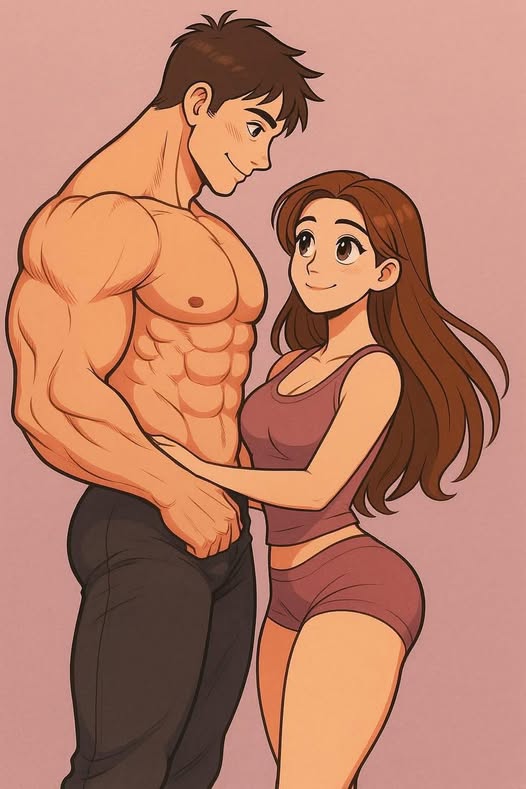
When a man first notices her, the reaction happens almost instantly—before her smile has time to register, before her voice reaches him, even before he learns her name. What stands out first, often without conscious thought, is her height. It’s a quick, almost instinctive observation, something that quietly shapes his perception before anything else has a chance to form. Tall, short, strikingly tall, noticeably petite—it registers in a way that feels natural, almost automatic. He might assume it’s just preference, just a simple matter of attraction, something easy to explain with “I have a type.” But beneath that surface-level explanation, there’s often something deeper at play, something he may not fully recognize himself.
Height, in this context, becomes more than a physical trait. It acts as a subtle signal that interacts with deeper ideas about identity, confidence, and how he positions himself in relation to others. What seems like a simple preference can actually reflect internal narratives about power, comfort, and the roles people unconsciously assign in relationships.
When a man is drawn to taller women, the attraction is rarely just about physical appearance. Tall women are often perceived—whether consciously or not—as commanding presence. They stand out, not just in height but in the way they occupy space. They can be associated with confidence, independence, ambition, and visibility. In social settings, they may appear to lead rather than follow, to assert rather than adapt.
For some men, this kind of presence is magnetic. It represents challenge, energy, and a certain kind of excitement. Being with someone who naturally draws attention can feel like stepping into a different dynamic—one where admiration flows in both directions, where the relationship carries a sense of intensity or elevation. In these cases, attraction can overlap with aspiration. It’s not just about being with someone tall; it’s about what that presence symbolizes and how it reflects on him.
At the same time, this attraction can also involve a subtle form of comparison. Standing beside someone who commands attention can bring awareness to one’s own position—socially, emotionally, or even physically. For some, this creates a sense of balance or partnership. For others, it introduces an element of competition, even if it’s not consciously acknowledged. The dynamic becomes layered, shaped by both admiration and self-reflection.
On the other end of the spectrum, attraction to shorter women often carries a different set of associations. Shorter stature is frequently linked with approachability, warmth, and a sense of softness. These perceptions aren’t universal truths, but they are patterns that tend to appear in how people interpret physical traits. A shorter woman may be seen as more nurturing, more gentle, or easier to connect with emotionally.
For some men, this creates a sense of comfort. It aligns with a desire for closeness that feels calm and reassuring rather than intense or challenging. The dynamic may feel more predictable, more grounded, less likely to disrupt their sense of control or stability. In this case, attraction can be connected to a need for emotional safety or a preference for relationships that feel less complicated or confrontational.
There’s also an element of how a man sees himself within that dynamic. Being physically taller can reinforce a feeling of protection or dominance, roles that some men associate with traditional ideas of masculinity. It can create a sense of clarity about position—who leads, who follows, who provides, who supports. These roles aren’t fixed or universal, but they often exist quietly beneath conscious awareness, influencing attraction in subtle ways.
Neither preference is inherently better or more meaningful than the other. What matters is not the height itself, but the meaning attached to it. Height becomes a kind of mirror, reflecting back how a man understands connection, identity, and emotional positioning within a relationship.
When someone strongly prefers one dynamic over another—whether it’s wanting to feel taller, wanting to feel smaller, or wanting a specific contrast—it often reveals something about how they want to experience closeness. Do they want to feel grounded and secure? Do they want to feel challenged and inspired? Do they want balance, or do they seek a dynamic where one presence clearly stands out?
In many ways, these preferences are less about the other person and more about internal alignment. They reflect how someone navigates vulnerability, how they relate to power, and how they interpret compatibility. What appears to be a simple physical preference becomes a subtle expression of emotional needs and self-perception.
In the end, height itself remains just a number—an objective measurement with no inherent meaning. But the story built around it, the assumptions, the feelings, and the interpretations—that is where complexity lives.
Because what a man responds to isn’t just how tall she is.
It’s how he feels standing next to her.