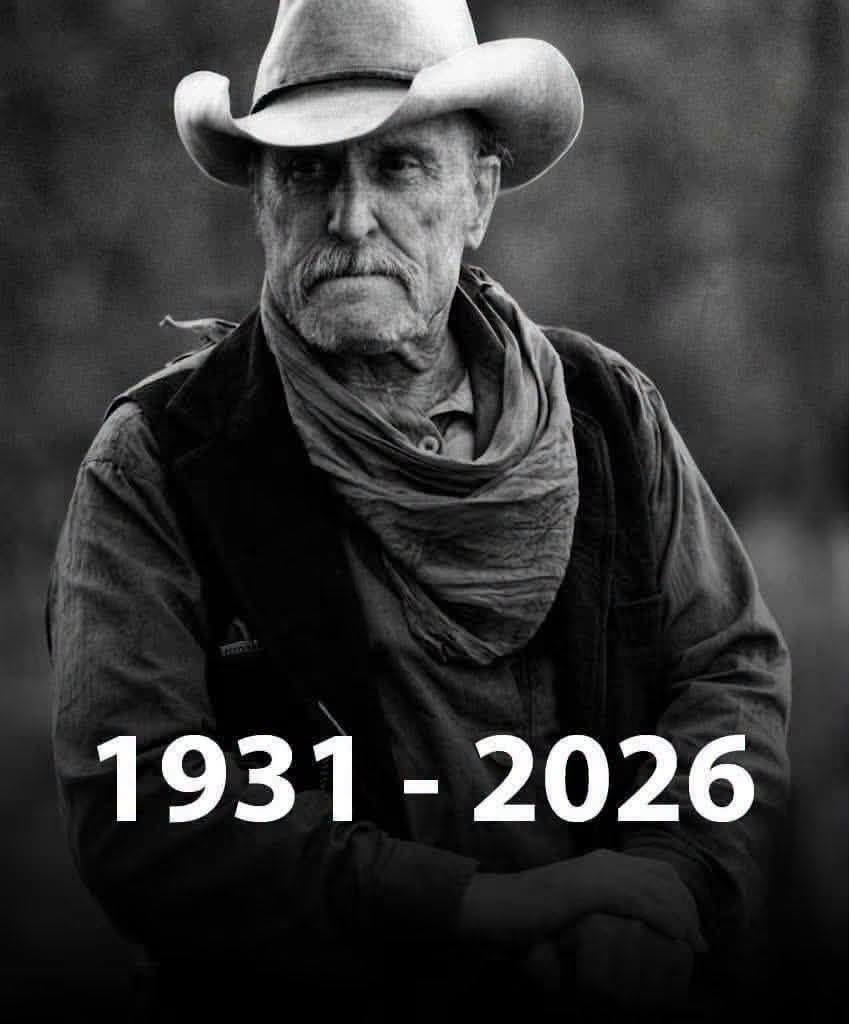
As Tom Hagen in The Godfather, Robert Duvall made restraint feel almost as powerful as action.
He did not need to raise his voice or dominate a scene to make his presence felt. As the Corleone family’s trusted adviser, Hagen often stood slightly outside the center of the family’s most dramatic moments, watching, calculating, listening, and choosing his words carefully. Yet that quietness became part of the character’s strength.
There was loyalty in Hagen, but there was also caution.
There was affection, but also professional distance.
Duvall understood that the character did not need to explain every thought passing through his mind. A pause, a glance, or a subtle change in expression could suggest an entire conversation that never happened aloud.
That became one of the defining qualities of Duvall’s career.
He trusted silence.
He trusted the audience.
And most importantly, he trusted the character.
Then came Apocalypse Now, where Duvall moved into an entirely different world.
As Lieutenant Colonel Bill Kilgore, he created a character whose battlefield confidence was so extreme that it became frightening. Kilgore could discuss surfing in the middle of combat, speak about danger with unsettling calm, and behave as though chaos were simply another ordinary part of his day.
The performance was memorable not because Duvall played the character as a conventional villain.
It was more complicated than that.
Kilgore was charismatic.
Funny.
Confident.
Absurd.
And terrifying.
Those qualities existed together.
Duvall understood that the most disturbing people are not always the ones who appear angry or unstable. Sometimes they are the ones who remain completely composed while doing things that should horrify everyone around them.
His famous battlefield presence turned bravado into something almost surreal.
And then, in Tender Mercies, Duvall went in another direction entirely.
As Mac Sledge, he played a wounded country singer whose life had been shaped by addiction, regret, loneliness, and loss.
There were no grand speeches that magically solved his problems.
There was no instant transformation.
Instead, Mac’s redemption emerged through small choices.
Through humility.
Through responsibility.
Through the willingness to believe that a damaged life might still contain something worth saving.
Duvall’s performance earned him the Academy Award for Best Actor, but the power of the role came from how little he appeared to be performing.
Mac did not feel like a fictional character constructed for a movie.
He felt like a man who had existed long before the camera arrived.
That quality appeared again and again throughout Duvall’s career.
His characters often seemed to have private histories.
You could imagine what they had experienced before the first scene.
You could sense what they regretted.
You could wonder what they were afraid to say.
Even when the script did not provide every answer, Duvall’s performances suggested that there was always something underneath the surface.
That may be one of the reasons his work remained so compelling across decades.
He did not treat acting as a competition to see who could make the biggest impression.
He understood that sometimes the smallest gesture carries the greatest weight.
A character hesitating before answering a question.
A glance toward someone they love.
A moment of discomfort after saying something cruel.
A smile that disappears almost immediately.
A hand that moves and then stops.
Those details may last only seconds, but they can reveal more than pages of dialogue.
Duvall trusted those moments.
He understood that people rarely explain themselves completely in real life.
They hide things.
They contradict themselves.
They say one thing and mean another.
They want forgiveness but struggle to ask for it.
They love people they cannot communicate with.
They make mistakes and sometimes spend years trying to understand the consequences.
His characters often carried those contradictions.
That made them feel recognizable.
Across his career, Duvall played men who could be intimidating, vulnerable, stubborn, wounded, humorous, dangerous, compassionate, or deeply confused.
Sometimes several of those qualities existed in the same character.
That complexity became part of his signature.
He rarely needed to tell the audience exactly what they should feel.
Instead, he created enough space for viewers to discover the character themselves.
That is a difficult kind of acting.
It requires confidence.
An actor has to resist the temptation to underline every emotion.
There is always a risk that subtlety will be mistaken for doing nothing.
Duvall understood the difference.
His restraint was not emptiness.
It was control.
He knew when to hold back.
He knew when a scene needed silence.
And he knew when a tiny shift in expression could completely change the meaning of a moment.
As the decades passed, his face itself became part of that language.
The lines that appeared with age did not diminish his screen presence.
They added to it.
Every crease suggested experience.
Every tired look could make a character seem as though he had already lived through years of events before the story began.
In an industry often obsessed with youth and appearance, Duvall’s aging became an artistic asset.
His face carried history.
That history made his later characters feel even more lived-in.
There was no need to hide the passage of time.
It became part of the performance.
And perhaps that is why his work continued to resonate with audiences across generations.
Duvall never seemed interested in making every character likable.
He was more interested in making them believable.
Those are very different goals.
A likable character can be easily understood.
A believable person can be difficult.
They can make terrible decisions.
They can behave selfishly.
They can show tenderness one moment and cruelty the next.
They can want to change while being afraid of what change requires.
Duvall allowed those contradictions to remain.
He did not clean his characters up for the audience.
He allowed them to be messy.
That honesty became one of his greatest strengths.
Whether he was playing a lawyer operating in the dangerous world of organized crime, a military officer behaving with unsettling confidence, or a broken musician attempting to rebuild his life, the characters felt like people rather than types.
They had histories.
They had habits.
They had weaknesses.
They had things they did not say.
And because of that, viewers could recognize something familiar in them.
That may be the deepest achievement of his career.
Not simply the number of famous films.
Not simply the awards.
Not simply the iconic scenes.
But the ability to make fictional strangers feel strangely familiar.
You may never have met Tom Hagen.
You may never have encountered anyone quite like Kilgore.
You may never have known a country singer like Mac Sledge.
Yet something about them feels human enough to recognize.
The hesitation.
The pride.
The loneliness.
The fear.
The desire to belong.
The hope that it is not too late to become someone better.
Those emotions are not limited to one character or one generation.
They are part of the human experience.
Duvall’s performances worked because he understood that audiences do not always need explanations.
Sometimes they simply need a truthful moment.
A character looking away.
A voice becoming quieter.
A smile appearing at exactly the wrong time.
A person sitting alone after everyone else has left.
A man realizing that the life he built is no longer the life he wants.
These moments can be more powerful than any dramatic speech.
They leave room for the audience to participate.
You are not simply watching Duvall tell you who the character is.
You are watching him reveal enough for you to discover the person yourself.
That is why his performances can feel intimate even when the worlds around his characters are enormous.
The Corleone family is larger than Tom Hagen.
The Vietnam War is larger than Kilgore.
The struggles of addiction and redemption are larger than Mac Sledge.
Yet Duvall could bring those enormous stories back to one person standing in one room, making one decision.
That ability—to make the personal visible inside the epic—was one of his greatest gifts.
His career also demonstrated that great acting does not always announce itself immediately.
Some performances stay with you because of one unforgettable scene.
Others grow in your memory slowly.
You remember a face.
A pause.
A particular line.
A strange little gesture.
Then, years later, you realize how much the performance communicated without ever saying directly what the character was feeling.
That is the kind of acting that rewards attention.
And Duvall consistently gave audiences reasons to keep watching closely.
His legacy is therefore much larger than a list of celebrated roles.
It is a lesson in observation.
He showed what can happen when an actor trusts the audience enough to leave certain things unsaid.
He showed that vulnerability does not have to be loud.
That strength does not always look aggressive.
That regret can live in a person’s posture.
That kindness can appear in a glance.
And that age can deepen a performance rather than diminish it.
Across decades of cinema, Robert Duvall made characters feel as though they continued to exist even after the camera stopped recording.
You could imagine them returning home.
Going to work.
Remembering something they had never told anyone.
Making another mistake.
Trying again.
Living with the consequences of the past.
That sense of life beyond the frame is perhaps the clearest sign of a great performance.
The audience sees only a few hours of a person’s story, yet somehow believes there was a whole life before it—and perhaps another life waiting after the credits.
That was Duvall’s gift.
He did not simply portray characters.
He gave them weight.
He gave them silence.
He gave them contradictions.
And he gave them the dignity of being complicated.
His enduring achievement is not merely a collection of famous roles or awards.
It is the intimacy of those performances.
He could take a fictional stranger and make you feel that you understood something about him.
Not everything.
Not perfectly.
Just enough to recognize the humanity underneath.
And sometimes, that is the most powerful thing an actor can give an audience.