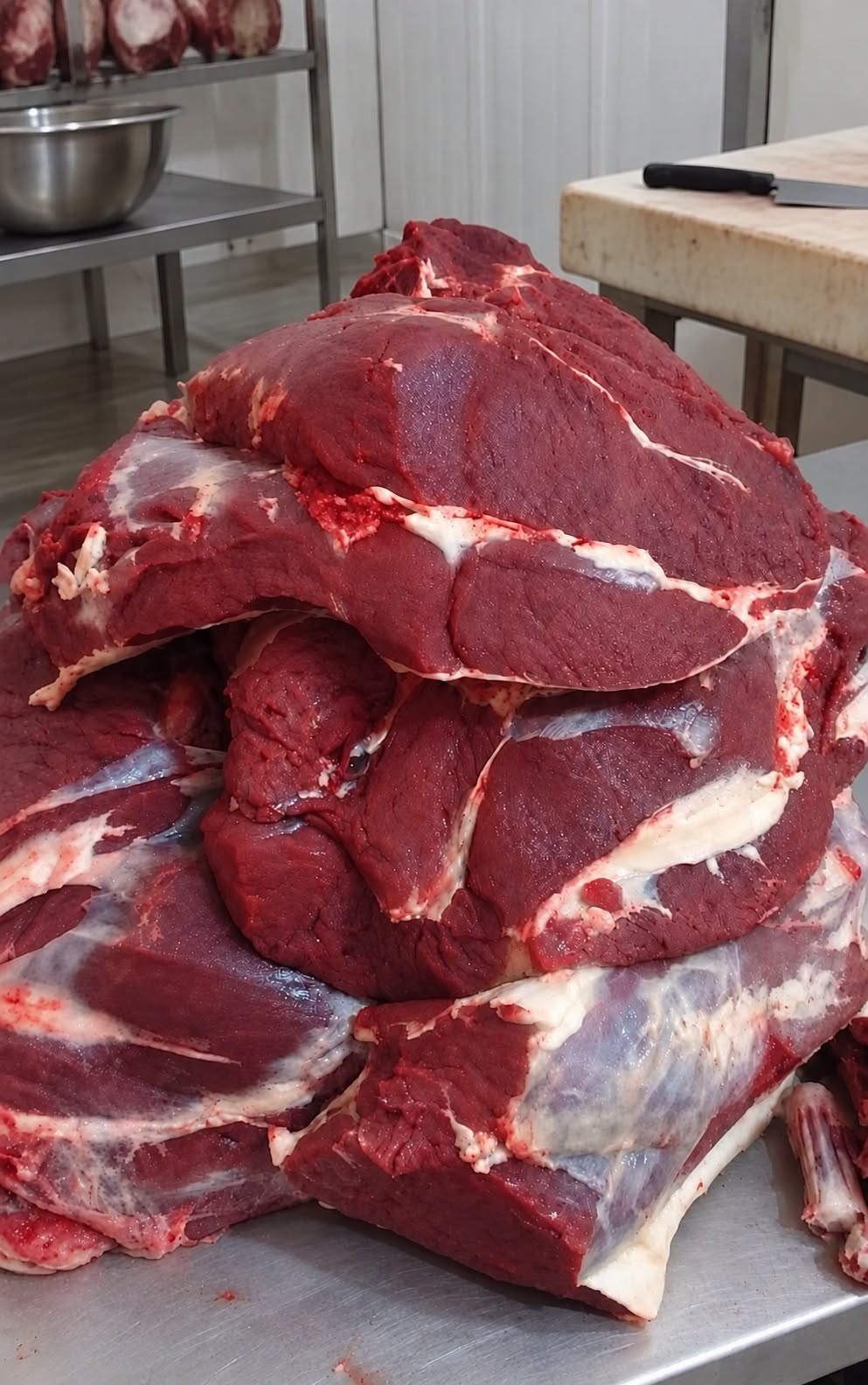
Walking into the meat aisle, you’re not just shopping—you’re being staged to. The bright red steaks, spotless trays, carefully arranged packages, and perfectly controlled lighting all work together to create a single impression: **fresh**. Everything is designed to look clean, appealing, and ready for your dinner table. Most shoppers never stop to question what they’re seeing. They trust the color, pick up a package, compare the price, and move on to the next item.
But the real story of how safe, fresh, or old that meat is starts long before it reaches the refrigerated display.
By the time you see that perfectly red steak beneath the supermarket lights, it may have already traveled through several stages of processing, packaging, refrigeration, transportation, and storage. The appearance you’re judging is only one small part of that journey. And in many cases, the visual impression can be surprisingly misleading.
Behind every glossy meat display is a carefully engineered presentation. Supermarkets and meat processors understand that shoppers make fast decisions, and color is one of the strongest visual signals people associate with freshness. A package of meat that looks vibrant and red can immediately seem more appealing than one that looks darker, even when color alone tells you very little about whether the meat is actually safe to eat.
Lighting plays a major role.
The lights used in refrigerated meat displays can be selected to make red meat appear brighter and more attractive. Under ordinary household lighting, the same package may not look quite as vibrant. The difference can be subtle, but in a supermarket environment where dozens of nearly identical packages compete for attention, even small visual advantages matter.
Then there is the packaging itself.
Many fresh meat products are packaged in controlled atmospheres that can include oxygen or other gases to help maintain an appealing appearance during storage and distribution. The goal is largely visual: keeping meat looking red and marketable for longer. In some packaging systems, the amount of oxygen available can influence the color consumers see when they look through the plastic.
That creates an important distinction.
**Bright color does not automatically guarantee freshness or safety.**
It can guarantee that the product looks appealing.
But appearance alone cannot tell you whether meat has been handled properly throughout its journey, kept at safe temperatures, or stored longer than you might assume.
This is where labels become important—and confusing.
Words such as **“packed on,” “sell by,” “use by,”** and **“best if used by”** do not necessarily mean the same thing. Some dates are intended for retailers and inventory management, while others may communicate quality or safety guidance depending on the product and jurisdiction. A shopper who treats every date as if it means “this meat is safe until this exact moment” can easily misunderstand what the label is actually telling them.
And the story behind a package can be more complicated than the date printed on the front.
The meat may have spent time in a processing facility before being shipped. It may have traveled across state lines. It may have remained refrigerated through several stages of distribution before reaching the store. Some products may also have been frozen previously and later thawed for sale, depending on the product and labeling requirements.
That doesn’t automatically make the meat unsafe.
But it does mean the package in your hand may have a longer history than its bright red appearance suggests.
This is why experienced shoppers don’t rely on color alone.
They pay attention to the entire package.
Look at how the meat is stored. Is it properly refrigerated? Is the package intact, or is the plastic torn, leaking, or visibly compromised? Is there an unusual amount of liquid collecting inside? Has the package become swollen or otherwise changed in appearance?
Texture can also provide useful information.
Meat should not automatically be considered spoiled simply because it isn’t perfectly bright red, because normal color changes can occur as meat is exposed to or deprived of oxygen. But a genuinely abnormal surface—particularly one that feels excessively sticky, tacky, or slimy—can be a reason to avoid the product.
Smell is another important clue.
Fresh meat can have a mild, natural odor, but a strong, unpleasant, sour, or otherwise abnormal smell should not be ignored. At the same time, consumers should remember that harmful bacteria are not always detectable through smell, appearance, or texture. Meat can look and smell normal while still being unsafe if it has been mishandled or stored at unsafe temperatures.
That is one of the most important lessons in the entire meat aisle:
**You cannot see every food-safety problem.**
The perfect red color doesn’t prove safety.
The absence of a bad smell doesn’t prove safety.
And a package that looks flawless doesn’t tell you everything about how it was transported or stored.
Temperature control matters enormously.
Keeping meat properly chilled slows the growth of many harmful microorganisms. Once meat has been exposed to unsafe temperatures for too long, however, appearance may not immediately reveal what has happened. That’s why refrigeration, handling, cooking, and preventing cross-contamination are just as important as selecting the right package.
The display is designed to make the decision feel easy.
Pick the reddest steak.
Choose the package with the nicest presentation.
Ignore the darker one.
Move on.
But darker meat isn’t automatically old or spoiled. Color can naturally change depending on the cut, packaging, and exposure to oxygen. A piece of beef can appear darker inside the package and become brighter after exposure to air, while meat exposed to air for longer periods can eventually develop brown or gray tones. Those changes alone aren’t enough to determine whether meat is safe.
That’s why understanding the product is more valuable than simply judging its appearance.
Read the entire label.
Pay attention to storage instructions.
Check the package for leaks or damage.
Notice unusual odors or textures.
Understand what the printed date actually means.
And, most importantly, remember that safe handling continues after you leave the store. Refrigerate meat promptly, prevent its juices from contaminating other foods, and cook it according to appropriate food-safety guidance.
The supermarket meat aisle is not necessarily hiding a secret conspiracy.
It is simply a retail environment built around presentation.
And presentation can be powerful.
A carefully illuminated package can make something appear fresher than it might under ordinary lighting. A perfectly arranged display can create confidence before you’ve even read the label. Plastic packaging can make every product look clean and uniform. Color can become the deciding factor before shoppers consider anything else.
But your eyes are only one tool.
In a system where appearance is carefully managed, your best defense is understanding what you’re actually looking at.
Don’t automatically fear meat because it looks darker.
Don’t automatically trust meat because it looks bright red.
Don’t assume a date means exactly what you think it means.
And don’t mistake a beautiful package for proof that every step before it was perfect.
The next time you walk through the meat aisle, slow down for a moment.
Look beyond the shine.
Read beyond the date.
Check beyond the color.
Because the safest shopping decision isn’t necessarily the package that looks the freshest under the supermarket lights.
It’s the package whose **label, condition, storage, and handling all make sense together.**