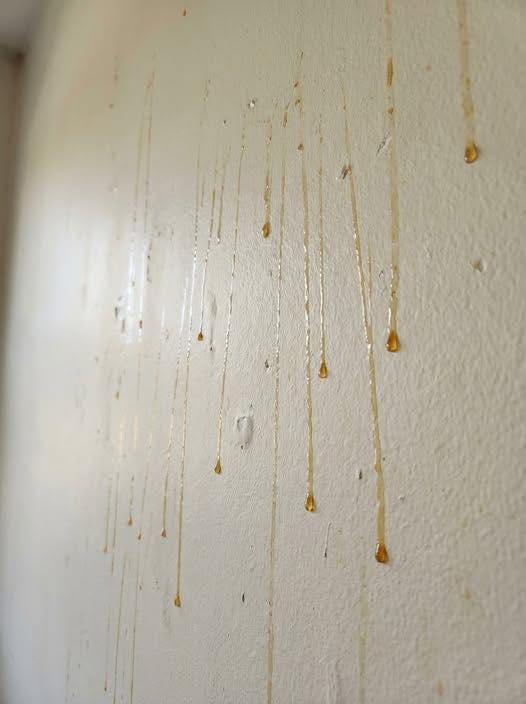
It begins as something almost unnoticeable—a faint, amber-colored stain that looks like a drop of dried honey or a coffee spill. You might ignore it the first time you see it, wiping it away with a damp cloth and assuming it’s nothing important. But then, after a long, hot shower, you return to the bathroom and notice that the walls seem to be “weeping.” Long, golden streaks run from the ceiling down to the floor, creating a scene that feels more like something out of a horror movie than a simple maintenance issue. While it may look frightening, this phenomenon is actually a silent warning from your home. These yellow drips are a physical sign of hidden environmental processes happening within your walls, and ignoring them can lead to serious damage to your home’s structure and even your family’s health.
The mystery of “bleeding” bathroom walls confuses thousands of homeowners every year, but the science behind it is both fascinating and concerning. To understand why your walls are dripping, you need to understand the unique environment of a modern bathroom. This space is a high-pressure zone where extreme temperature changes and large amounts of humidity collide. Every time you turn on hot water, you create a mini climate system. The steam rises and looks for cool surfaces to settle on—usually your walls and ceiling. When the vapor condenses back into water, it doesn’t just sit there; it interacts with everything that has built up on those surfaces over time.
One of the most common causes is a process called surfactant leaching. Modern paints contain chemicals that help them spread evenly and remain stable. Under normal conditions, these substances evaporate as the paint dries. However, in high-humidity environments like bathrooms, moisture can pull these ingredients out of the paint before it fully cures. The result is a sticky residue that seeps out of the wall, forming those yellow or brown streaks. This isn’t just a cosmetic issue—it’s a sign that the paint’s protective layer is weakening.
Another factor is the buildup of everyday products. Hair sprays, deodorants, perfumes, and cleaning aerosols leave behind a thin, invisible layer on your walls. Over time, this becomes a “ghost layer.” When steam from the shower hits it, it liquefies again and runs down the wall in oily streaks. If smoking has ever occurred in the home, the effect is even worse—nicotine and tar can seep through layers of paint and reappear when exposed to humidity.
There is also a more serious possibility: mold and bacteria. Bathrooms provide the perfect environment for their growth—warm, dark, and constantly moist. These organisms can produce colored substances as they feed on organic material in your walls. If you notice a musty smell or stains appearing in corners or near the floor, it may indicate a deeper problem that requires professional attention.
In most cases, the main cause is poor ventilation. Bathroom fans are often underused or not powerful enough. Moisture can remain in the air for up to 20 minutes after a shower, and if ventilation stops too soon, the walls stay damp. This creates ideal conditions for both chemical leaching and mold growth.
The solution requires several steps. First, deep clean the walls using warm water and a mild detergent to remove residue. Second, improve ventilation—install a stronger fan or one with a timer. When repainting, use moisture-resistant paint designed for bathrooms. Even simple habits, like wiping down walls after a shower, can make a big difference.
In the end, those yellow streaks are not just dirt. They are a warning sign from your home. By understanding them and taking action early, you can prevent much bigger and more expensive problems in the future.