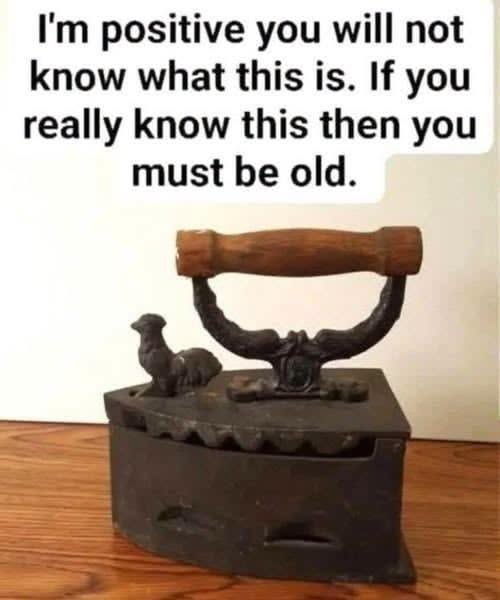
It wasn’t just an iron. It was a box of fire gripped in bare hands. In cramped kitchens, crowded laundry rooms, and steaming washhouses, women fed glowing coals into heavy cast-iron chambers, working inches away from heat, sparks, and smoke for the sake of smooth linen and social respectability. Every shirt, sheet, collar, and dress demanded patience and physical effort. One careless movement, one overheated surface, or one stray ember could turn an ordinary day of household work into burned fabric, blistered skin, or something even more dangerous.
Long before electricity hummed quietly through homes, the charcoal box iron offered a clever way to transform raw fire into a more controlled tool of domestic work. Its hollow cast-iron body was designed to hold burning charcoal or glowing embers, allowing heat to spread downward toward the heavy soleplate. Instead of heating the entire iron externally, the source of heat traveled inside it. That simple idea made the device feel remarkably advanced compared with many earlier ironing methods.
Above the scorching metal body sat a handle, often made from wood to reduce the amount of heat reaching the user’s hand. A hinged lid allowed the iron to be opened so fresh charcoal could be added and ash removed. Some surviving examples feature elaborate decorative details, including latches shaped like roosters or other figures. What looks ornamental today once sat directly above a miniature furnace that had to be carefully managed throughout hours of demanding work.
Using one required far more attention than simply waiting for a modern electric iron to reach the correct temperature. The charcoal had to remain hot enough to smooth stubborn wrinkles without allowing the iron to become dangerously overheated. Airflow mattered, fuel had to be tended, and ash could accumulate inside. Meanwhile, piles of washed and often slightly damp fabric waited nearby, each piece requiring repeated passes until rough cloth became crisp sheets, smooth dresses, and sharply pressed collars.
Compared with older solid metal “sad irons,” which had to be repeatedly heated on a stove or near a fire, the charcoal box iron offered an important advantage. Because its heat source remained inside the iron itself, users could work for longer stretches without constantly returning the tool to the stove. For laundresses responsible for enormous quantities of clothing and household linen, reducing those repeated trips could make a significant difference during an already exhausting working day.
But convenience came with its own dangers. The iron could be heavy, the surrounding room could become uncomfortably hot, and burning charcoal produced smoke and fumes that demanded adequate ventilation. Sparks or pieces of hot material could potentially escape when the lid was opened, while an iron left too long against delicate fabric could ruin hours of washing and preparation in seconds. What appears today as a charming antique was once a serious working tool requiring strength, experience, and constant attention.
The environment surrounding the work could be equally punishing. Imagine standing for hours in a room already warmed by boiling water, heated stoves, and damp laundry while holding a metal container filled with burning fuel. Steam hung in the air, clothing accumulated in heavy piles, and the process repeated week after week. Ironing wasn’t a quick finishing touch before leaving the house; it was another physically demanding stage in the enormous amount of labor required to keep a household clothed and presentable.
Yet the charcoal box iron also represented an important step toward the appliances that would eventually transform domestic life. It took an ancient requirement—heat—and placed that heat directly inside a portable tool. In doing so, it stood at a fascinating crossroads between the open hearth and the electrical age, combining fire, metal, craftsmanship, and practical engineering in one deceptively simple object.
Eventually, electricity would remove the charcoal, smoke, ash, and much of the constant temperature management. Heating elements and thermostats would turn ironing into something as simple as plugging in a device and waiting a few moments. But before that convenience arrived, the charcoal box iron quietly helped bridge two worlds—half primitive furnace, half recognizable modern appliance—preparing generations for the day when controlling heat would require no glowing embers at all, only the flick of a switch.