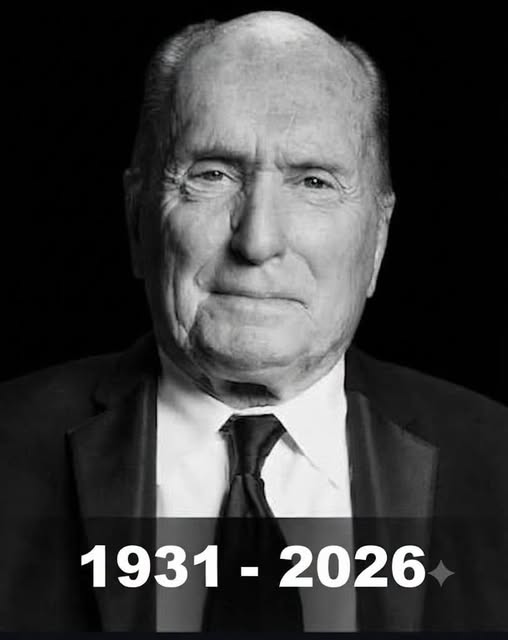
The news hit like a punch to the chest. Robert Duvall, the quiet giant of American cinema, is gone at 95. An era has ended, and Hollywood suddenly feels smaller, dimmer, and somehow older without him. For generations, his face appeared across the screen carrying stories that could be brutal one moment and deeply tender the next. His characters haunted us, healed us, frightened us, challenged us, and sometimes even saved us. Now the man behind those unforgettable performances has left the stage, leaving behind a body of work that feels almost impossible to measure.
He never needed to shout for attention, yet somehow the screen seemed to bend around him whenever he appeared. Robert Duvall built his legacy not on spectacle or celebrity, but on something much harder to manufacture: truth. He could communicate an entire history through a pause, a glance, or the slightest change in his expression. Whether playing a broken man searching for redemption or a powerful figure hiding danger beneath perfect composure, Duvall made audiences believe there was always another life continuing beneath the words of the script.
That gift followed him through some of the most important films of American cinema. There was the weary tenderness and quiet redemption of *Tender Mercies*, the coiled calm and controlled authority of Tom Hagen in *The Godfather*, and the unforgettable madness and poetry surrounding Lieutenant Colonel Kilgore in *Apocalypse Now*. These performances could hardly have been more different, yet each carried the unmistakable precision that became Duvall’s signature.
He understood something that many performers spend entire careers trying to learn: sometimes doing less makes an audience feel more. His characters rarely seemed like actors waiting for their next line. They breathed, hesitated, listened, and carried invisible histories into every scene. Duvall could make damaged men feel painfully human without demanding that viewers forgive them. Instead, he allowed audiences to sit with their contradictions, their failures, their loneliness, and the fragments of dignity they still carried.
That honesty became one of the defining qualities of his career. He played soldiers, lawyers, cowboys, fathers, preachers, criminals, and ordinary men struggling beneath extraordinary circumstances, but he resisted turning them into simple types. Even when his characters were intimidating or deeply flawed, there was often something recognizable beneath the surface. In giving those men complexity, he gave audiences permission to confront uncomfortable shadows within themselves.
Across more than six decades, Duvall became part of the architecture of American film. He worked alongside generations of directors and actors while maintaining a style that remained distinctly his own. Trends changed, filmmaking evolved, and new stars arrived, but his commitment to authenticity never seemed to bend with fashion. He belonged equally to sweeping cinematic landmarks and intimate character studies because he approached both with the same seriousness.
His death closes a chapter that cannot be rewritten, but it does not silence his voice. The performances remain, flickering across screens in darkened rooms and waiting to be discovered again by people who were not even born when many of them were created. Someone watching *The Godfather* for the first time decades from now will still encounter Tom Hagen’s measured calm. Someone discovering *Tender Mercies* will still feel the weight behind every restrained word.
Future actors will continue studying his restraint, his precision, and his refusal to make a moment bigger simply because the camera was watching. His greatest lesson may be that powerful acting does not always announce itself. Sometimes it lives in silence, in listening, in allowing the audience to come closer instead of forcing emotion toward them.
For six decades, Robert Duvall helped carry American cinema through some of its most memorable eras. Awards and iconic scenes tell only part of that story. The deeper legacy exists in the countless performances that made fictional people feel startlingly alive. Now the cameras have stopped rolling for one of the greats, but the work remains. And every time someone presses play, watches that familiar face appear, and becomes completely absorbed by a single quiet glance, Robert Duvall steps onto the screen once more.