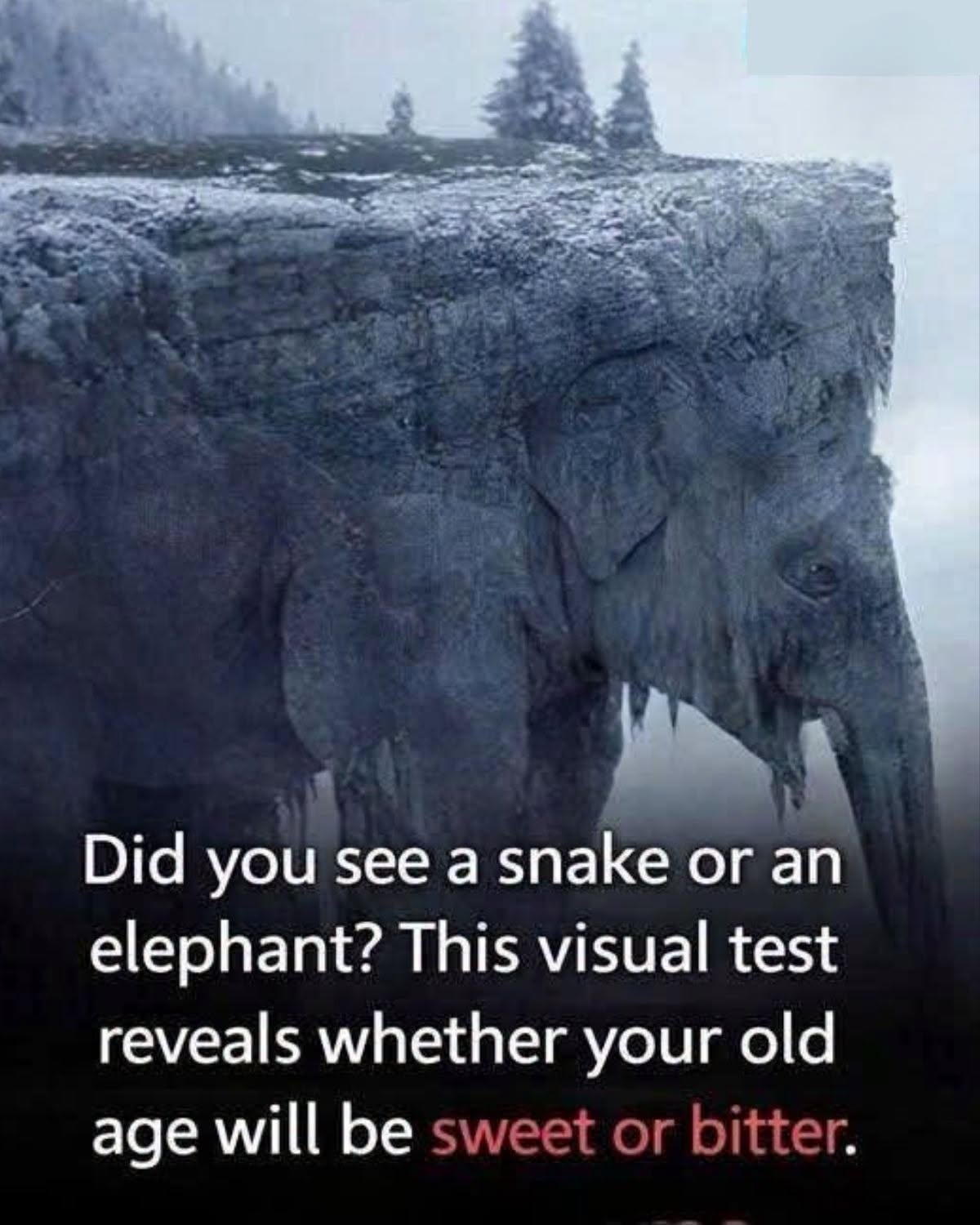
Millions of people are looking at the exact same image, yet they don’t all see the same thing. Some immediately notice a snake winding across a frozen landscape. Others are convinced they’re looking at the unmistakable outline of an elephant. The debate has spread across social media, with thousands comparing answers and wondering why one image can produce such different first impressions. Some even believe the animal you notice first reflects aspects of your personality, the way you make decisions, and how you approach everyday life. Before reading any further, imagine you’re looking at the image yourself. What would catch your eye first?
Optical illusions have fascinated people for centuries because they challenge our confidence in what we see. They remind us that vision isn’t simply about our eyes—it’s about how our brains interpret information. Every second, your brain receives an overwhelming amount of visual data, filtering, organizing, and making sense of it almost instantly. Most of the time, this process happens so smoothly that we never realize how much interpretation is taking place behind the scenes.
This particular illusion appears simple at first glance. It seems to show nothing more than a frozen cliff covered with snow, jagged rocks, and icy shadows. But hidden within the landscape are two completely different images. Depending on how your brain processes the shapes and lines, you may immediately recognize one while remaining completely unaware of the other.
Some people instantly spot a snake stretching across the icy terrain. Its curved body seems to weave naturally through the frozen landscape, becoming impossible to ignore once it’s been seen. Others don’t notice the snake at all. Instead, their eyes immediately find the profile of an elephant, its massive head and trunk seemingly carved into the snow-covered rock. What’s remarkable is that both images exist simultaneously, yet many viewers struggle to notice both without someone pointing them out.
The question is simple.
Which animal did you see first?
According to popular interpretations shared across the internet, your answer may offer an interesting glimpse into the way you naturally process information. While these descriptions aren’t scientifically proven personality tests, many people enjoy comparing their results and reflecting on whether the observations feel accurate.
If the snake caught your attention first, you’re often described as someone with exceptional attention to detail. You may naturally notice subtle changes that others overlook, quickly identifying patterns, inconsistencies, or hidden connections. People with this style of thinking are frequently portrayed as analytical, practical, and strategic. Rather than making impulsive decisions, they often prefer gathering information before acting, carefully weighing facts and considering multiple possibilities. Challenges rarely intimidate them because they enjoy solving problems step by step.
Those who identify with this description often value logic and precision. They may thrive in situations requiring careful observation, critical thinking, or adaptability. When unexpected problems arise, they’re more likely to remain calm, analyze the situation, and search for the most effective solution instead of reacting emotionally.
On the other hand, if you noticed the elephant first, popular interpretations suggest you’re someone who naturally focuses on the bigger picture. Instead of becoming distracted by small details, you may prefer thinking about long-term goals, overall direction, and broader meaning. You’re often described as patient, dependable, and emotionally balanced, someone who values stability and carefully considers the impact of important decisions.
People who recognize the elephant first are frequently associated with qualities such as loyalty, compassion, and wisdom. They tend to appreciate meaningful relationships and may place great importance on trust, consistency, and emotional connection. Rather than rushing into decisions, they often prefer allowing situations to unfold naturally before choosing the best path forward.
Of course, there is no scientific evidence that seeing one animal before another can accurately define someone’s personality. Human behavior is far too complex to be explained by a single visual preference. However, that hasn’t stopped millions of people from enjoying these illusions as entertaining opportunities for self-reflection and conversation.
The true fascination lies not in the personality descriptions themselves but in what the illusion reveals about human perception. Two intelligent, observant people can examine the exact same image and honestly experience it in completely different ways. Neither person is wrong. Their brains are simply prioritizing different visual information during those first few moments of observation.
Scientists have long known that perception is influenced by countless factors. Previous experiences shape how familiar patterns are recognized. Personal interests influence what naturally attracts our attention. Expectations, habits, emotions, and even our current level of focus can subtly affect what we notice first. Because of these influences, the brain doesn’t merely record reality—it actively interprets it.
This process happens astonishingly fast. Before you’re even aware of making a decision, your brain has already analyzed shapes, compared them to memories, discarded unnecessary information, and formed its best interpretation of what you’re seeing. That’s why optical illusions continue to amaze researchers and the general public alike. They offer a rare opportunity to witness the hidden processes normally operating beyond conscious awareness.
These visual puzzles also remind us of something important that extends far beyond images on a screen. In everyday life, people often experience the same event differently because each person filters information through unique experiences, beliefs, expectations, and emotions. What seems obvious to one individual may be invisible to someone else. Recognizing that difference can encourage greater patience, understanding, and open-mindedness.
Perhaps that’s one reason optical illusions remain so popular. They aren’t simply games or internet trends. They invite us to question our assumptions, appreciate the complexity of the human mind, and remember that perception is rarely as straightforward as it first appears.
So, if you ever find yourself debating whether you saw the snake or the elephant first, remember that there isn’t a right or wrong answer. The real mystery isn’t hidden inside the picture—it’s hidden inside the remarkable way your brain transforms a collection of shapes into a meaningful story.