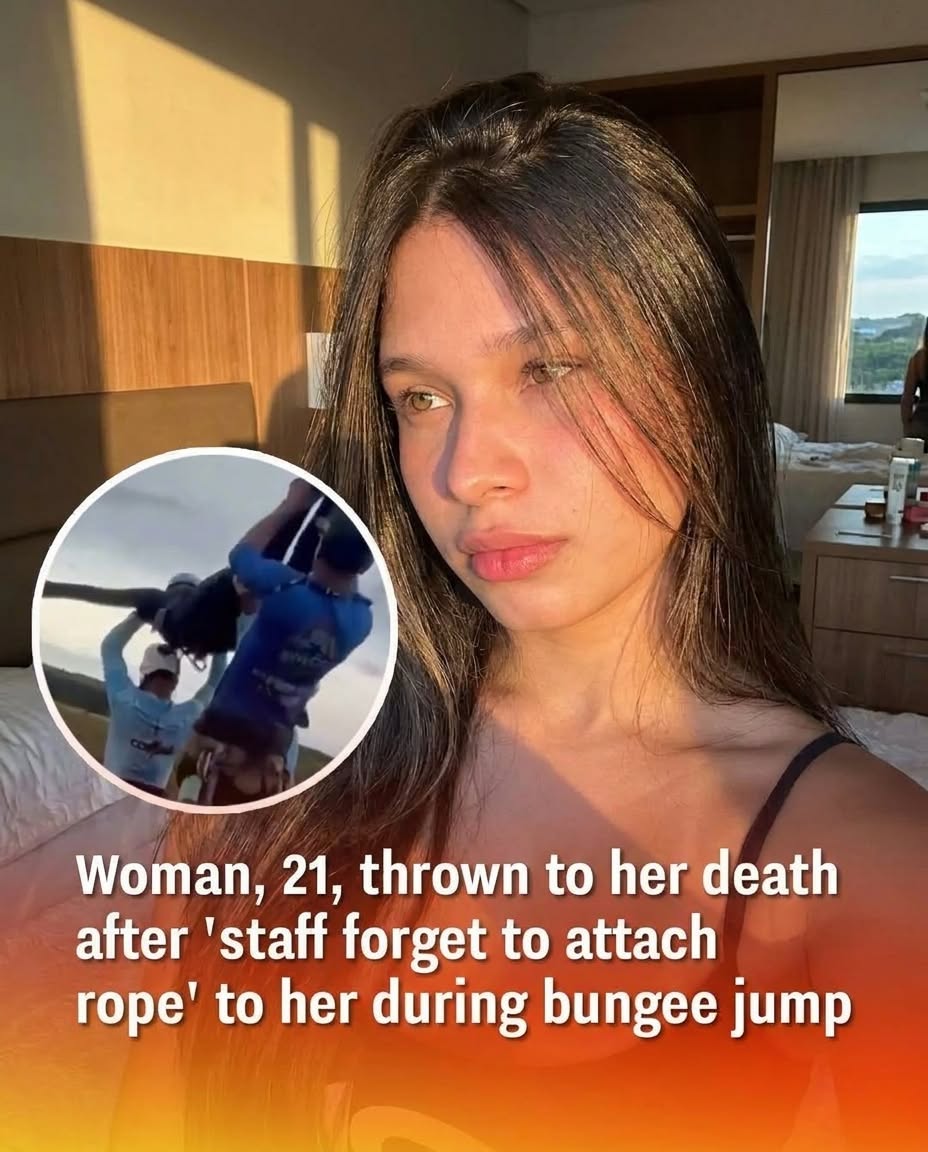
What began as an exciting adventure for a young woman seeking an unforgettable experience ended in a heartbreaking tragedy that shocked an entire community. Maria Eduarda Rodrigues de Freitas, a 21-year-old from Brazil, arrived at a popular rope-jumping site expecting an adrenaline-filled thrill. Instead, a devastating mistake turned what should have been a joyful day into a fatal disaster that has raised serious questions about safety and accountability.
Friends described Maria as energetic, adventurous, and eager to embrace new experiences. On the day of the jump, she shared moments of excitement as she prepared for the activity, never imagining that something could go catastrophically wrong. Witnesses say she appeared confident and trusted the organizers responsible for ensuring every participant was properly secured before stepping off the platform.
Rope jumping requires specialized equipment, strict procedures, and multiple safety checks. Participants rely entirely on trained staff to verify that every harness, rope, and connection point is properly secured. According to early reports from the scene, one critical step may have been overlooked. Moments after Maria jumped, onlookers reportedly realized that a vital safety connection had not been attached correctly, leaving her unprotected during the fall.
The atmosphere changed instantly from excitement to panic. Witnesses described scenes of shock and horror as people watched helplessly while emergency services rushed to the location. Firefighters, medical teams, and police responded quickly, but the injuries sustained in the fall proved fatal. What had begun as a recreational activity ended in an irreversible loss that devastated family members, friends, and everyone present.
Authorities immediately launched an investigation to determine exactly how the incident occurred. Investigators are reviewing video footage, examining equipment, and interviewing employees involved in the operation. Their goal is not only to identify the specific mistake that led to the tragedy but also to determine whether safety protocols were ignored or whether broader negligence played a role.
The case has sparked widespread concern throughout Brazil’s adventure tourism industry. Safety experts argue that high-risk activities require multiple layers of protection and independent verification procedures to prevent human error. Many are now calling for stricter oversight, improved training standards, and more rigorous inspections of companies offering extreme recreational experiences.
Officials are also examining whether the organizers possessed all required permits, certifications, and insurance coverage needed to conduct such activities legally. If deficiencies are discovered, the findings could have significant legal consequences and may prompt broader regulatory reforms designed to protect future participants.
Meanwhile, tributes continue to pour in for Maria from friends, relatives, and members of her community. Those who knew her remember a young woman full of life, optimism, and ambition. As investigators search for answers, her death stands as a painful reminder of the enormous responsibility carried by those entrusted with the safety of others and the devastating consequences that can follow when that trust is broken.