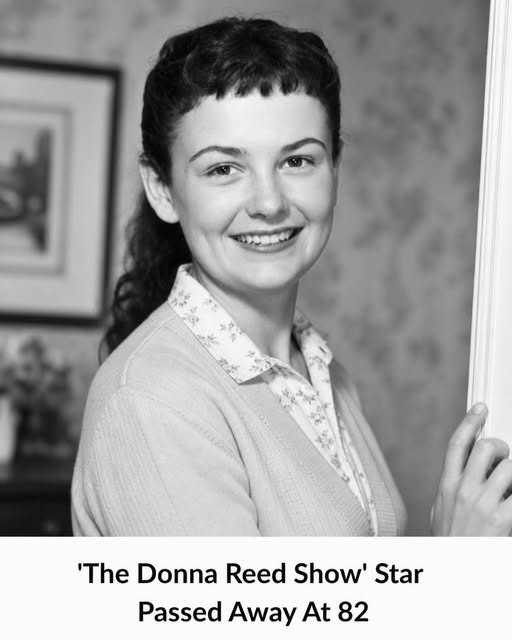
Shelley Fabares’ final curtain has fallen, and Hollywood is mourning the loss of a woman whose face became woven into the memories of generations. The beloved star of *The Donna Reed Show* and *Coach* is gone at 82, leaving behind a career that stretched across decades of American television. Her family’s heartbreaking words, the private struggles surrounding her final years, and the love story she shared with *M*A*S*H* star Mike Farrell have brought renewed attention to the remarkable life behind the familiar smile.
For millions of viewers, Shelley Fabares was far more than an actress. She was part of the rhythm of growing up, appearing on television during an era when families gathered together around the same programs each week. Her career began when television itself was still finding its identity, and she managed to remain relevant as the industry changed dramatically around her.
As Mary Stone on *The Donna Reed Show*, Fabares became one of the most recognizable young actresses of the late 1950s and early 1960s. Her character represented the warmth and innocence associated with the classic American family sitcom, but Fabares’ own career soon revealed that she was capable of much more than playing the wholesome daughter next door.
Then came an unexpected chapter that transformed her into a pop-culture sensation. Her recording of “Johnny Angel” became a massive hit, climbing to No. 1 on the Billboard Hot 100. Almost overnight, the television actress found herself at the center of the music world as well. The success was remarkable precisely because it was so unexpected, turning Fabares from a familiar television face into a genuine pop phenomenon.
Yet she refused to let one moment define her. As the years passed, she continued working and eventually found another defining role on *Coach*. Playing Christine Armstrong, she brought intelligence, warmth, humor, and emotional depth to a series filled with larger-than-life personalities. The role introduced her to an entirely new generation and demonstrated the extraordinary longevity of her talent.
Away from the cameras, however, Fabares’ life was much quieter. Those who knew her best remembered her not for ratings, awards, or chart positions, but for the way she treated the people around her. She built a lasting marriage with Mike Farrell, and their relationship became one of the most enduring partnerships in her life. Together, they created a family life far removed from the pressures and constant attention of Hollywood.
Friends and loved ones have described Fabares as someone who could make people feel comfortable simply by being present. She was known for her warmth, loyalty, and devotion to those closest to her. As a wife, stepmother, friend, and longtime member of the entertainment community, she found meaning in relationships that existed far beyond the spotlight.
Her final chapter was private, much like so much of her personal life. After a brief illness, Fabares passed away, leaving family, friends, former colleagues, and generations of viewers to confront the loss of a performer who had been part of their lives for so long.
There is something especially poignant about the passing of stars like Shelley Fabares. Their work does not disappear with them. The episodes remain. The songs remain. The photographs remain. Somewhere, a television still plays an old episode of *The Donna Reed Show*. Somewhere else, “Johnny Angel” brings back memories of another era. And for countless fans, *Coach* remains a reminder of the sharp, compassionate actress who returned to primetime decades after her first breakthrough.
Fabares’ life traced the evolution of American television itself—from the black-and-white innocence of early family sitcoms to the more sophisticated comedy of modern primetime. She adapted, endured, and continued working while many of the stars who began alongside her gradually disappeared from the screen.
But perhaps her greatest legacy is not found in any single role. It is found in the comfort of recognition. For millions of people, seeing Shelley Fabares on screen meant seeing a familiar face from childhood, adolescence, or another chapter of their own lives. She became part of the emotional landscape of American entertainment.
Now that journey has come to an end. Hollywood has lost one of its familiar faces, but the memories she created will remain. Through Mary Stone, Christine Armstrong, “Johnny Angel,” and the many other moments that defined her career, Shelley Fabares leaves behind something more lasting than fame.
She leaves behind a feeling—a connection to a time when television could become part of the family, when a song could suddenly change a young actress’ life, and when one familiar face could remain in viewers’ hearts for generations.
The curtain may have fallen, but Shelley Fabares’ story is far from forgotten.