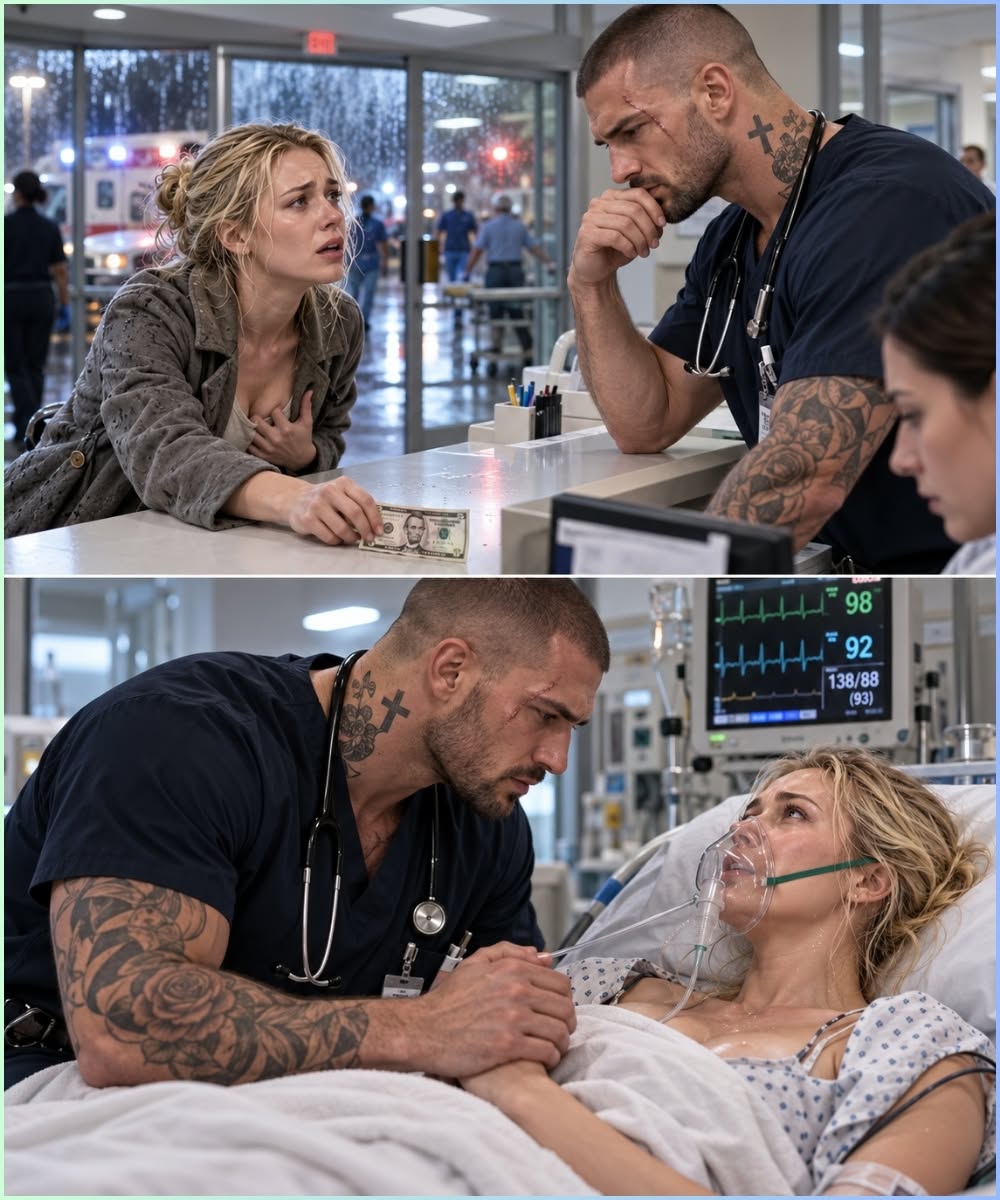
“Why stay?”
I thought about giving her the normal answer.
Training.
Career.
Patients.
Instead I said, “A man came in last winter. Homeless. Pneumonia. They wanted to transfer him because County had a charity bed. I thought he was unstable, so I refused.”
“He lived?”
“Yes.”
“And you got punished.”
“Officially? No.”
“Unofficially?”
“My procedure schedule disappeared for three weeks.”
Claire looked at me.
“Why?”
“Because somebody had to pay for making compassion expensive.”
She studied me for so long that I finally said, “What?”
Nothing.”
“That wasn’t nothing.”
“I was wondering whether you really believe that.”
“What?”
“That compassion is what made it expensive.”
I didn’t answer.
Because somewhere behind the question was the woman at the intake counter.
Five dollars in her hand.
Me telling her to walk.
My face got warm.
“I made a bad call tonight.”
“Yes.”
“You could pretend to be gracious.”
“I could.”
She took another sip of coffee.
“I’m choosing not to.”
At 4:18 a.m., her labs came back reassuring.
No heart damage.
No major infection.
Her chest X-ray was clear.
I should have discharged her.
Instead, she pointed toward my workstation.
“Can you check something?”
“That depends.”
“The man who was transferred.”
“Samuel?”
“Yes.”
“I can’t show you his chart.”
“Just tell me whether County received him.”
I stared at her.
“Why?”
“Because the transport aide came back.”
I looked into the hall.
She was right.
The aide who had taken Samuel out less than an hour earlier was pushing an empty wheelchair toward supply.