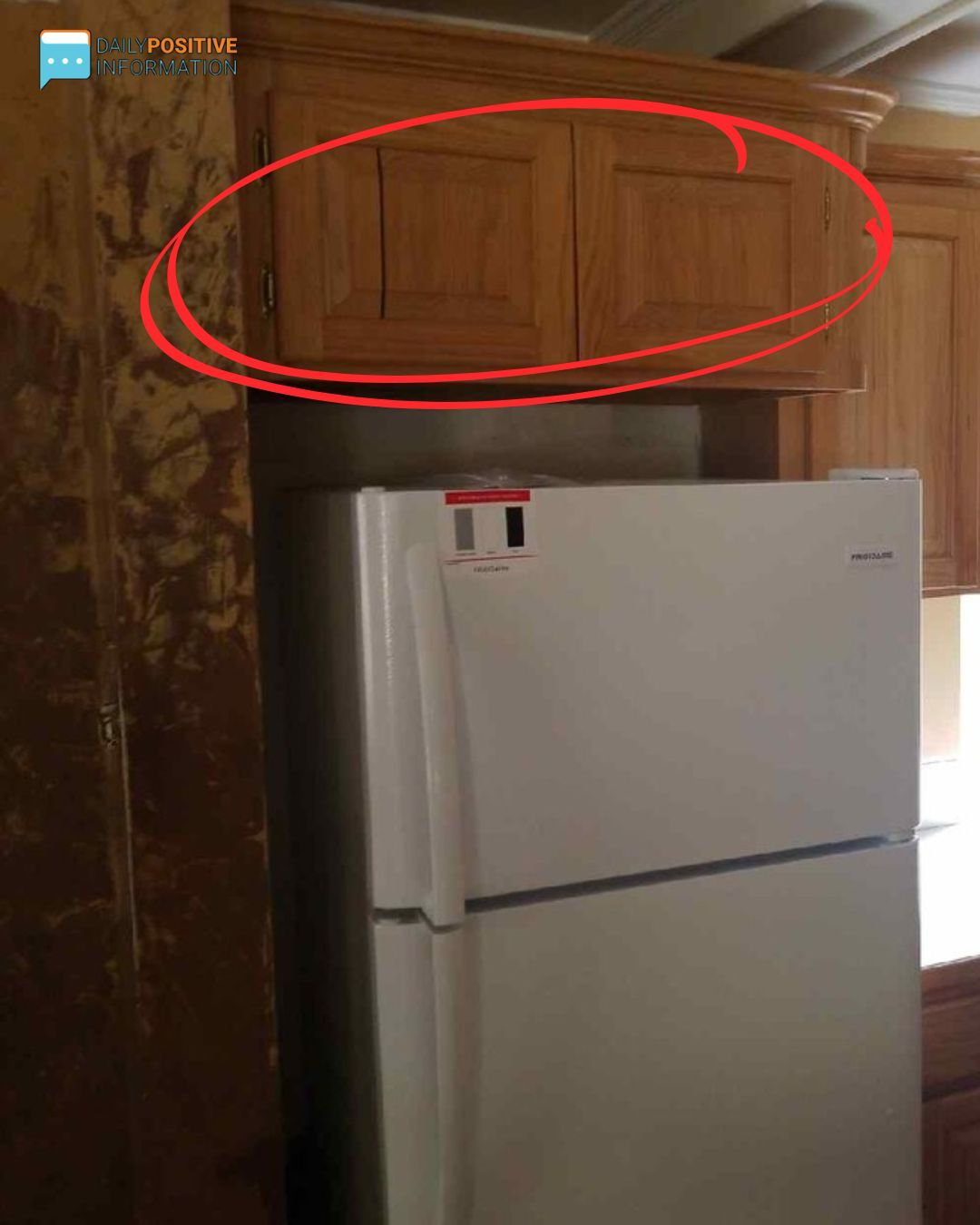
That awkward cabinet above your fridge that’s almost impossible to reach without a step stool isn’t actually useless. Professional organizers explained to Taste of Home exactly what should be stored there — and what absolutely shouldn’t. The cabinet’s 18-to-24-inch height, combined with the refrigerator’s 24-inch depth, makes it perfect for one specific category of items most people never think to place there.
In many American kitchens, the cabinet above the refrigerator exists in a strange kind of limbo. It’s too high to reach comfortably without a step stool. It’s too shallow for certain items. Dust builds up there quickly. Over time, it turns into a storage spot for random appliances, old serving dishes, or expired baking supplies forgotten years ago.
Professional organizers see this same problem in home after home. According to Carol Appelbaum, founder of Luxury Pro Organizer in Houston, the cabinet above the refrigerator “is often overlooked or used as a catch-all for miscellaneous items, but it can become a functional storage space” when used intentionally. Courtney Cummings of The Stylish Organizer, also featured in a 2025 Taste of Home article about difficult kitchen storage areas, explained the cabinet’s dimensional advantage: “The cabinet above the fridge is likely at least 18 inches tall, if not closer to 24 inches. Combine that with the fridge depth — usually 24 inches deep — and this is a perfect place for large platters.”
That extra height and depth — larger than most upper cabinets — is exactly what makes the space valuable. The biggest mistake homeowners make is treating it like ordinary cabinet storage. It isn’t ordinary storage. It works best as specialized storage for specific types of items, and the rules for what belongs there are completely different from the rest of the kitchen.
Here’s exactly what professional organizers recommend storing there, what they strongly advise against, and the organizing tools that make the space actually useful.
The professional consensus, repeated across multiple organizers featured in home design publications, focuses on four categories of items that fit the cabinet’s unique characteristics perfectly.
Seasonal and holiday-specific items are the top recommendation from nearly every organizer. Holiday dishes, decorative serving pieces, special-occasion cloth napkins, festive cookie cutters, and similar items used only a few times each year fit this storage space perfectly. Since you only need to access them occasionally, climbing a step stool a few times annually makes sense. Appelbaum specifically points to this category: “Since these items are only used occasionally, they won’t clutter your everyday storage, but they’ll still be within reach when you need them.”
Large serving platters and trays are another ideal choice. This is where the cabinet’s extra depth becomes important. Most upper cabinets are too shallow to hold large platters flat, but the over-fridge cabinet often has enough depth to handle them easily. Cummings recommends using vertical dividers to “section off each piece and easily slide platters in and out.” This avoids the frustrating problem of stacked platters where removing one means lifting everything above it first.
Lightweight bulk items also work well there. Paper towels, extra napkins, and lightweight pantry goods stored in airtight containers are good examples. The important word is lightweight. Heavy items create both safety risks and physical strain when removing them from above your head.
Cookbooks you don’t use every day can also fit nicely in this cabinet, especially when stored upright. The vertical setup takes advantage of the cabinet’s height, and cookbooks you reference only occasionally don’t need prime eye-level storage.
Heavy small appliances, however, should never go above the refrigerator. Advice suggesting you store blenders, food processors, or waffle makers there is completely backwards. Heavy appliances become genuine injury hazards when removed from overhead storage. A heavy food processor slipping from your hands can damage countertops or seriously injure you. Professional organizers repeatedly warn against storing bulky, heavy appliances there. As Appelbaum explains, “Consider storing lighter items rather than bulky, heavy cookware or appliances.”
Anything you use weekly or more often also doesn’t belong there. If you constantly need a step stool to reach something, it’s stored in the wrong place. The defining feature of this cabinet is that it’s inconvenient to access. Frequently used items should always stay within easy reach.
Items sensitive to heat should also be avoided. Refrigerators generate noticeable heat through their coils, especially older models with coils on the back or top. Chocolate, certain oils, candles, and other heat-sensitive products can deteriorate faster when stored above the appliance.
Storing items multiple layers deep is another major mistake. According to Appelbaum, “Storing more than one item deep is not efficient because you will have to remove multiple items just to reach something in the back.” Everything should remain visible and accessible in a single row whenever possible.
Fragile items that could fall should never be stored there either. Wine glasses, delicate china, and breakable pieces create obvious risks if they slip during removal. Those belong in cabinets with easier, safer access.
Several organizing tools can make the cabinet far more functional.
Vertical dividers are one of the most useful additions. Plastic or wire dividers create separate slots for platters and trays, allowing each one to slide in and out independently. Searching for “kitchen cabinet vertical dividers” usually brings up affordable options between $15 and $30.
Adjustable shelves can also completely change how usable the space becomes. If the cabinet has a fixed shelf, lowering or removing it may dramatically improve storage flexibility.
Stackable clear bins with labels are another highly recommended solution. Stores like IKEA, Amazon, and The Container Store all sell clear bins specifically designed for high cabinets. Since you can partially see inside them from below, they help eliminate guesswork. Large labels are essential because tiny labels are difficult to read from underneath.
Cabinet risers are useful when the cabinet is taller than the items being stored. These small platforms create a second storage level and help maximize vertical space.
Command Strips can help keep organizers from sliding around inside the cabinet. Home blogger Megan from The Homes I Have Made discovered after repeated trial and error that organizers placed above the fridge often shift during use. Command Strips keep everything stable while still allowing removal later if needed.
A dedicated step stool is absolutely essential. The cabinet’s height makes a sturdy step stool a safety necessity, not a luxury. A simple two-step folding stool stored nearby prevents dangerous habits like standing on chairs or countertops.
Beyond the specific tools, professional organizers emphasize several important principles for using this cabinet effectively.
Appelbaum recommends reassessing the cabinet once every year, especially after the holiday season. “If something hasn’t been used in a year or more, it’s worth asking whether it still deserves space in your kitchen.” Because the cabinet sits out of sight, it easily becomes a storage area for forgotten clutter.
Before reorganizing, empty the cabinet completely and group similar items together. Decide which categories truly deserve that storage space based on how often they’re used.
Everything that isn’t immediately recognizable should be clearly labeled. Since visibility into the cabinet is limited, readable labels help prevent the slow return of clutter and confusion.
Most importantly, the storage should match the cabinet’s actual access pattern. The space works best for items you intentionally retrieve a few times per year, not things you casually grab every day. Holiday serving dishes fit perfectly. Everyday salt and spices do not.
Cleaning the cabinet before reorganizing also matters. Dust and grease collect quickly above refrigerators because of kitchen airflow patterns. Wiping the area down with an all-purpose cleaner before adding new items makes future maintenance much easier.
The cabinet above the refrigerator reflects a larger truth about home organization: every storage space has characteristics that make it ideal for certain items and terrible for others. The real mistake most people make isn’t organizing badly — it’s assuming every storage space should function the same way.
The same principle applies throughout the home.
Under-sink cabinets handle moisture well, making them suitable for cleaning supplies but poor for paper goods or food.
Garage shelves tolerate temperature changes better for tools and seasonal items, but they’re terrible for paint, electronics, or heat-sensitive materials.
Attics work for protected holiday decorations in sealed bins but not for photographs, electronics, or anything with adhesives.
Basements may survive humidity and occasional moisture, but paper, fabric, and metal items can easily become damaged there.
Closet floor space provides easy access for daily-use items, but without organization systems, it quickly becomes chaotic.
The cabinet above the refrigerator becomes genuinely useful when you stop treating it like ordinary storage and start treating it like specialized storage for lightweight, infrequently used, oversized items that benefit from the cabinet’s depth and don’t require constant access.
For most homeowners, the solution is surprisingly simple: empty the cabinet, organize kitchen items by frequency of use, identify the “few-times-a-year” items scattered around the kitchen, and move them into the over-fridge cabinet using clear bins or vertical dividers. In less than an hour, one of the most wasted spaces in the kitchen can become one of the most efficient.
Most people assume those cabinets are pointless. Professional organizers who redesign kitchens for a living strongly disagree — but only when the space is used for what it’s actually designed to do instead of becoming overflow storage for random clutter.