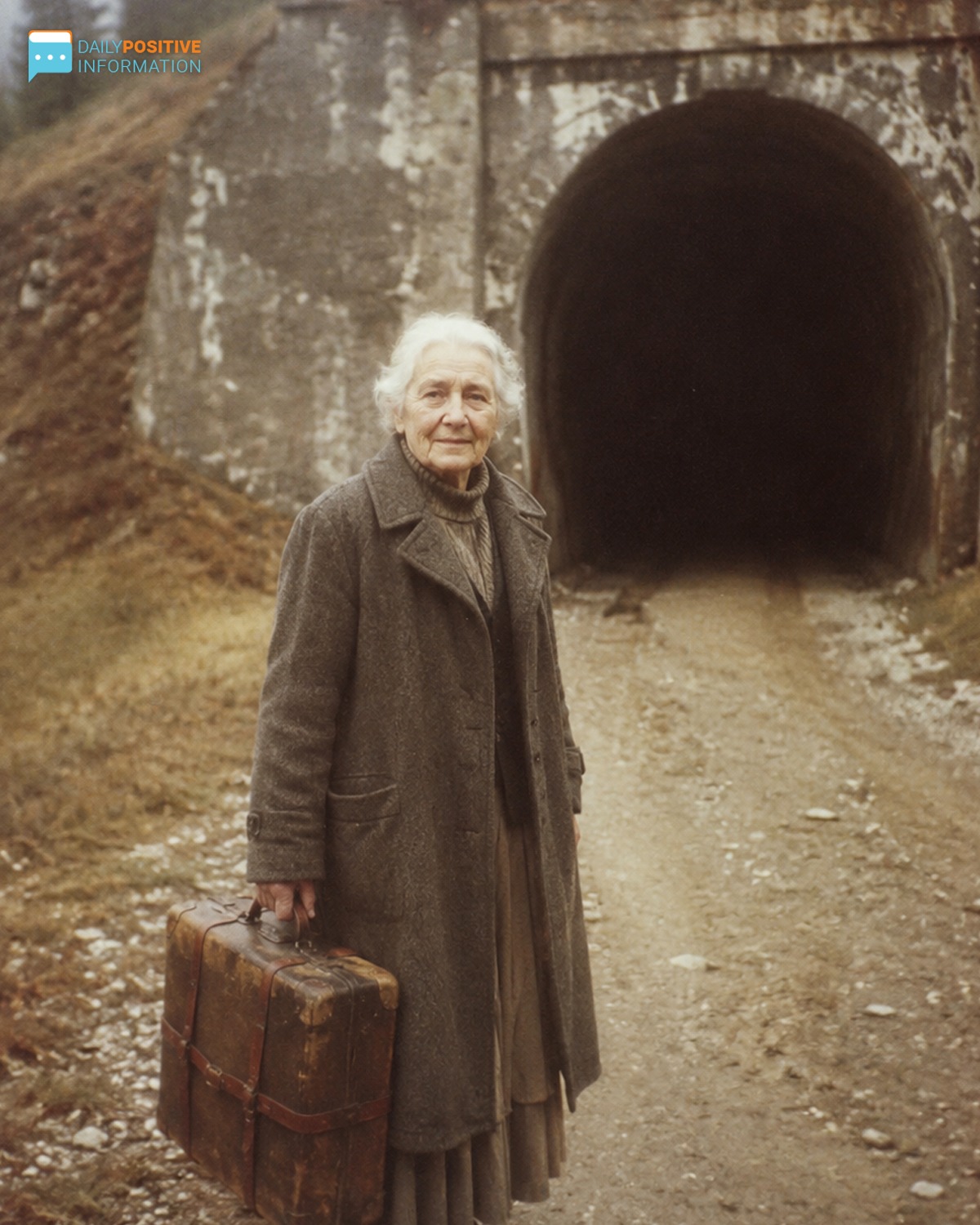
Debbie Harrison knew every inch of that little house on Maple Street the way only someone who has truly lived somewhere can.
She knew which floorboard beside the kitchen sink creaked when stepped on just right. She knew the dining room window would stick every time rain rolled through the valley and that you had to lift it slightly before it would finally slide open. She knew exactly how the October sunlight stretched warm and golden across the oak table where her husband Robert used to sit pretending to read the newspaper while secretly stealing bites of pie before supper.
Nobody in Asheford, Colorado would have called the house remarkable. It was a small two-bedroom cottage with aging white siding that needed repainting every few years, a narrow porch barely large enough for two rocking chairs, and a backyard where Debbie stubbornly tried every spring to grow tomatoes in mountain soil that clearly preferred refusing her.
But it was hers.
Hers and Robert’s.
They bought it in 1962 when he was twenty-six and she was twenty-two, back when the future still looked smooth and endless instead of steep and uncertain like the years that eventually followed.
Inside those walls she raised her son Marcus. She stitched Halloween costumes at the dining room table. She stayed awake through childhood fevers, Christmas mornings, broken hearts, and algebra homework. She mourned Robert’s death inside that house, then later carried another quieter grief there too as Marcus buried himself in work and tried carrying more of life than any one man should have to shoulder alone.
When Marcus died suddenly at fifty-three from a heart attack in a grocery store parking lot, something inside Debbie’s life cracked open in a way that never fully healed again.
After that, the only family she had left was Marcus’s son.
Kyle.
Even before Marcus passed away, Kyle had always been the kind of man small towns describe gently because nobody enjoys speaking the harsh truth aloud. Restless. Unfocused. Drifting. By thirty-two he had already cycled through enough jobs to fill an entire road map. Borrowing money came easier to him than paying it back. He spoke confidently when drinking and became bitter whenever people expected responsibility from him. There was always another unpaid bill, another girlfriend problem, another business idea that collapsed before it ever had the chance to breathe.
Marcus loved him fiercely anyway, the way good fathers often do when they keep believing patience and love might eventually guide a son toward solid ground.
After Marcus died, Kyle started appearing at Debbie’s house on Maple Street more often.
At first, Debbie was honestly grateful.
He sat at her kitchen table on Sunday afternoons with his father’s eyes and grandfather’s smile while she fed him potato soup and ham sandwiches. He listened while she repeated Marcus stories she had already told many times before. Once or twice he brought groceries. He offered to shovel snow after the season’s first storm. He called her “Grandma” with such tenderness that it tugged painfully at her aging heart.
And if she noticed his eyes lingering around the house too carefully, or the way his questions about finances came wrapped a little too neatly in concern, she forced herself not to become suspicious of her own blood.
Loneliness has a way of making people choose warmth over warning.
## The Day Kyle Arrived With Papers
The sky was pale and brittle blue the morning he brought the folder.
A sharp valley wind rattled the loose storm window in the front bedroom while Debbie sat at the kitchen table shelling beans for supper. Kyle walked in carrying a manila folder beneath one arm and a coffee from the diner downtown in the other hand.
“For you,” he said, placing the coffee beside her.
“Well now,” Debbie smiled. “You must want something.”
He laughed exactly when expected, though only briefly. Then his face settled into practiced seriousness.
“Grandma, I’ve been worried about you.”
She looked up above her reading glasses. “That so?”
“Yeah. You’re doing okay now, but things happen. Falls. Medical emergencies. Bills. If something ever went wrong and you couldn’t manage everything yourself, somebody should be able to step in and help.”
Debbie continued shelling beans. “I’ve handled myself just fine this long.”
“I know you have. I’m not saying you can’t.” He leaned forward, softening his voice. “I’m saying if something happened. Dad would’ve wanted somebody taking care of you.”
Marcus.
Kyle had learned, perhaps without fully realizing it himself, that his father’s name still unlocked every guarded room inside Debbie’s heart.
She slowly set the beans aside.
“What exactly are you asking me?”
He slid the papers from the folder.
A power of attorney.
Page after page of tiny legal language, the kind designed to exhaust ordinary people before they ever reached the bottom.
“Just emergency authority,” Kyle explained casually. “So I can help if you ever need it. Bank paperwork, insurance, bills. Just in case. It’s boilerplate lawyer stuff. Half of it sounds more serious than it actually is.”
“Protection from what?” Debbie asked carefully.
“From being alone if something happens.”
He placed his hand gently over hers.
For one dangerous, heartbreaking second, he looked exactly like Marcus at eighteen before life and disappointment hardened his features.
“You trust me, don’t you?”
Old age had not stolen Debbie’s intelligence. But it had altered its rhythm. Dates blurred sometimes. Long conversations slipped around the edges. Legal jargon hit her mind like sleet against glass, and Kyle understood that perfectly.
She hesitated long enough that a wiser moment might have carried those papers to a lawyer, a pastor, a friend — anyone.
But wisdom can drown beneath grief, love, and the deeply human desire to believe family is better than it truly is.
So she signed.
Kyle hugged her afterward.
Months later, a coldness still remained inside her whenever she remembered how quickly he returned the papers to the folder. How carefully he held them as he walked away. How relieved he looked.
## The Letter
Two months later, the notice arrived.
Not from Kyle.
From a real estate office.
At first Debbie honestly thought the letter had been delivered to the wrong address. Standing on the porch in slippers, she read the opening sentence three times before her mind finally accepted what it meant.
The property at 214 Maple Street had been sold.
The new owners would take possession in thirty days.
The current occupant was required to vacate.
Debbie carried the letter inside and sat down at the same kitchen table where Kyle once placed coffee and paperwork. She stared at the notice while the kettle on the stove shrieked itself dry.
Then she picked up the phone and called him.
He answered on the fourth ring.
“Kyle,” she said carefully, “there’s been some mistake.”
A pause.
“What mistake?”
“This letter says my house was sold.”
Silence.
Debbie flattened her shaking hand against the table.
“Kyle?”
When he finally spoke, his voice sounded disturbingly calm.
“Grandma, we already talked about this.”
“No. We absolutely did not.”
“You signed for me to handle things.”
“I signed so you could help if I got sick.”
“You signed power of attorney.”
The room seemed to shrink around her.
“Kyle,” she said slowly, carefully, “I never gave you permission to sell my house.”
He sighed impatiently.
“You don’t remember the conversation?”
“There was no conversation.”
“You said yourself you couldn’t keep up with the place anymore. Repairs, taxes, maintenance. It was too much. This is better.”
“Better for who?”
Silence again.
When he spoke next, every trace of softness had vanished.
“I did what needed to be done.”
“Where am I supposed to go?”
“There are senior places.”
“With what money?”
No answer.
And suddenly she understood.
Not only what he had done.
But why.
“Kyle,” she whispered. “Did you take the money?”
His response came flat and defensive.
“I had debts.”
Debbie closed her eyes.
The kitchen around her — Robert’s chair, the curtains she hemmed herself, Marcus’s high school photo still hanging on the refrigerator — suddenly felt like someone else’s museum.
“I trusted you,” she whispered.
He laughed harshly, shame disguised as anger.
“You trusted Dad too, and look where that got everybody.”
The cruelty of the sentence felt almost rehearsed.
“Don’t speak about your father that way,” Debbie said quietly.
“It’s already done, Grandma.”
“This is my home.”
“You’re too old to be living there alone.”
She gripped the phone with both hands.
“I’m old enough to recognize betrayal when I hear it.”
For one brief second she thought maybe conscience had finally reached him.
Instead he said:
“You’ll figure something out.”
Then he hung up.
## The Mountain
The lawyer was kind.
But the law did not care who deserved shelter.
Kyle had used the authority she gave him. The paperwork was technically clean. Fighting it would require money Debbie did not have and time the eviction notice would never allow.
Mrs. Patterson from next door brought pound cake and tears while repeating over and over:
“I just don’t understand how a grandson could do something like this.”
But understanding was never really the problem.
The thirty days passed like fever.
Debbie packed only what she could not bear to lose.
A photo album.
Robert’s pocketknife.
Marcus’s kindergarten drawing of a trout that had hung on the pantry wall for forty-five years.
Two changes of clothes.
A winter coat.
A Bible.
Candles from the hallway closet because she had always kept candles for storms.
And whatever cash remained after discovering most of the checking account had already been emptied.
The morning the eviction became official, frost coated the garden like powdered sugar.
Debbie stood on the sidewalk beside one suitcase while workers changed the locks and boarded up the windows.
Mrs. Patterson pressed two hundred dollars into her coat pocket.
“Don’t argue. Please. Just take it.”
Debbie accepted because pride does not keep an old woman warm in November.
When the hammering began against the windows, she turned away.
She did not go to a shelter.
She went to the mountain.
Her father had once been a forest ranger. Long before she became Mrs. Robert Harrison of Maple Street, she had been Debbie Miller in the woods. She knew trails, springs, rock ledges, and weather by scent. She knew how to build shelter from pine boughs and catch brook trout in icy streams above town.
And buried deep inside those memories lived one place.
An abandoned mining tunnel on the mountain’s north face, half-hidden by brush and forgotten decades.
Her father showed it to her once when she was young and warned:
“Never go in there alone.”
Which ensured she remembered it forever.
Now, with cold settling into the valley and her suitcase dragging against her legs, Debbie turned toward the mountain.
The climb took nearly two hours.
By the end her breath scraped painfully inside her throat and a blister burned across her palm from the suitcase handle. Twice she had to stop and rest on rocks. Once she thought she might faint.
But eventually the tunnel appeared.
A dark opening cut into the mountainside, hidden beneath pine and stone.
She stood at the entrance and let the truth settle fully over her.
She was eighty-four years old.
Homeless because her own grandson stole her home.
Standing before a mountain tunnel like some forgotten animal searching for shelter.
“This is madness,” she whispered.
But the light was fading and the cold deepening.
So she picked up the suitcase and stepped inside.
## The Palace of Light
The darkness came first.
Not ordinary darkness.
Tunnel darkness.
Earth darkness.
The kind that swallows shape and distance until a person feels painfully mortal.
Then came the cold.
A deep stone cold untouched by sunlight for generations.
Debbie’s flashlight showed fifteen percent battery and no signal.
But it revealed enough.
Rough walls.
Uneven ground.
And deeper inside, a wider chamber large enough to become shelter.
She carried her suitcase there.
“This is where I’ll die if I’m not careful,” she thought.
Oddly, the realization steadied her more than it frightened her.
She lit one candle.
The chamber changed.
Still cold.
Still harsh.
But the flame pushed enough darkness away to give the place edges.
And in the candlelight she noticed something beautiful.
Quartz veins streaked through the walls like frozen lightning.
Moisture glimmered against stone.
The ceiling curved overhead almost like the old church sanctuary before renovations changed it.
Sitting there on her suitcase because the ground felt too cold to trust, Debbie finally cried.
For Robert.
For Marcus.
For the house on Maple Street.
For the tomatoes.
For the humiliation of becoming old inside a world that slowly turns elderly people into paperwork.
Mostly she cried because she was exhausted.
Eventually the tears stopped.
Nothing around her had changed.
Oddly, that became the beginning of her courage.
“Well,” she said aloud.
Then she stood.
Over the next weeks she built a life.
Not quickly.
Patiently.
Wake with light.
Wash in the stream.
Work.
Rest.
Work again.
She carved candle niches into softer stone. She hauled flat rocks uphill one at a time to raise pathways above the damp floor. She salvaged abandoned wood from town dumpsters and slowly built a raised sleeping platform. She stuffed an old sleeping bag with moss and pine needles until it became a mattress smelling of earth and cold mountain air.
The first night she slept comfortably for four uninterrupted hours, she woke confused simply because comfort itself felt unfamiliar.
Then one day, while clearing a narrow side passage, her hand brushed against something smoother than natural rock.
Stone blocks.
Deliberate.
Ancient.
At the center ran a seam.
She pushed.
The hidden wall shifted open.
Cold air breathed outward.
Debbie lifted the lantern.
Inside waited another chamber.
And when the light touched its walls, the mountain answered in stars.
Crystals.
Quartz and mineral formations thick across the chamber, catching lantern light in thousands of silver reflections.
Debbie laughed until tears rolled down her face.
Not because she was happy.
Because the mountain itself seemed to whisper:
Look deeper.
For three days she cleaned the chamber carefully with cold water and old rags.
As the grime disappeared, the room transformed.
Silver.
White.
Amber.
Light multiplied endlessly across crystal faces.
The first evening she finished enough to truly see it, she placed candles throughout the room and lit them one by one.
The chamber came alive.
Every crystal caught flame and scattered it.
The mountain seemed filled with trapped starlight.
Debbie sat there silently crying.
Not grief this time.
Reverence.
“All right,” she whispered to the glowing walls. “I see you.”
By winter, the tunnel no longer resembled the place where she arrived with a suitcase and one candle.
The floor became a mosaic of fitted stone.
The walls glowed warm beneath lantern light.
The sleeping platform stood sturdy.
The hidden crystal room looked almost sacred.
Kyle took her house.
But he did not take this.
He did not take her hands.
Or her eye for beauty.
Or her ability to build life from ruin.
## The Discovery
Three months later, hikers spotted lantern light near the tunnel.
Sarah and Tom entered cautiously.
Then stopped in stunned silence.
“My God,” Tom whispered.
Debbie straightened proudly.
“I know how it looks.”
Sarah shook her head.
“No. It’s beautiful.”
That word from a stranger warmed Debbie more than the fire ever could.
She told them everything.
Kyle.
The eviction.
The tunnel.
The crystal room.
When Sarah saw the chamber glowing with candlelight, she nearly sobbed.
“People need to know about this,” she whispered.
“I don’t need pity,” Debbie replied.
“That’s not what I mean.”
Tom spoke gently.
“What you made here matters.”
“What does it say?” Debbie asked.
Sarah answered quietly.
“That they were wrong about your worth.”
The story spread quickly.
By the next morning the entire state knew about the eighty-four-year-old woman living inside a mountain tunnel she transformed into beauty.
The town named it:
The Palace of Light.
Debbie disliked the name at first.
Too dramatic.
Too polished.
But it spread anyway.
People climbed the mountain leaving blankets, food, candles, gloves, letters, and money.
Lawyers offered help.
Advocates arrived.
Contractors volunteered labor.
Engineers reinforced the tunnel safely.
Solar panels were installed discreetly above.
Water systems added.
But everyone quickly learned one thing:
Nothing happened without Debbie’s approval.
“They’ll ruin it,” she warned Sarah once.
“They won’t,” Sarah promised. “Not while you’re standing there glaring at them.”
And so Debbie stood there glaring.
By her eighty-seventh birthday, people traveled across the country just to sit quietly inside the crystal chamber.
No loud voices.
No careless behavior.
“Why so strict?” one reporter once asked.
“Because reverence needs room,” Debbie answered.
Visitors came carrying grief, loneliness, heartbreak, aging, abandonment, and fear.
Debbie guided them through the tunnel herself.
“This,” she would say near the entrance, “is where I believed the world had reached its final conclusion about what I was worth.”
Then she would lead them into the crystal chamber.
And eventually everyone reacted the same way.
Silence.
Then tears.
Because they understood.
The room was not simply beautiful.
It was proof.
Proof that abandonment is not ending.
Proof that age is not erasure.
Proof that beauty pulled from suffering becomes something deeper than decoration.
It becomes survival made visible.
The legal case against Kyle eventually succeeded.
Not enough to restore Maple Street.
That house belonged to someone else now.
And Debbie no longer wanted it.
What she received instead was acknowledgment.
Protection.
Justice strong enough to follow Kyle for the rest of his life.
He left Asheford quietly afterward.
Debbie never asked where he went.
One afternoon Sarah asked her:
“Don’t you ever wonder about him?”
Debbie sipped tea quietly before answering.
“When Robert was alive, he used to tell Marcus guilt is like carrying wet wool on your shoulders. Heavy all the time, and it never fully dries. If Kyle still has any conscience left, he already knows exactly where he is.”
“You really don’t hate him anymore?” Sarah asked.
Debbie looked toward the tunnel glowing softly in evening light.
“I did for a while,” she admitted. “Hate keeps you warm when you’re freezing. It’s useful at first. But it’s poor fuel for a long life.”
## The Final Lesson
On Debbie’s eighty-seventh birthday, they carried cake into the crystal chamber.
Candles burned in every carved niche.
The walls shimmered with warm reflected light.
Someone asked Debbie what she wished for.
She smiled.
“That people stop mistaking comfort for life.”
Later, after everyone left, Debbie remained alone inside the chamber.
She thought about Robert.
About Marcus.
About the frightened old woman standing on the sidewalk beside one suitcase while strangers boarded up her home.
Then she walked slowly back through the tunnel lighting candles one by one exactly the way she had during that first brutal winter.
Warm amber light climbed the walls.
The cracked mirror scattered reflections.
Quartz veins flashed softly.
Standing in the center of the chamber, spine bent slightly by age but never by defeat, Debbie finally said aloud the truth she had earned.
“They took my house.
But they never took my home.”