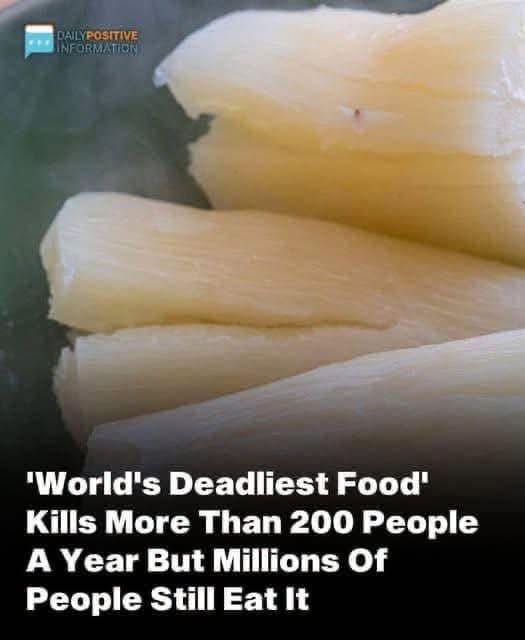
It may look like an ordinary root vegetable, but cassava demands careful preparation before it is safe to eat. For hundreds of millions of people across Africa, Asia, and Latin America, cassava is a vital source of food, providing calories where other crops often fail. Its remarkable ability to grow in poor soils and withstand drought has made it one of the world’s most important staple crops. Yet beneath its rough exterior lies a natural defense mechanism that can become dangerous if the root is not prepared correctly.
Cassava contains naturally occurring compounds known as cyanogenic glycosides. When the plant is damaged by peeling, cutting, or chewing, these compounds can release small amounts of cyanide. Sweet varieties of cassava generally contain much lower levels of these compounds than bitter varieties, but both require proper preparation before consumption. When processed correctly, cassava is safe to eat and has been enjoyed for generations in countless traditional cuisines.
For many communities, cassava represents far more than a food crop. It provides dependable harvests during droughts, survives where other crops struggle, and serves as a critical source of nutrition during periods of food insecurity. Its resilience has helped countless families endure difficult conditions caused by climate change, conflict, and economic hardship.
Traditional preparation methods developed over generations are essential for making cassava safe. Depending on the variety and local customs, the root is typically peeled thoroughly, grated or sliced, soaked in water, fermented, dried, and then cooked completely. These steps help remove or greatly reduce the naturally occurring compounds that can produce cyanide, making the root suitable for consumption.
Problems can arise when cassava is eaten raw or when preparation is rushed or incomplete. Consuming improperly processed cassava can lead to cyanide poisoning, with symptoms such as nausea, vomiting, dizziness, abdominal pain, confusion, weakness, and, in severe cases, difficulty breathing or life-threatening complications. The risk is greatest during food shortages, emergencies, or situations where people may not have enough time, water, or fuel to process the root properly.
Long-term reliance on poorly processed cassava, particularly in communities where diets lack sufficient protein, has also been associated with certain neurological disorders in some regions. One example is konzo, a rare condition that causes irreversible weakness or paralysis of the legs. These illnesses are most often linked to prolonged consumption of inadequately processed bitter cassava under conditions of severe poverty and malnutrition.
Fortunately, these health risks are largely preventable. Following traditional preparation techniques, purchasing cassava products from reliable sources, and cooking the root thoroughly all help make it safe to eat. Commercial cassava products sold in many grocery stores have generally been processed according to food safety standards before reaching consumers.
Cassava also appears in many familiar foods around the world. Tapioca pearls, cassava flour, cassava chips, and various baked goods are all made from properly processed cassava. These products are widely consumed and considered safe when produced using established manufacturing practices.
The story of cassava is one of balance. It is neither a miracle food nor a dangerous poison by nature. Instead, it is a remarkable crop that rewards careful preparation. Generations of farming communities developed effective methods through experience, passing that knowledge from one generation to the next to ensure the plant could safely nourish their families.
As global interest in cassava continues to grow, preserving that traditional knowledge remains just as important as expanding access to the crop itself. Understanding how to prepare cassava properly allows people to benefit from one of the world’s most resilient food sources while avoiding preventable health risks. With the right techniques and respect for established food safety practices, cassava continues to serve as a dependable staple that supports millions of lives around the world.