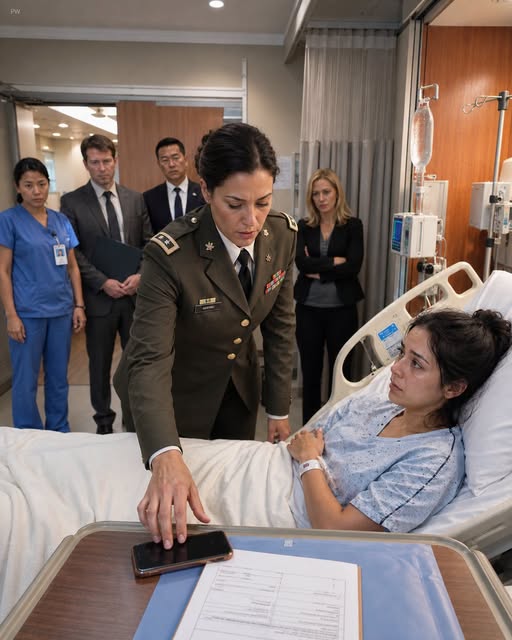
My daughter’s voice shattered my life in a single call. There was fear buried beneath those few broken words, the kind of fear a parent recognizes before the mind can even process what is being said. By the time I reached the hospital, the Bennetts were already there, calm and composed, smiling like they owned the building and everyone inside it. My bruised child seemed to them like just another problem to be managed, another uncomfortable situation that could be contained if they controlled the right people and said the right things.
They thought money, lawyers, connections, and carefully chosen threats would bury what they had done. They believed they could turn the entire situation into a private family disagreement, something that would disappear once everyone went home and stopped asking questions. What they didn’t know was that I had walked through those hospital doors carrying something far more dangerous to their version of events: a timeline, witnesses, documented conversations, photographs, and a silent detonator of truth they could not easily erase.
The Bennetts had spent years rehearsing their roles. There was the indulgent husband who always claimed he was only trying to help. There were the reasonable parents who spoke softly while making everyone else feel unreasonable. There was the family that always knew best, always had an explanation, always seemed prepared to make someone else doubt what they had seen or felt.
Their favorite script was predictable. She’s dramatic. It was a misunderstanding. She misunderstood what happened. Everyone is upset. Let’s not make this worse. Let’s keep this private. They repeated variations of those phrases so often that they had probably convinced themselves they were true. What they never imagined was that someone had entered the scene without following their script—someone who had been documenting every contradiction, every change in their story, and every attempt to control the narrative.
The hospital room became a battlefield they could not control. Suddenly, there were intake forms that could not be rewritten, photographs that captured what words tried to minimize, timestamps that placed people where they claimed they had not been, and professionals who were not interested in protecting a family reputation. They treated my daughter as a patient with rights, a person whose condition mattered, and a voice that deserved to be heard.
For the first time, their influence began to weaken. They could no longer simply walk into a room and decide what everyone should believe. Every conversation had consequences. Every statement could be recorded. Every attempt to pressure Emily could become another piece of evidence. Their confidence began to fray the moment it met a paper trail and a mother who refused to be baited into screaming, threatening, or making the kind of mistake they could use against her.
I knew they wanted me angry. They wanted me to lose control because anger is easy to manipulate. If I shouted, they could call me unstable. If I threatened them, they could make themselves look like victims. If I acted impulsively, they could point to my behavior and distract everyone from what had happened to Emily.
So I did the opposite.
I stayed calm. I wrote everything down. I saved every message. I remembered every name, every time, every detail. When someone said something that mattered, I documented it. When someone changed their story, I documented that too. I stopped trying to convince the Bennetts of anything because they were never going to voluntarily surrender the story that protected them.
What mattered most, however, was not my rank or their money. It was Emily’s voice.
Her cracked, defiant words came quietly at first, almost lost beneath everything happening around her.
“I want them out.”
That sentence changed everything.
It was not dramatic. It was not a courtroom speech. It was not a grand declaration. It was simply a frightened young woman finally saying what she wanted after spending too long having other people decide what was best for her.
Those words turned bystanders into witnesses. They transformed policy from a collection of rules into a shield. They forced people in the room to listen instead of assuming. And once Emily had spoken, I understood that my job was no longer to fight her battle for her. My job was to make sure nobody could silence her again.
Survival did not look like victory.
It looked like locksmiths arriving at midnight. It looked like passwords being changed one by one. It looked like phone numbers being blocked, accounts secured, documents copied, and orders signed with shaky hands. It looked like sleeping with one ear open because even after the immediate danger passed, trust did not magically return.
It looked like choosing daylight over secrecy.
It meant telling the people who needed to know instead of protecting a reputation. It meant choosing process over revenge, evidence over accusations, and documentation over fear. There were moments when every part of me wanted to confront the Bennetts and demand answers, but I knew that confrontation was exactly what they were waiting for.
I could not speak the words that freed Emily. Only she could do that.
What I could do was clear the way.
I answered every call. I recorded every important detail. I kept copies of everything. I made sure every professional involved understood what Emily had said. When a threat came, I did not respond with another threat. I documented it. When someone tried to rewrite the past, I returned to the timeline. When they tried to make the situation emotional, I brought it back to facts.
Slowly, the balance shifted.
The Bennetts walked into that hospital believing they still controlled the room. They walked out with less than they had arrived with—not money, not possessions, but certainty. Their certainty that they could control Emily. Their certainty that everyone would believe them. Their certainty that silence would protect them.
That certainty was gone.
And Emily finally walked toward a life they had never planned for her.
It was not perfect. Freedom rarely is. There were difficult mornings, difficult conversations, and moments when the past still felt close enough to touch. But there was something new in her life that had been missing for far too long: choice.
Her voice had become the boundary.
Not their influence. Not their money. Not their carefully rehearsed explanations.
Her voice.
And this time, when she drew the line, everyone finally understood that it was hers to draw.