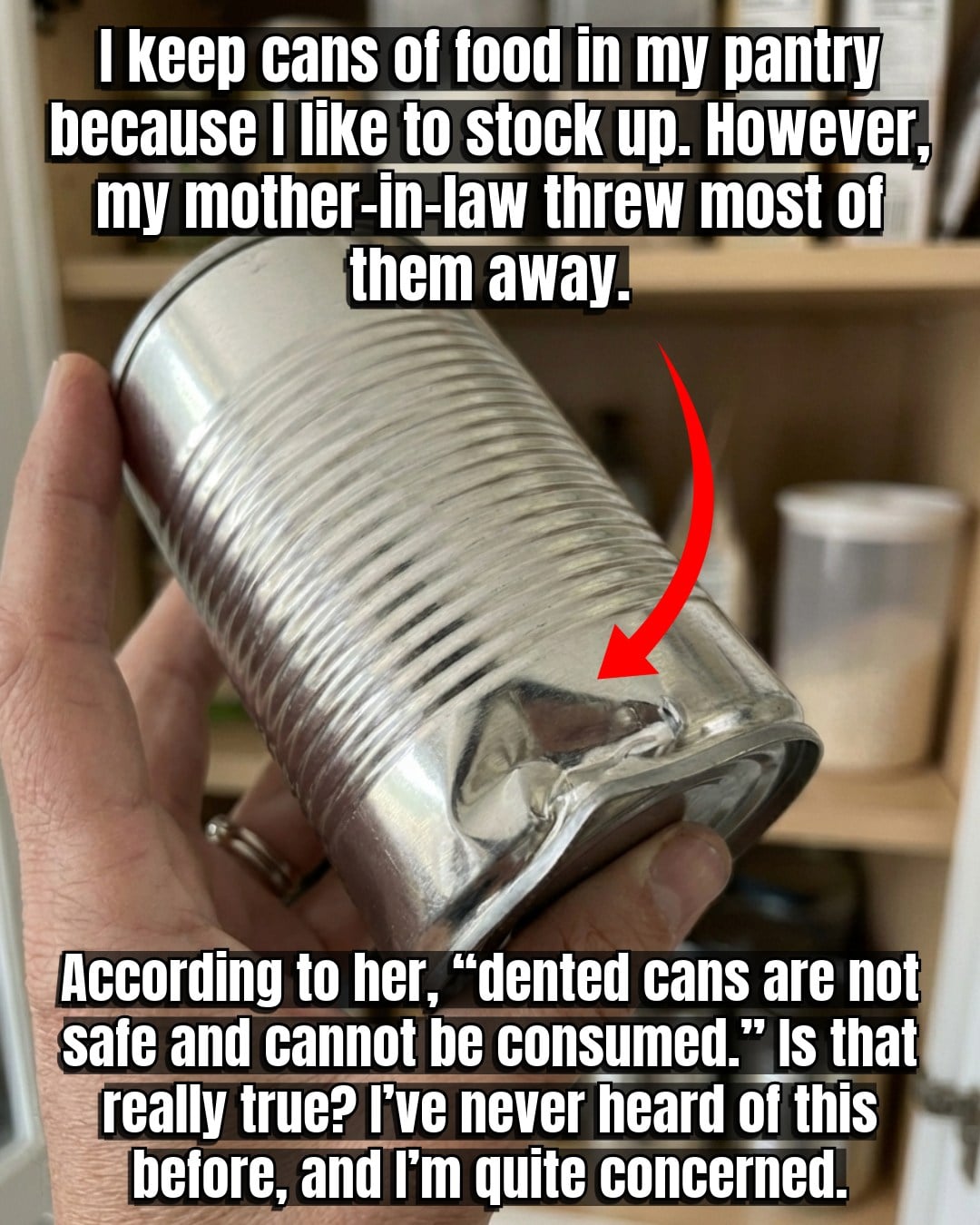
That dented can sitting quietly on the bottom shelf of your pantry may look harmless — just another slightly damaged item you keep meaning to deal with later. Most people have done it: noticed a dent, hesitated for a second, then pushed the can aside thinking it probably isn’t a big deal. After all, canned food is supposed to last for years. The metal feels solid, the label still looks fine, and nothing appears obviously wrong. But some dents are more than cosmetic damage. In the wrong place, a bent can can compromise the invisible protective barrier keeping dangerous bacteria out of your food.
Canned foods feel safe because they are engineered to be safe. Inside every properly sealed can is a carefully controlled environment designed to block air, moisture, and microorganisms. During the canning process, food is heated to destroy harmful bacteria, then vacuum-sealed so contaminants cannot re-enter. That airtight seal is what allows canned foods to remain shelf-stable for months or even years. But when metal becomes deeply bent, punctured, or weakened — especially near seams or lids — the protection holding everything together can quietly fail.
And that is where the danger begins.
One of the biggest concerns with damaged cans is the potential growth of Botulism, a rare but potentially deadly illness caused by toxins produced by Clostridium botulinum bacteria. These bacteria thrive in low-oxygen environments like improperly sealed canned foods. What makes botulism especially frightening is that contamination often cannot be seen, smelled, or tasted. A can may look mostly normal while dangerous toxins develop silently inside.
That is why food safety experts take damaged cans seriously even when the problem seems minor.
Certain warning signs should immediately raise concern. Deep dents you can feel sharply with your fingertip, especially around seams or lids, may indicate the seal has been compromised. Sharp creases are riskier than smooth shallow dents because they can weaken the metal enough to create microscopic openings where bacteria may enter. Bulging lids or swollen cans are particularly dangerous because gas buildup inside can signal bacterial growth. Rust around damaged areas, leaking liquid, spraying contents when opened, foul smells, or unusual discoloration are all major red flags that the food should never be eaten.
What confuses many people is that not all dents are dangerous. Minor shallow dents located away from seams or edges are usually considered low risk. If the can remains structurally intact with no sharp creases, swelling, leaks, or rust, the food inside is often still safe. But distinguishing harmless damage from risky damage is not always easy for consumers standing in a kitchen trying to decide whether to save or discard something.
That uncertainty is why experts often repeat a simple principle: when it comes to canned food, “better safe than sorry” is genuinely good advice.
The consequences of severe foodborne illness can be devastating. Symptoms of botulism may include blurred vision, muscle weakness, difficulty speaking or swallowing, breathing problems, and paralysis. Without rapid medical treatment, the illness can become life-threatening. Although cases remain rare, botulism is dangerous enough that health agencies urge extreme caution around potentially compromised canned foods.
The risk also increases because many people grew up treating canned food as nearly indestructible. Pantry items often feel emotionally reassuring — emergency backups that stay safe long after fresh foods expire. During shortages, economic hardship, or busy periods of life, canned foods become especially valuable because they provide affordable, long-lasting meals. That convenience sometimes makes people reluctant to throw damaged cans away, especially if the contents appear expensive or still usable.
But saving a few dollars is never worth gambling with food safety.
Experts recommend inspecting canned goods regularly instead of letting older items disappear into the back of shelves for years. Organizing pantries so older products are rotated forward helps reduce forgotten stock and makes it easier to spot damaged cans early. If a can arrives deeply dented from the store, returning it is usually safer than assuming it is fine. Many retailers will replace visibly damaged canned products without issue.
Storage conditions matter too. Excess heat, humidity, and rough handling can weaken cans over time, increasing the chance of corrosion or seal failure. Keeping canned goods in cool, dry areas and avoiding stacking heavy items on top of them helps maintain their integrity longer.
What makes this issue especially unsettling is how invisible the threat can feel. Human beings naturally trust visual cues to judge safety. Mold, rot, or bad smells signal danger clearly. But certain foodborne toxins do not announce themselves so obviously. A can may appear only slightly damaged while still carrying serious risk underneath the metal surface.
In the end, that small dented can represents something larger about modern food safety itself: much of what protects us remains invisible until it fails. The smooth metal, airtight seal, and sterile environment inside canned foods are engineering systems people rarely think about until one tiny crease raises questions about whether those protections still exist.
So the next time you notice a swollen lid, a sharp dent near a seam, rust spreading across damaged metal, or even a can that simply feels questionable, trust the discomfort instead of ignoring it. Because sometimes the safest decision in a kitchen is also the simplest one: throw it away and move on.