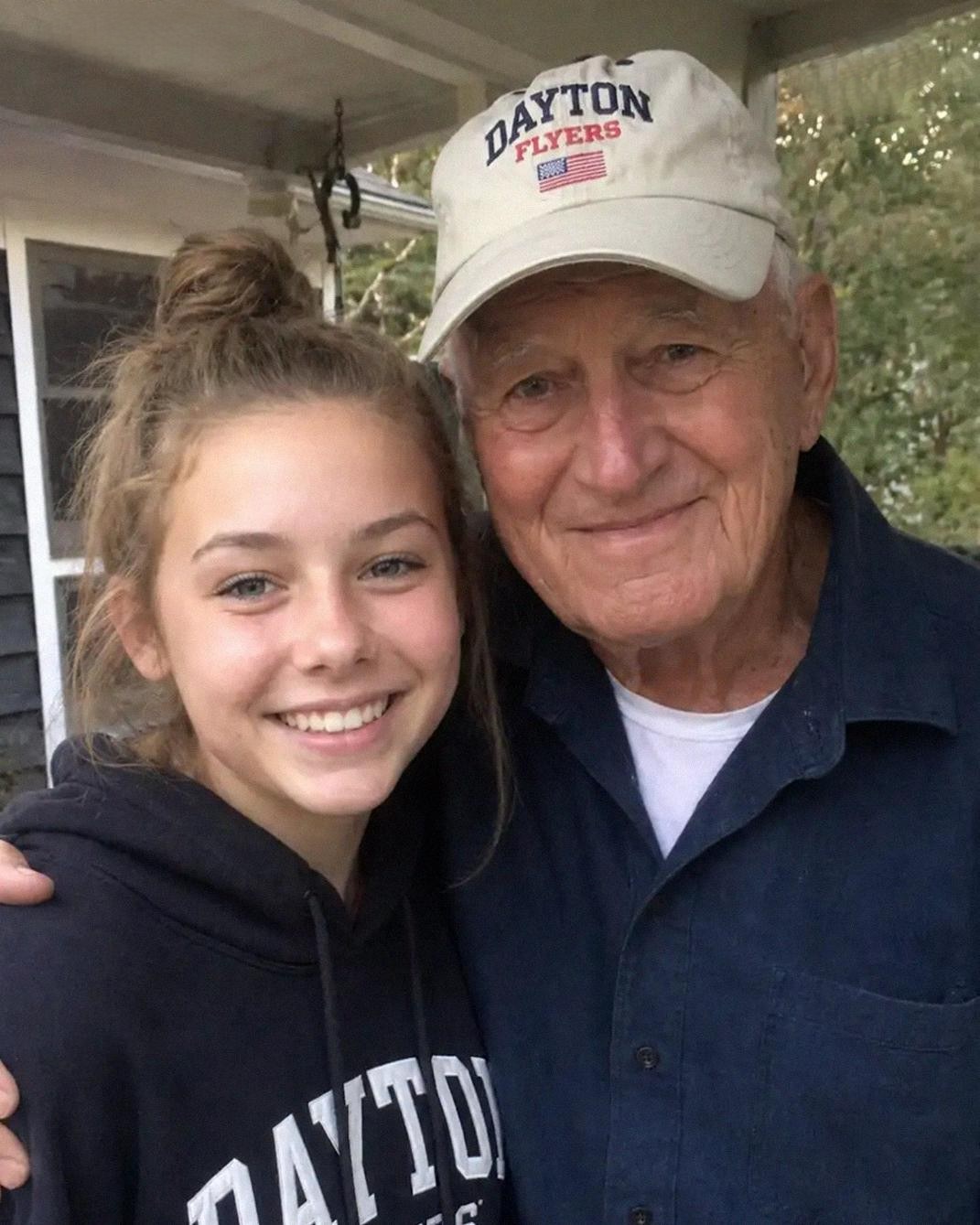
The distance between my daughter and me did not arrive all at once. It crept quietly into our lives until one day I realized the girl who once sat beside me gossiping about teachers and laughing over burnt pancakes had become someone I barely recognized. Hanna drifted through our house like a shadow, polite but emotionally unreachable. Every conversation ended quickly. Every attempt to reconnect felt like pushing against a locked door.
And always, there was the same explanation.
“I’m going to Grandpa Stuart’s.”
At first, I welcomed it.
After my husband Pete died from a sudden heart attack eight years earlier, Stuart became the steady foundation holding our small family together. Hanna was only seven when she lost her father. She used to wear a plastic toy stethoscope around the house and promise she would grow up and “fix hearts forever.” Stuart never tried replacing Pete, but he filled the empty spaces grief created. He attended school plays, helped with homework, taught Hanna to ride a bike, and somehow kept our lives from completely collapsing after the funeral.
So when my teenage daughter started spending most of her free time with him, I told myself it was harmless.
Comforting, even.
But slowly, something changed.
At home, Hanna became colder and more unpredictable. Meals turned tense. Her eyes constantly looked tired, like she was carrying something too heavy to share. One evening during dinner, I casually asked what she and Stuart had been doing together lately. I even suggested bringing over a lemon cake and joining them sometime.
The reaction stunned me.
Hanna slammed her fork against the plate and snapped at me to leave it alone. When I reminded her that I was still her mother and deserved some honesty, she pushed away from the table and disappeared upstairs.
The click of her bedroom door sounded final somehow.
That night, I called Stuart looking for reassurance. He answered warmly like always, but when I asked directly about Hanna, there was a tiny pause before he explained they were “just gardening.”
It should have sounded harmless.
Instead, it sounded rehearsed.
A mother’s intuition is difficult to silence once it starts whispering something is wrong.
The next afternoon, guilt twisting in my stomach, I drove near Stuart’s neighborhood and watched quietly from behind a fence bordering his yard. What I saw confused me even more.
Hanna was laughing.
Actually laughing.
The kind of carefree laugh I hadn’t heard at home in months.
She rolled her eyes playfully while Stuart handed her small gardening pots beside rows of flowers. She looked light again, alive again. And watching that happiness exist everywhere except around me hurt more than I wanted to admit.
It felt like my daughter belonged to someone else’s world now.
Then everything changed on a rainy Saturday morning.
Stuart appeared unexpectedly at my front door looking exhausted in a way I had never seen before. He asked me to walk with him to the nearby park. We sat together on an old wooden bench while he stared silently at the ground for a long time before finally speaking.
“I know you’ve been worried,” he said softly. “And honestly, you deserve the truth.”
Then he told me the secret Hanna had been carrying alone.
Months earlier, while searching through a kitchen drawer, Hanna accidentally discovered Stuart’s medical records.
Stage four cancer.
He made her promise not to tell me.
According to Stuart, he couldn’t bear the idea of watching me survive another devastating loss while still carrying unresolved grief over Pete’s death. He thought protecting me from the truth for a little while longer would somehow lessen the pain.
And Hanna—my fifteen-year-old daughter—kept that promise.
Suddenly every cold silence, every emotional outburst, every desperate retreat to Stuart’s house made horrifying sense. She wasn’t pushing me away because she stopped loving me.
She was terrified.
Terrified that if she looked at me too long, the truth would slip out and destroy me.
When I got home, Hanna stood in the kitchen preparing blueberries for a pie she planned to bake for Stuart. I confronted her gently, and at first she burst into tears of anger because Stuart broke their agreement. But eventually the walls she’d built around herself collapsed completely.
“I didn’t know how to carry it,” she admitted through sobs. “I didn’t want you to hurt again.”
That moment changed something between us forever.
We cried together while measuring sugar and flour, finally grieving honestly instead of separately. Hanna admitted she had been spending every possible moment with Stuart because she knew time was running out. She wanted his final months filled with gardens, laughter, and ordinary joy rather than hospital rooms and fear.
She was trying to give him a beautiful goodbye.
Before we could even put the pie into the oven, the phone rang.
A neighbor found Stuart collapsed in the garden beside the white lilies he planted years earlier in memory of his late wife.
At the hospital, reality finally stripped away every illusion we still carried. The doctors confirmed there was nothing left to do except keep him comfortable.
I will never forget seeing Hanna sitting beside his bed holding his hand.
She looked impossibly young and impossibly strong at the same time.
In that moment, I realized my daughter had quietly become a caregiver long before I noticed. While I mistook her silence for rebellion, she was carrying the emotional burden of preparing someone she loved for death.
Stuart passed away two weeks later.
The funeral overflowed with white lilies and grief too deep for words. But standing beside Hanna that day, hand tightly wrapped in mine, I understood something important.
She was no longer the little girl shattered by losing her father.
She had become someone resilient enough to walk directly through heartbreak while still choosing love.
Today, we still visit Stuart’s garden together every Sunday morning. We pull weeds, replant lilies, and talk openly again. Hanna tells me about her dream of becoming a doctor someday, inspired partly by the helplessness she felt watching illness take another person she loved.
And sometimes, while standing among those flowers, I think about how badly I misunderstood her silence.
I thought distance meant rejection.
But really, my daughter had been trying to protect me the only way she knew how.
Love doesn’t always arrive loudly.
Sometimes it hides itself inside exhaustion, secrecy, sacrifice, and trembling silence. Sometimes the people protecting us most are carrying burdens we never even realize exist.
And sometimes, in the quiet aftermath of grief, families grow back together stronger than before—like lilies somehow blooming again from soil that once held nothing but loss.