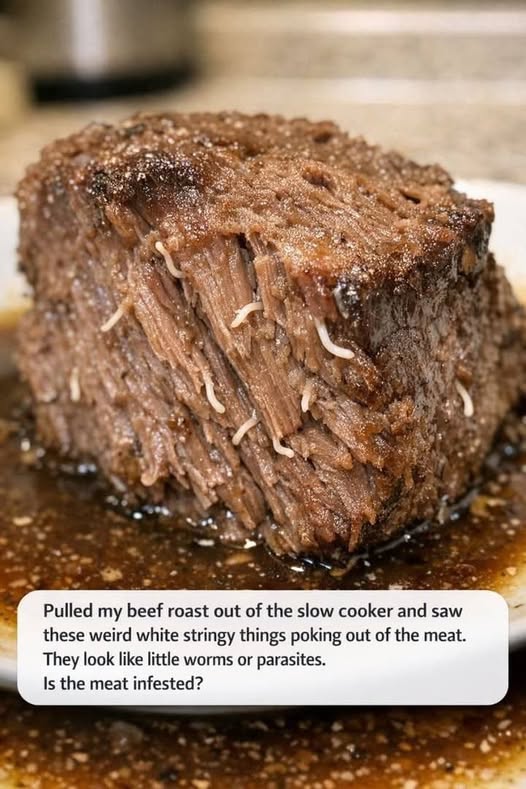
That first glance can feel genuinely alarming. You slice into your slow-cooked roast, expecting a tender, perfectly cooked piece of meat, and instead you notice thin, pale, worm-like strands woven through it. Instantly, your stomach tightens. Your thoughts jump to the worst possibilities—parasites, contamination, something unsafe. It’s a reaction most people would have in that moment, because visually, it doesn’t look right. But before you panic or throw the entire meal away, it’s important to understand what you’re actually seeing and why it appears that way.
In reality, those white, stringy strands are almost always a completely natural part of the meat itself. Cuts like beef roast are filled with connective tissue—especially collagen—that holds muscle fibers together and gives structure to the meat. When you cook beef slowly over low heat for a long period of time, something important happens: that tough collagen begins to break down. As it softens and transforms, it can separate into pale, thread-like strands or even slightly gelatinous pieces that sit between the meat fibers.
This process is actually the reason slow-cooked beef becomes so tender and flavorful. What starts as tough, chewy connective tissue gradually melts into a softer texture, adding richness and depth to the meat. Even though it may look unusual—especially if you’re not expecting it—it’s not a sign that anything is wrong. On the contrary, it often indicates that the meat has been cooked properly and that the collagen has done exactly what it’s supposed to do during slow cooking.
The confusion usually comes from how similar these strands can appear to something unfamiliar or unpleasant. Because they are light in color and somewhat stringy, it’s easy for the mind to interpret them as something foreign. However, their texture gives them away. Connective tissue that has broken down will feel soft, slightly slippery, and easy to pull apart with your fingers or a fork. It blends naturally into the meat and doesn’t hold a rigid shape.
True parasites in beef, on the other hand, are extremely rare—especially in countries with modern food safety and inspection systems. Meat that reaches the market typically undergoes strict controls, and recommended cooking temperatures are more than enough to eliminate any potential risks. Parasites, if present, would not survive proper cooking, and they would also appear very different: more defined, firmer, and consistent in structure rather than soft and uneven like dissolved connective tissue.
Another key factor is smell and storage. If your beef smells normal, has been stored correctly, and was cooked to a safe internal temperature, there is very little reason to suspect contamination. The appearance alone, while surprising, is not a reliable indicator of danger. In most cases, what you’re seeing is simply the natural transformation of collagen under heat—nothing harmful, nothing unusual from a culinary standpoint.
Understanding this can completely change how you react in that moment. Instead of immediately assuming the worst, you can recognize it as part of the cooking process—a visible reminder of how heat breaks down structure and turns tougher cuts into something tender and enjoyable. What may initially look unsettling is actually a sign of the science behind slow cooking doing its job.
So the next time you notice those pale strands in your roast, take a moment before reacting. Look at the texture, consider how the meat was cooked, and remember that appearance can sometimes be misleading. In most cases, those “worm-like” pieces are nothing more than softened collagen—harmless, natural, and even beneficial for flavor and texture.
In the end, it’s not a warning sign—it’s simply the result of time, heat, and the structure of the meat coming together exactly as they should.