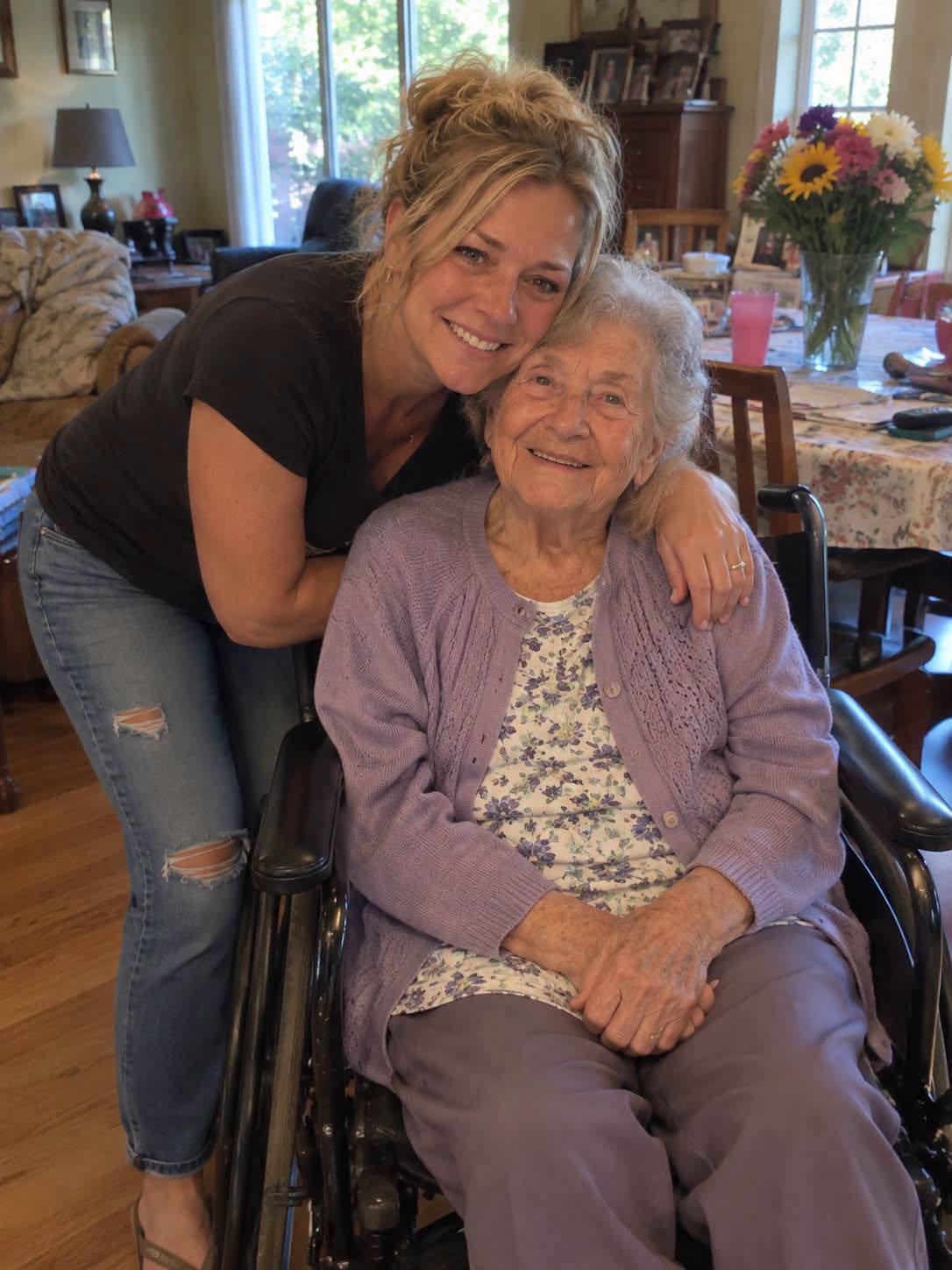
Determined to understand what had happened, Ellie sought help from attorney Margaret Holloway. Together, they began collecting medical records, reviewing financial documents, and documenting the circumstances surrounding the disputed transactions. Ellie also contacted investigators, hoping that a proper examination of the evidence would establish whether her grandmother had been taken advantage of during a vulnerable period in her life. The process was emotionally exhausting, especially because the person at the center of the allegations was her own mother. Ellie knew that pursuing the truth could permanently change their relationship, but she also believed that Rose deserved justice and that her memory should not be overshadowed by unanswered questions.
As the investigation progressed, Ellie decided to take a more personal step. She gathered Rose’s patched coat, the deposit slips from birthday gifts Rose had carefully saved, and a formal demand for repayment. She then arranged for these items to be delivered to Diane’s workplace at the bank. Each object represented a different part of Rose’s life: the coat reflected her modest habits, the deposit slips preserved the record of money she had received and saved, and the repayment demand made clear that the disputed funds could not simply be ignored. The delivery brought the situation into the open and exposed the seriousness of the betrayal.
The consequences for Diane were immediate and painful. She lost her job, and the family was forced to confront the financial and emotional damage that had been done. Eventually, Diane returned the full $26,418.37. To gather the money, members of her family sold some of the purchases connected to the situation and contributed funds of their own. Although the repayment addressed the financial loss, it could not instantly restore the trust that had been broken. Ellie had recovered the money that belonged to her grandmother’s estate, but she was left struggling with the reality that her own mother had been involved in circumstances that raised such serious concerns.
Then Ellie discovered Rose’s final letter, and the contents complicated the anger she had been carrying. In the letter, Rose expressed regret about the way she had treated Diane when Diane was a young mother. Her words revealed that their relationship had contained its own history of pain, disappointment, and unresolved feelings. Ellie began to understand that the conflict between her mother and grandmother had not started with the disputed withdrawals. There were older wounds that had shaped their relationship, even if those wounds could not excuse what had happened later.
The letter did not erase the evidence or make the financial allegations disappear, but it gave Ellie a more complicated understanding of the people involved. Rose had been a vulnerable person who deserved protection, yet she had also been someone who recognized that she had made mistakes in her own relationships. Ellie realized that holding someone accountable did not require pretending that their entire life could be reduced to their worst decisions. With that understanding, she requested leniency for Diane, hoping that the legal consequences could acknowledge the wrongdoing without closing the door entirely on the possibility of change.
Nevertheless, accountability remained an essential part of the outcome. After Diane entered a misdemeanor plea, she received probation, a fine, and community service. The consequences made clear that the situation could not be resolved through family forgiveness alone. The legal process had addressed the wrongdoing, while the family still had to work through the emotional damage that remained. For Ellie, it was important to distinguish between showing compassion toward her mother and pretending that the betrayal had never happened.
During this difficult period, Ellie continued working toward her own future. She eventually completed nursing school, a milestone that represented years of effort, determination, and the desire to build a life centered on helping others. Although the experience with Diane had changed the way she viewed trust and family relationships, it did not make her abandon her commitment to caring for people. Instead, it gave her a deeper appreciation for vulnerability, dignity, and the importance of protecting those who may not always be able to protect themselves.
Over time, Ellie cautiously reopened communication with Diane. Their relationship did not suddenly return to what it had been before, and Ellie did not pretend that reconciliation meant everything was repaired. There were still painful memories, difficult conversations, and questions that could not be answered easily. Rebuilding trust required patience, honesty, and a willingness to recognize the harm that had occurred. Ellie understood that forgiveness, if it came, would have to develop gradually rather than being demanded or assumed.
Later, Ellie made a decision that reflected the values Rose had passed down to her. She deposited $1,000 into an account intended to support her younger sister Kayla’s education. The gesture was more than a financial contribution. It continued a family tradition in which money was set aside to give younger generations opportunities for a better future. By helping Kayla, Ellie was choosing to preserve something positive from her grandmother’s legacy, even after the painful circumstances surrounding Rose’s final years.
In the end, the recovery of the $26,418.37 addressed only one part of what Ellie had lost. The deeper challenge had been learning how to balance justice with compassion, and how to recognize another person’s mistakes without allowing those mistakes to define every part of their identity. Rose’s final letter had reminded Ellie that family relationships could carry pain across generations, while her own actions showed that the cycle did not have to continue unchanged.
The money was recovered, the legal consequences were imposed, and Ellie gradually began finding her own way forward. But the greatest inheritance she received from Rose was not financial. It was the understanding that caring for someone means protecting their dignity, respecting their vulnerability, and making difficult decisions when necessary. By supporting Kayla’s education and approaching her relationship with Diane cautiously, Ellie carried that lesson into the next chapter of her life. She could not undo what had happened, but she could decide what kind of person she wanted to become because of it.