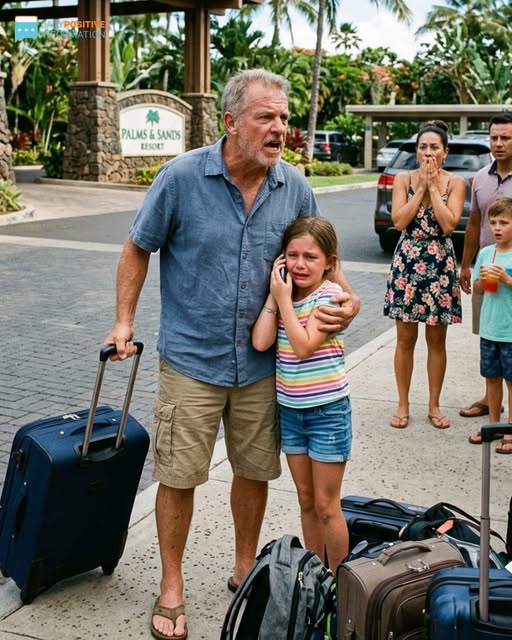
There are phone calls that arrive like a hand on your shoulder in the dark.
I had been asleep for maybe forty minutes—the deep, dreamless kind that only comes after a week that has stripped you down to the last thread. At sixty-three, sleep doesn’t come easily anymore. It arrives in fragments, cautious and uncertain, like a guest who isn’t sure whether they are welcome. But for those forty minutes, I had managed to sink all the way under.
Then my phone lit up the nightstand like a flare.
White light sliced through the darkness of my bedroom in Decatur, Georgia. My body reacted before my mind fully caught up. Thirty-one years as a family attorney will do that to a person—you learn to fear late-night calls the way soldiers fear sudden noise in a quiet street. Nothing good ever comes after midnight.
I reached for my glasses, slid them on, and looked at the screen.
Skyla.
My granddaughter.
I answered before the second ring.
“Skyla, baby, what’s wrong?”
For a moment, there was nothing. Only breathing. Not crying—something far worse. The sound of a child who has already cried herself empty. Those thin, broken breaths that come after the tears are gone, leaving only the ache behind.
Then, in a voice so fragile it seemed to fracture as she spoke:
“Grandpa.”
I was upright instantly. Feet on the floor. Heart pounding hard enough that my fingertips went cold.
“I’m here,” I said. “Right here. Tell me what happened.”
Another shaky breath.
“They left.”
I froze.
“Who left, sweetheart?”
“Daddy and Mama and Alex.”
I stood.
The room tilted slightly as my mind tried to assemble meaning from the words. Anthony. Natalie. Alex. Her father, her stepmother, her little brother. I gripped the phone until my hand hurt.
“Say that again.”
“They went to Disney World,” she said, her voice breaking on the words. “They went to Florida.”
For several seconds, I forgot to breathe. I remember standing barefoot on the hardwood. I remember the ceiling fan turning slowly overhead. I remember the cold spreading through my chest like water turning to ice.
When shock is real, it doesn’t arrive with noise. It arrives with silence.
Anger comes later. Questions come later. At first, there is only disbelief.
I lowered myself onto the edge of the bed.
“Who’s with you?” I asked.
“No one.”
That answer hit harder than anything else.
“No one?”
“Mrs. Patterson next door said I can knock if I need something. But they left last night.” Her voice trembled again. “They said it didn’t make sense to take me because I have school Monday.”
I closed my eyes.
“And Alex?” I asked.
“He doesn’t have school either,” she whispered. “Grandpa…”
“Yes, sweetheart?”
The sound that came next was a small collapse.
“Why didn’t they take me too?”
That question broke something that had been holding inside me for years.
What I Did Before the Sun Came Up
In my career, I had stood in courtrooms listening to people wrap lies in polite explanations. I had watched parents lose custody, watched families fracture under the weight of their own choices. I had learned to stay calm, to stay precise, to keep emotion carefully locked behind discipline.
But sitting in the dark, listening to my granddaughter ask why her family had gone to Disney World without her, I had to press my fist to my mouth to hold everything back.
When I spoke, I kept my voice steady.
“You didn’t do anything wrong. Do you understand me? Not one single thing.”
“Then why?”
“I don’t know yet,” I said. “But I’m going to find out.”
At that moment, I didn’t fully realize I had just made the most important promise of my life.
By 2:11 a.m., I had called Joseph Wright.
Joseph was seventy-one, a retired Delta aircraft mechanic, and one of the few men I knew who could answer a middle-of-the-night call as though he had been expecting it.
“Steven,” he said immediately, too awake for that hour. “What happened?”
“I need you to watch the dog.”
A pause. “How long?”
“A few days. Maybe more.”
“That granddaughter of yours?”
“Yes.”
He didn’t ask anything else. Joseph had many flaws, but he understood when questions were unnecessary.
“I’ll be there in ten minutes,” he said. “Leave the key under the flowerpot.”
I booked the earliest flight out of Hartsfield-Jackson—6:15 a.m. It was barely long enough to qualify as travel, but I wasn’t in any condition to drive six hours. My back had developed its own opinions in recent years, and unlike most people, it refused to be ignored.
Then I went to my office.
I don’t know exactly why I opened the bottom-left drawer of my desk. Habit, maybe. Instinct. Inside, beneath old legal pads and a tangled printer cable I had never bothered to throw away, was a small digital recorder.
Black. Old. Forgotten.
I turned it over once in my hand.
Old lawyers never entirely stop being old lawyers.
I packed a bag—suit, shirts, medication, a legal folder. By 4:50 a.m., I was dressed and waiting at the door.
Joseph arrived at 5:02, wearing sweatpants, a faded Braves shirt, and slippers, holding a travel mug of coffee.
“You look terrible,” he said.
“You look worse.”
“That’s friendship.”
Then his expression changed as he studied my face. “Bring her home if you need to.”
“I might.”
He squeezed my shoulder once—firm, steady. Then he walked inside, already heading toward my kitchen where my beagle was waiting hopefully for breakfast.
I left for the airport.
What I Found on Whitmore Drive
I landed in Atlanta at 7:08 a.m. and rented a blue Chevy Malibu that smelled aggressively of pine cleaner, the kind of smell that suggests someone recently tried to erase something.
The roads were already full—people in offices, routines, normal lives moving forward without interruption.
Whitmore Drive, when I arrived, looked unchanged.
Beige siding. Trimmed hedges. Carefully maintained flower beds Natalie always tended with almost military precision. A neighborhood designed to look peaceful from every angle.
Skyla must have been watching because the front door opened before I reached the steps.
She stood there in pink sloth pajamas, barefoot, curls tangled around her face, eyes swollen and exhausted. She looked smaller than eight.
For a moment, she just stared at me, as if confirming I was real.
Then she ran.
I dropped my bag without thinking and caught her halfway down the walkway. She collided into me hard enough to push me back a step, arms locking around my neck.
I held her tightly.
She didn’t speak.
Neither did I.
Some moments don’t need language.
I kept one hand on the back of her head, the other steady between her shoulder blades, holding her while the world continued its ordinary rhythm around us—sprinklers ticking down the street, a neighbor walking a dog, sunlight spilling across manicured lawns.
That is the quiet truth about harm inside families: from the outside, everything still looks perfectly normal.
Finally, I stepped back just enough to see her face.
“Have you eaten?”
She shook her head.
“Slept?”
A faint, exhausted shrug.
“All right,” I said softly. “You’re going to show me where everything is, and I’m going to make you the worst scrambled eggs you’ve ever had.”
A flicker of something passed across her face. “Worse than last Christmas?”
“Much worse,” I said. “Those at least resembled eggs.”
And that almost-smile she gave me nearly broke my heart in half.
What the House Told Me Before Skyla Said a Word
People often think homes are neutral spaces. They are not. They are records. The arrangement of objects tells its own story, if you know how to read it.
I spent thirty-one years teaching judges exactly that—how to see what is not spoken.
The first thing that caught my attention was the hallway gallery wall.
Framed photographs ran in a clean, deliberate line toward the bedrooms. Carefully curated. Balanced. Alex in his school portrait. Anthony and Natalie at some canyon out west. Alex in a baseball uniform. Christmas mornings. Beach trips. Pumpkin patches. A little league trophy displayed beneath. A finger painting framed neatly and hung like art.
I counted eleven photographs in total.
Skyla appeared in only two.
Only two.
One was her first-day-of-school picture, placed lower than the others and slightly off-center, as if it had been added reluctantly—something included only because its absence would have been too obvious. The second was a Christmas portrait.
In that image, everyone else wore matching red sweaters—Anthony, Natalie, Alex. Perfectly coordinated. Intentional.
Skyla stood at the far edge in a navy school sweater, half a step behind the rest of them.
Like she was not fully part of the frame.
Like she was visiting.
I stared at that photograph until the details blurred at the edges, my coffee growing cold in my hand.
Skyla came up beside me quietly.
“I don’t like that one,” she said.
“Why not?”
She shrugged without looking at it. “I look like I’m visiting.”
Eight years old.
And already fluent in exclusion.
My fingers brushed the recorder in my coat pocket. Then I followed her into the kitchen.
The scrambled eggs were as bad as she had warned, and in a strange way, that was useful. Sometimes humor is the only bridge available when a child is too guarded for comfort. She picked at the plate. I exaggerated an apology. She rolled her eyes—small, real, unforced. The first sign of ease I had seen all morning.
“When did they tell you they were going?” I asked.
“Tuesday night,” she said. “After dinner.”
“And what did they say?”
“Daddy said it was a last-minute trip for Alex’s birthday.”
I kept my expression neutral. “Alex’s birthday isn’t for two months.”
“I know.”
That certainty was worse than confusion.
“Did you say that to them?”
Her fork paused. “Mama got upset. She said I was ruining the surprise.”
“And then?”
“Daddy didn’t talk to me for three days.”
I went still.
Years in court had trained me to do one thing well: separate emotion from fact. To hold rage in a sealed room where it could not interfere with judgment.
But sitting there, listening to an eight-year-old describe being emotionally sidelined for speaking the truth, I felt that discipline strain.
“Has this happened before?” I asked carefully.
She hesitated.
“How many times?” I pressed gently.
“A lot.”
“Try to think.”
“The camping trip,” she said finally. “In September. They took Alex to Tennessee.”
“And you?”
“They said I had a sleepover with Arya. But Arya canceled, so I stayed with Mrs. Patterson.”
That one landed heavily. Not loud. Just final.
“Any others?”
“The hockey tournament in Savannah. Daddy said it was only for sports families.” She paused. “The aquarium in Chattanooga. They said it was too expensive for everyone. The beach weekend with Uncle Marcus. Mama said there wasn’t enough room.”
Each sentence came out flat, practiced in the way children repeat things they have had to accept too often.
I stopped asking.
There are moments when more questions do not reveal truth—they only deepen harm.
I reached across the table and placed my hand over hers.
“You did the right thing calling me,” I said.
Her voice was small. “Mama says I’m too sensitive.”
That sentence stayed in the air longer than anything else.
“Skyla,” I said quietly, “calling someone who loves you when you feel unsafe is not being too sensitive. That is exactly what you are supposed to do.”
She looked at me for a long moment, as if testing whether the idea could hold.
Then she nodded.
What I Did While She Slept and Why I Reached for the Recorder
After breakfast, she fell asleep on the couch under a weighted blanket she had clearly dragged out herself. Exhaustion overtook her quickly, as if her body had finally stopped resisting what her mind already knew.
I sat at the kitchen table and began documenting everything.
Anthony called four times that morning.
Not once did he ask if Skyla was safe.
The first voicemail was casual in a way that felt rehearsed.
“Hey, Dad. I’m guessing Skyla called you. It’s more complicated than it looks.”
More complicated. A phrase people use when they hope complexity will soften accountability.
The second message was sharper. “Dad, call me.”
The third was Natalie.
“She’s fine. Mrs. Patterson knew to check in. She had food. She had her tablet.”
Food. A tablet. A neighbor’s awareness as a substitute for presence.
The fourth voicemail was recorded against a backdrop of amusement park noise.
“Don’t make this into something bigger than it is. Skyla’s fine. She’s just dramatic sometimes.”
I set the phone down carefully.
Then I wrote three words at the top of my legal pad.
Pattern. Documentation. Custody.
I had not made a final decision.
But I was no longer uncertain about direction.
That afternoon, I took Skyla out of the house.
Children should not remain inside spaces that have already shown them their place in the hierarchy.
We went to Rosy’s Diner on Canton Street. Vinyl booths, laminated menus, a rotating pie case that smelled like another era entirely.
Skyla ordered grilled cheese and a chocolate milkshake with the seriousness of someone making a strategic decision.
When the waitress called her “sweetheart,” Skyla glanced at me.
“He’s okay,” she said.
I pressed a hand to my chest. “I will frame that for court.”
The waitress laughed and walked away.
As we ate, I asked about school.
“The play,” I said. “Your teacher sent me the program.”
“I was the narrator,” she said, a hint of pride breaking through. “Seven lines.”
“That is a significant responsibility.”
She nodded, then hesitated.
“Were your parents there?”
A pause.
“Daddy came. Then he left for Alex’s hockey practice.”
“And Natalie?”
“She stayed with Alex.”
I lowered my eyes briefly, not because I needed to—but because I did not want her to see my reaction.
“Your birthday,” I said more carefully. “Did you have a party?”
Silence stretched.
“I heard them talking,” she said finally. “Daddy said big birthdays were expensive because Alex already had Great Wolf Lodge.”
Her voice was steady, but something underneath it had gone still.
I set my fork down.
“Do you feel treated the same as Alex?”
She didn’t answer immediately. That hesitation told me more than words.
“Sometimes,” she said at last. “Not really.”
I nodded slowly. “Can you give me one example?”
“The Christmas photo,” she said. “Mama forgot my sweater.”
“And?”
“She said it didn’t arrive.”
Then, softer: “I wore my school sweater.”
The image from the hallway returned to me in full clarity.
“That must have felt…” I began.
“Normal,” she interrupted quietly. “It just felt normal.”
And that was the most painful part.
The Recorder, the Photographs, and the Legal Pad
Back at the house, while Skyla worked on a word search at the kitchen table, I returned to the hallway.
I photographed everything.
Every frame. Every arrangement. Every deliberate omission.
Then I activated the recorder.
“Documentation entry, Whitmore Drive residence. Eleven framed family photographs in primary hallway display. Child Skyla appears in two images. In both, she is visually separated from primary family grouping.”
I paused.
“Noted pattern of positional exclusion within family imagery.”
I turned it off.
When I returned to the kitchen, Skyla was circling a word.
“Grandpa,” she said without looking up, “is ‘parallel’ one L or two?”
“Two.”
She marked it carefully.
Then, after a moment: “Are you going to make me go back when they come home?”
It was not asked as fear. It was asked as preparation.
I sat across from her.
“I don’t know yet,” I said honestly. “But I need you to hear this clearly.”
She looked up.
“You are not an afterthought. You are not optional. You are not less important because someone else was louder.”
Her eyes held mine.
“You are the point, Skyla.”
Her chin trembled once. She swallowed it down.
“Okay,” she said softly.
“Okay,” I answered.
That night, Anthony called again.
I answered.
“Dad—how is she?”
“She is safe,” I said. “With me.”
Silence.
Then I asked the only question that mattered.
“When is the last time she was included in a family trip?”
The pause told me everything before he spoke.
“Dad, it’s complicated—”
“No,” I said quietly. “It isn’t.”
And then I began to speak the pattern out loud.
Tennessee. Savannah. Chattanooga. Birthdays. Christmas.
Each one met with silence.
Finally, he exhaled.
“I don’t know how it got like this,” he admitted.
That, at least, was the truth.
“We’ll talk Sunday,” I said.
Then I ended the call.
Opened my laptop.
And began drafting the petition.
The legal language returned to me with a disturbing ease after so many years away from the courtroom. Best interests of the child. Pattern of exclusion. Emotional neglect. Failure to provide consistent care. Emergency relief.
By the next morning, I had already called Josephine Carter.
Josephine had been the most capable junior associate I ever mentored. She had taken over part of my practice when I retired—precise, intelligent, and the kind of lawyer judges respected because she never mistook volume for strength.
She answered on the second ring.
“Steven Collins. I was starting to think retirement might actually stick.”
“I need a favor.”
“Of course you do.”
By noon, she had reviewed the draft petition. By mid-afternoon, she called back, her tone unusually tight—meaning she was already angry on my behalf.
“You’ve got enough for an emergency filing,” she said. “Possibly more, depending on how strong those voicemails are.”
“They’re worse than the facts,” I replied.
“That’s saying something.”
We filed on Friday morning in Cobb County Superior Court.
Anthony and Natalie were served that same afternoon.
The rest of the weekend, I focused on what mattered most—being there. Skyla and I went to the park. We ate ice cream. She painted my nails with silver glitter while we watched an old animated movie. She beat me at Uno three times and accused me of letting her win, which was unfair, because I had genuinely lost every time.
Each night she asked me if I would still be there in the morning.
Each morning, I was.
It is astonishing how quickly a child begins to relax when they finally trust someone will not disappear.
Anthony and Natalie returned on Sunday at 4:17 p.m.
The front door opened. Suitcases rolled across the floor. Voices filled the house with that tired, artificial brightness of people returning from a vacation built on distraction.
Skyla was sitting at the kitchen table with her word search book.
She didn’t look up.
That alone stopped Anthony in the doorway. He had expected emotion—anger, tears, maybe even relief—but not silence. Not a child who had already moved past the need to react.
“Hey, sweetheart,” he said.
“She can hear you,” I said from the hallway. “Whether she responds is her decision.”
Natalie turned toward me immediately, composed but tense. “Steven. We need to speak privately.”
“We will,” I said calmly. “But first, Anthony—check your mailbox.”
He frowned, confused, then stepped outside. When he returned, he was holding a thick manila envelope.
Legal documents always carry a certain weight. Anyone who has ever received them recognizes it instantly.
“What is this?” he asked.
“A petition for de facto custodianship of Skyla Hall, filed Friday morning in Cobb County Superior Court.”
Silence followed.
Natalie’s face drained of color.
“You can’t be serious.”
“I have never been more serious in my life.”
Anthony flipped through the pages, his expression shifting as he read. By the third page, he lowered himself into a chair as if his legs had given out.
“Dad…” he started.
“I have recordings,” I said. “Photographs. A timeline. Your own voicemails from Disney World explaining how leaving an eight-year-old behind was apparently ‘fine for everyone.’”
Natalie began to cry.
I handed her a tissue from the entry table—not out of softness, but out of control. I was angry, not cruel.
“This isn’t about punishment,” I said. “It’s about a child who called me at two in the morning asking why she wasn’t worth taking with her own family. And no adult in this house had an answer.”
Anthony finally looked up, his eyes red.
“Are you going to take her away from us?” he asked.
“No,” I said. “I’m going to protect her. What happens next depends entirely on what you choose to do.”
He lowered his head for a moment.
Then, quietly, he said the one thing I hadn’t been sure I would hear.
“I’m not going to fight this.”
Natalie turned sharply. “Anthony!”
But he didn’t look at her.
“I’m not going to fight it,” he repeated. “He’s right.”
Cobb County Superior Court. Judge Patricia Wyn presiding.
If you spend enough years in family law, you learn judges the way others learn weather patterns. Judge Wyn had no patience for performance, no tolerance for emotional staging, and a sharp instinct for detecting when someone was trying to shape a narrative instead of telling the truth.
Anthony came without legal representation.
That told me everything I needed to know. Either he had accepted that resistance was pointless, or no lawyer was willing to argue against what was already clearly documented.
Josephine sat beside me, composed and focused. Skyla sat between us in a purple dress and white shoes, her hands folded tightly in her lap, as if she wasn’t entirely sure she was allowed to take up space there.
I hadn’t wanted her in the courtroom.
But she had insisted.
“I need to know where I belong,” she had said the night before.
So I brought her.
Josephine presented the case with quiet precision. No exaggeration. No emotion. Just structure—facts laid out in a sequence that allowed them to speak for themselves.
The recordings were submitted. The photographs. The history of unequal treatment, the missed events, the trips where she was excluded, the affidavit from the neighbor who had been asked only to “check in” on her during the Disney trip. School records. Emails. My sworn statement.
Then Anthony testified.
Eleven minutes.
He did not deny anything. He did not attack or justify. He simply admitted, in a steady but broken voice, that he had failed to see the harm he was causing until it was placed directly in front of him.
Judge Wyn looked at him and asked, “Do you believe your father can currently provide more consistent emotional and practical care for Skyla than you can?”
Anthony hesitated.
Then he said, “Yes, Your Honor.”
There is no victory in hearing something like that. Only a quiet kind of grief that still manages to hold truth.
When I spoke, I kept my voice steady.
“I am not here because I want conflict. I am here because a child should never have to question whether she is optional in her own family.”
Judge Wyn looked at Skyla for a moment—not to pressure her, just to acknowledge the center of everything in the room.
Then she delivered her ruling.
De facto custody granted to Steven Collins, effective immediately.
Visitation to be determined based on compliance and therapeutic evaluation.
I exhaled slowly.
Skyla looked at me, her expression steady.
She didn’t cry. She simply nodded once, small and certain.
Understood. Accepted.
On the drive home, the city passed in quiet motion—gas stations, school buses, grocery stores, life continuing unaware that something fundamental had just changed.
Skyla stayed silent for a while.
I didn’t push her. Some changes need space to settle.
Eventually, she spoke.
“Grandpa?”
“Yes?”
“Am I your first choice?”
I paused—not because I didn’t know the answer, but because some truths take a moment to become words.
Then I placed my hand over hers on the console.
“You were never my first choice,” I said gently. “You were my only one.”
She looked at me.
“Always have been.”
She turned toward the window, but I saw the tears form before she did.
I kept my hand where she could hold it if she wanted to.
In the months that followed, Skyla slowly settled into my home in Decatur. She painted her room, filled shelves with books, covered the walls with drawings. She laughed more. Spoke more. Grew into the space around her like she finally understood she had permission to exist fully.
Her first birthday with me was simple. No grand celebration—just cake, a park, and a walk through the trees behind the house.
At the end of the day, she sat beside me on the porch and said quietly, “Grandpa, I’m really glad I’m here.”
I held her close and didn’t say anything, because nothing needed to be added.
In the end, it was never about paperwork, or courtrooms, or evidence. It was about presence. About showing up, again and again, until a child stops wondering if she will be left behind.
Skyla had a home now. A place. A person.
And that, more than anything else, was enough.