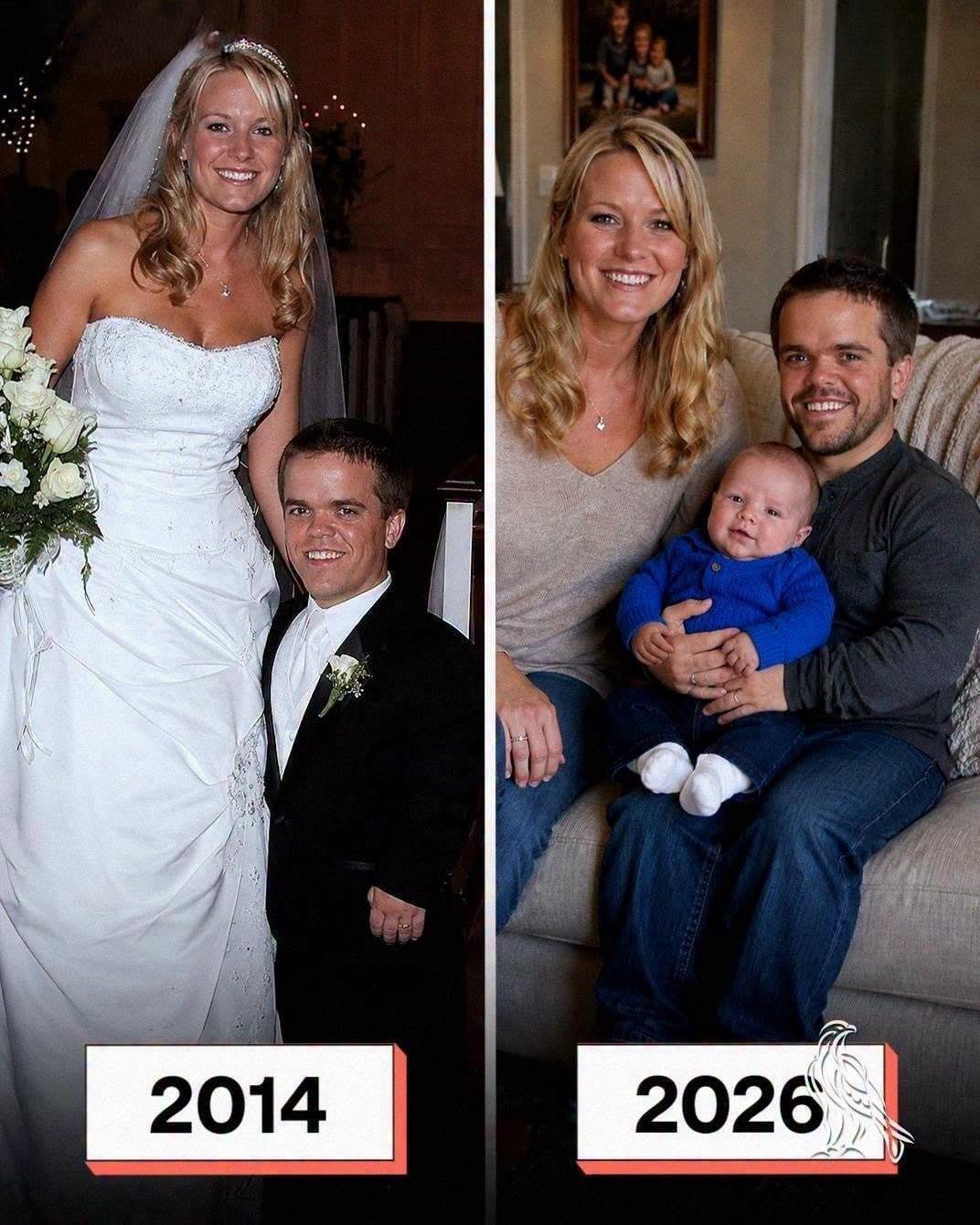
When I announced that I was going to marry Daniel, my family reacted as if I had told them I was throwing my life away.
My mother stared at me in disbelief. My father shook his head and muttered something about wasted potential. My older sister laughed so loudly that I could feel my cheeks burning.
“Of all the men in the world, you chose him?” she asked, looking Daniel up and down. “You’re beautiful, intelligent, and educated. You could have married someone tall, handsome, and successful. Instead, you’re settling for a man who barely reaches your shoulder.”
Daniel was standing beside me when she said it. He heard every word.
He was five feet four inches tall, while I stood nearly five feet eight. His height had always been the first thing people noticed about him, and unfortunately, it was also the first thing my family judged. They never bothered to look beyond his appearance long enough to discover the man I had fallen in love with.
Daniel was kind, patient, hardworking, and thoughtful. He remembered the smallest things I told him. He never made me feel insignificant, and he never used anger to win an argument. When I was struggling, he supported me without making me feel indebted to him. When I succeeded, he celebrated as if my achievements were his own.
To me, those qualities mattered far more than a few inches of height.
But to my family, love was not enough.
They believed a successful marriage had to look impressive from the outside. They wanted me to marry a man who would make other people jealous, someone they could proudly introduce at family gatherings. Daniel did not fit their picture of an ideal husband, and they made sure I knew it.
My mother pulled me aside one evening and tried to reason with me.
“Marriage is difficult enough,” she whispered. “Why make your life harder by choosing someone people will laugh at? Think about your future children. Think about what people will say.”
I looked at her and asked a question I had been carrying in my heart for weeks.
“Mom, if Daniel were six feet tall but treated me badly, would you prefer him?”
She did not answer.
That silence told me everything I needed to know.
I married Daniel anyway.
Our wedding was modest. A few friends attended, along with the relatives who were willing to come. My parents appeared uncomfortable throughout the ceremony, and my sister spent much of the reception whispering to her husband. I noticed the looks and heard the occasional remark, but I refused to let their cruelty ruin the happiest day of my life.
Daniel held my hand as we left the reception.
“I’m sorry your family doesn’t approve of me,” he said quietly.
I stopped walking and turned toward him.
“Never apologize for being the person I chose,” I told him. “I didn’t marry you because of how tall you are. I married you because of how you make me feel when the rest of the world makes me feel small.”
He smiled, and for the first time that evening, I saw the tension leave his face.
Then he kissed my forehead and said, “One day, I’ll give you a life where you never have to worry about whether we have enough.”
At the time, I thought he was simply trying to comfort me.
I had no idea how seriously he meant those words.
The Years When Nobody Believed in Him
Our first years of marriage were not easy.
We rented a small apartment with aging furniture, narrow windows, and a kitchen barely large enough for two people. The paint peeled in the bathroom, the heating system made strange noises, and our dining table doubled as Daniel’s workspace.
He was trying to build a technology business.
His idea involved developing software that would help small companies manage their deliveries, inventory, and customer orders more efficiently. He believed many smaller businesses were being left behind because the software available to them was too expensive or complicated.
He wanted to create something affordable, reliable, and easy to use.
But having an idea and turning it into a successful company were two entirely different things.
Some months, Daniel earned barely enough to cover our expenses. Other months, he made no money at all. He spent long nights working on his computer, testing programs, speaking with potential customers, and correcting problems that seemed to appear just when he thought everything was finally working.
There were days when I came home from work and found him asleep at his desk, his glasses lying beside the keyboard and unfinished notes scattered across the table.
I worried about him.
I worried about our bills, our future, and the possibility that his business might never succeed. Sometimes, I wondered whether we were being foolish by putting so much faith in an uncertain dream.
But whenever I asked Daniel how he was feeling, he gave me the same honest answer.
“I’m tired,” he would say. “But I’m learning.”
He never pretended that success was guaranteed. He simply refused to give up before he had exhausted every reasonable possibility.
My family, meanwhile, watched our struggles with a mixture of pity and satisfaction.
At Sunday dinners, my sister would ask whether Daniel had finally found a real job.
My father would offer unsolicited advice about finding stable employment.
My mother would remind me that I could still make different choices if I wasn’t happy.
They never asked what Daniel was building. They never asked what he had learned, how many customers he had contacted, or how close he might be to solving a problem that had been holding him back.
They saw a short man struggling to make money, and they believed that confirmed everything they had said about him.
One Christmas, my sister arrived wearing an expensive coat and carrying designer shopping bags. She spent the evening talking about her husband’s promotion and their plans to buy a larger house.
Then she looked at Daniel.
“So, how is your little business going?” she asked.
“It’s growing,” he replied calmly.
She smiled.
“Growing into what? Another unpaid electricity bill?”
Several people laughed.
I felt anger rise inside me, but Daniel gently touched my hand beneath the table.
He didn’t want a fight.
Later that night, when we were alone, I apologized for my family’s behavior.
Daniel shook his head.
“Don’t carry their opinions for them,” he told me. “I know what I’m working toward. That’s enough for now.”
Then he returned to his desk.
That was the thing about Daniel: he did not waste much energy trying to convince people who had already decided not to believe in him.
He would rather use that energy to build something.
The Breakthrough Nobody Expected
Everything began to change during the fourth year of our marriage.
A regional distribution company agreed to test Daniel’s software. The trial went better than expected. The system helped the company organize its orders, reduce certain administrative delays, and track deliveries more efficiently.
The company renewed its contract and recommended the software to several business partners.
For the first time, Daniel had customers who were not merely interested in his idea. They were willing to pay for it.
He hired two developers, rented a small office, and began improving the product. Within a year, several more companies had signed contracts.
The business was still demanding, but it was finally generating enough income to support itself.
Then came the opportunity that changed everything.
A larger logistics group approached Daniel about expanding the software across its operations. Negotiations lasted months. There were meetings, legal reviews, technical assessments, and periods when Daniel could barely sleep because the agreement seemed close to falling apart.
I watched him prepare for every meeting as though his entire future depended on it.
He researched the company’s needs, reviewed the numbers, and practiced explaining his vision in clear, practical terms. He was never the loudest person in the room, but he understood his product better than anyone else.
Eventually, the contract was signed.
The deal gave Daniel’s company the resources and credibility it needed to expand rapidly. More customers followed, and the business began attracting serious interest from investors.
Within a few years, the company had grown from a small operation in our apartment into a substantial business with employees, offices, and clients in multiple markets.
Daniel hired experienced managers, invested in further development, and gradually moved away from the exhausting routine that had consumed his early years.
He was no longer struggling to pay our bills.
We bought a comfortable home, paid off our debts, and began traveling to places we had once discussed only in passing. Daniel also established a financial plan that allowed us to support charitable projects and help young entrepreneurs who lacked the resources to pursue their ideas.
The wealth did not arrive overnight, and it did not come without risk or hard work. But eventually, Daniel had achieved something my family had never imagined possible.
He had become a wealthy man.
And suddenly, people who had spent years looking down on him began looking for reasons to stand beside him.
The Family That Suddenly Wanted to Reconnect
At first, the changes were subtle.
My sister began calling more frequently. She asked about our vacations, complimented our house, and wanted to know how Daniel’s company was performing.
My father, who had once dismissed Daniel’s business as a waste of time, started telling people that he had always believed Daniel was a determined young man.
My mother began inviting us to family gatherings with an enthusiasm I had not seen in years.
I wanted to believe they were changing.
A small part of me hoped that Daniel’s success had finally encouraged them to recognize the qualities I had loved in him from the beginning.
But another part of me wondered whether they were simply responding to the money.
The truth became clearer over time.
My sister never asked how Daniel had handled the stress of building his company. My father never asked what lessons he had learned from his failures. My mother rarely spoke about the years when we struggled.
Their conversations increasingly revolved around property prices, business investments, expensive purchases, and the people Daniel knew.
It was as if his wealth had erased the years when they had mocked him.
One afternoon, my sister called and invited us to dinner. She was unusually warm, asking whether Daniel was available and insisting that the entire family needed to spend more time together.
When we arrived, she had prepared an elaborate meal.
My father complimented Daniel’s success. My mother asked about our recent holiday. My sister’s husband talked about a business opportunity he wanted to explore.
For nearly two hours, everything seemed pleasant.
Then, as dessert was served, my sister placed her spoon down and exchanged a glance with her husband.
I recognized that look.
Something was coming.
“Actually,” she began, “there’s something we wanted to discuss with you.”
Daniel leaned back slightly.
“Of course,” he said. “What’s going on?”
Her husband cleared his throat.
“We’ve run into a financial problem. An investment didn’t work out the way we expected, and now we’re facing a deadline. We need some help getting through it.”
My sister nodded quickly.
“We wouldn’t ask if it weren’t important.”
I waited for her to explain the situation fully.
Instead, she looked directly at Daniel.
“We need twenty thousand dollars.”
The room fell quiet.
Twenty thousand dollars was a significant amount of money, even for a comfortable household. Yet what troubled me most was not the size of the request.
It was how confidently they had made it.
They had not asked whether Daniel would be comfortable discussing their finances. They had not explained what had happened in detail. They seemed to believe that because he had become wealthy, helping them was simply the natural next step.
My father joined the conversation.
“Family should help family,” he said. “You have done very well for yourself, Daniel. Surely you can spare this amount.”
I looked at him, remembering every time he had questioned my decision to marry Daniel.
My sister folded her hands.
“We know you have the money. It would make a huge difference to us.”
Daniel remained silent for several seconds.
Then he asked a simple question.
“Why are you asking me?”
My sister blinked.
“What do you mean?”
“Why me, specifically? Why not a bank, a business partner, or one of the other relatives you’ve been close to over the years?”
My father frowned.
“Because you’re family.”
Daniel nodded slowly.
“That’s an interesting answer.”
He turned toward me, then looked back at them.
“Before I respond, I’d like everyone to remember something.”
His voice was calm, but the room had changed. Nobody was laughing now.
The Lesson They Never Expected
Daniel reached for the glass of water in front of him and took a small sip.
“When we first got married,” he began, “we lived in a tiny apartment. I was trying to build a business, and there were months when we didn’t know exactly how we would cover every expense.”
My mother lowered her eyes.
“I remember the jokes about my height. I remember the comments about my business. I remember being told that your daughter had made a terrible decision by marrying me.”
My father shifted in his chair.
Daniel continued.
“I also remember that during those years, nobody offered to help us. I didn’t expect anyone to finance my business, and I never believed that my difficulties entitled me to somebody else’s money. But I did expect basic respect.”
He paused.
“Instead, I was treated as though my appearance made me less worthy and my financial situation made me a disappointment.”
My sister opened her mouth, but he raised a hand gently.
“Please let me finish.”
She fell silent.
“When the business began succeeding, the conversations changed. Suddenly, I was worth inviting to dinner. Suddenly, people wanted to know about my investments. Suddenly, my success became something the entire family could celebrate.”
He looked around the table.
“But I never heard anyone say they were sorry for the way they treated us when we had nothing.”
My mother looked close to tears.
“We didn’t understand what you were going through,” she whispered.
Daniel answered without raising his voice.
“You didn’t try to understand.”
Those five words seemed to land more heavily than an angry speech would have.
He continued.
“I want you to understand something else. My wife stood beside me when I had no guarantees. She believed in me when my business was little more than an idea. She shared the uncertainty, the long nights, and the difficult decisions. We built our life together.”
He reached for my hand.
“The money you see today came after years of work, risk, and sacrifice. It is not a reward for people who suddenly approve of me. And it is not a debt I owe to anyone who happens to share my last name.”
My sister’s husband stared at the table.
My father looked offended.
“So you’re refusing to help your own family?” he asked.
Daniel shook his head.
“No. I’m refusing to let money become the only reason we pretend to be close.”
He then explained that he would not hand over twenty thousand dollars simply because the family had requested it. If they were facing a genuine financial emergency, he was willing to listen to the facts and discuss practical options. But he would not provide an unconditional payment without understanding the circumstances or establishing reasonable expectations.
He also made it clear that any future financial assistance would be based on the situation, not on guilt, pressure, or the assumption that his success made him responsible for everyone else’s decisions.
Then he said something I would remember for the rest of my life.
“If you want a relationship with us, you are welcome to have one. But it must be a relationship between people who respect each other—not a transaction in which kindness is measured in dollars.”
Nobody spoke.
The request for twenty thousand dollars had been made with confidence, as though the answer was already decided. Now, the entire family seemed unsure what to say.
My sister finally asked, “So you’re just going to let us struggle?”
Daniel looked at her sadly.
“I didn’t create your financial problem. I hope you find a way through it, and I’m willing to discuss reasonable ways to help. But I won’t prove that I’m a good person by writing a check.”
He stood, thanked everyone for dinner, and asked whether I was ready to leave.
I took his hand.
For the first time that evening, I felt completely at peace.
What Happened After That Night
The drive home was quiet.
I kept thinking about the years when my family had treated Daniel as though he were not good enough for me. I remembered the humiliating jokes, the dismissive comments, and the countless occasions when I had defended my husband while trying not to damage my relationship with my parents.
Part of me felt satisfied that Daniel had finally spoken openly about what had happened.
Another part felt sad.
I had hoped that success would make my family recognize his character. Instead, it had exposed how easily some of them confused financial prosperity with personal worth.
When we arrived home, I asked Daniel whether he regretted refusing their request.
He shook his head.
“No,” he said. “But I don’t want revenge, either.”
He explained that he had no interest in making my family suffer simply because they had once hurt him. He did not need to humiliate them, expose their private problems, or use his money to make them feel inferior.
What he wanted was something much simpler.
He wanted honesty.
“If they genuinely want to change how they treat us,” he said, “we can give them that opportunity. But we don’t have to pretend the past never happened.”
Over the following weeks, the family responded in different ways.
My father stopped calling for a while. My sister sent a few short messages that avoided the subject entirely. My mother eventually reached out and asked whether she could visit us.
When she arrived, she seemed less certain of herself than I had ever seen her.
She sat with us in the living room and admitted that she had been wrong to judge Daniel by his appearance and financial circumstances. She acknowledged that her comments had hurt me and that she had failed to support our marriage when we needed encouragement.
Her apology did not erase the past, but it was a beginning.
Daniel listened without interrupting.
He did not demand that she make a dramatic promise or offer some grand gesture. He simply told her that a better relationship would require consistency, honesty, and respect over time.
As for the twenty thousand dollars, the family eventually had to confront the financial decisions that had created their problem. Daniel did not simply hand them the money, but he remained open to discussing practical solutions once the circumstances were clearer.
The experience changed our boundaries. We became more careful about mixing money with family relationships, and we learned that it was possible to care about people without accepting every demand they made.
Not every relationship returned to what it had been. Some relatives remained distant, and others continued to believe Daniel should have been more generous.
He accepted that he could not control everyone’s opinion.
He could only decide what kind of person he wanted to be.
The Real Meaning of Wealth
Today, when I look at Daniel, I don’t see the height my family once used to judge him. I see the man who stayed up through difficult nights, who worked through uncertainty, and who treated me with kindness even when life gave us very little.
His financial success changed our circumstances, but it did not create his value.
That value had been there from the beginning.
The most important lesson from that dinner was not that a wealthy man could refuse to give his relatives twenty thousand dollars. It was that financial success does not erase the need for accountability, and family ties do not automatically entitle anyone to another person’s resources.
Generosity is meaningful when it is freely given. Respect matters when there is nothing to gain. And an apology becomes valuable when it leads to a genuine change in behavior.
My family once believed that I had made a mistake by marrying a man who did not fit their expectations. Years later, some of those same people approached him because they wanted access to the life he had built.
But Daniel did not measure his worth by their approval then, and he did not measure it by their requests now.
He had already proved something far more important: the person who stands beside you when life is difficult is worth more than the people who appear only when success arrives.
And that was the lesson they would never forget.
True wealth is not just having enough money to help others. It is having enough self-respect to know when to say yes, when to say no, and when to insist that love and respect must come before money.