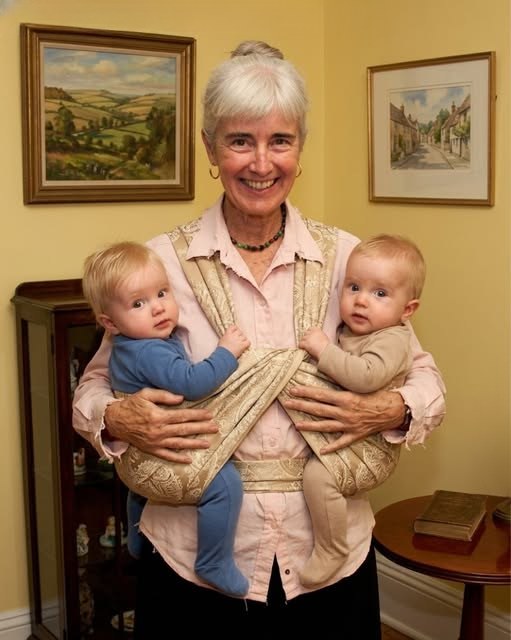
For five long years, Chad acted as though our grandmother no longer existed. He skipped birthdays, ignored family gatherings, never called to check on her, and disappeared entirely when she suffered a stroke. While I was helping her recover, carrying her up and down four flights of stairs because our building had no elevator, my brother was nowhere to be found. Yet the moment he heard a rumor about her savings account containing nearly half a million dollars, he suddenly remembered exactly where she lived.
Grandma Lois became our guardian after our parents passed away.
She was nearly sixty years old when she took responsibility for raising two grieving children. Most people her age were thinking about retirement, but Grandma picked up extra shifts at a local diner just to keep food on the table and a roof over our heads.
Even after spending long days on her feet, she always found time to help us with homework before starting dinner. I can still remember sitting in one of the diner booths after school while she worked nearby. She never trusted strangers to watch us, so she simply brought us with her whenever she could.
Years passed, but Grandma never stopped working.
When she finally left the diner, she started a small business from home. What began as a modest side project slowly turned into something successful. She built it with the same determination she had used to raise us.
As she grew older, her health began declining.
Her breathing became difficult.
Her legs weakened.
Doctors insisted she spend time outside every day, but getting her downstairs was almost impossible because our apartment building lacked an elevator.
So I carried her.
Every morning I helped her down those four flights of stairs.
Every evening I carried her back up.
Some days my muscles ached so badly I could barely move afterward, but I never complained. We would sit outside together watching neighbors walk past, talking about everything and nothing.
Meanwhile, Chad was living his own life.
The week he turned eighteen, he packed his bags and left.
Five years passed.
Not a single birthday visit.
Not a single holiday.
Not even after Grandma’s stroke.
While I sat beside her hospital bed listening to machines monitor her heartbeat, Chad couldn’t be bothered to show up.
Then came the family video call that changed everything.
It was supposed to be a simple catch-up conversation. A dozen relatives appeared on screen discussing ordinary family matters. During the call, my uncle casually mentioned that he had been helping Grandma organize some financial paperwork.
That was when my cousin Mick opened his mouth.
“Did you know Grandma has almost half a million dollars saved?”
The entire conversation stopped.
Nobody spoke.
Then, almost immediately, another square appeared on the screen.
Chad.
He had apparently been connected to the call the entire time without saying a word.
The first thing he asked wasn’t about Grandma’s health.
It wasn’t about her recovery.
It wasn’t even about how she was feeling.
Instead, he asked one question.
“So how is the money being divided?”
I ended the call right then.
I couldn’t listen anymore.
That evening, Chad appeared at Grandma’s apartment carrying a cheap bouquet of flowers that still had the gas-station price sticker attached.
The performance began instantly.
He hugged her.
Cried.
Talked about mistakes.
Claimed he missed her.
Promised he wanted to reconnect.
I watched from the kitchen and didn’t believe a single word.
Grandma listened quietly.
When he finally finished, she smiled and squeezed his hand.
“Everything I own can be yours, Chad.”
His face brightened immediately.
Then she continued.
“But only if you agree to one condition.”
Without hesitation he replied.
“Anything.”
Grandma reached beneath her pillow and handed him a folder.
Inside was a seven-day challenge.
For one week, Chad would live exactly as Grandma had lived while raising us.
No extra money.
No shortcuts.
No outside help.
He would cook.
Clean.
Manage medications.
Carry Grandma downstairs every morning and upstairs every evening.
Handle every responsibility.
And I would supervise the entire process.
His confidence vanished as he read.
“You can’t be serious.”
Grandma smiled.
“You said you’d do anything.”
After a long pause, he reluctantly agreed.
The first day was a disaster.
He burned Grandma’s breakfast because he was distracted by his phone.
Then he expected me to fix the mistake.
Instead, I made him start over.
The second day he complained constantly.
About the stairs.
About the medications.
About the grocery shopping.
About everything.
By the third day he looked exhausted.
He accidentally switched sugar and salt.
Ruined Grandma’s coffee.
Turned soup into something barely edible.
The confidence he arrived with was disappearing quickly.
On day four he started searching for shortcuts.
He rushed through chores.
Left dishes dirty.
Forgot medication schedules.
Every mistake earned him additional work.
By day five something began changing.
The complaints became less frequent.
The excuses stopped.
He still struggled, but for the first time he was actually trying.
The sixth day brought an unexpected moment.
He was hanging laundry in the courtyard when Mrs. Ford, a longtime neighbor, walked past.
She stopped and stared.
“Well,” she said, “look who finally remembered where Grandma lives.”
Chad didn’t argue.
Didn’t defend himself.
Didn’t make excuses.
He simply continued hanging clothes.
For perhaps the first time all week, he seemed genuinely ashamed.
That night was even more revealing.
Grandma’s hip pain flared around three in the morning.
She needed help adjusting in bed.
When I reached her room, Chad was already there trying to assist her.
At first he did it incorrectly.
Grandma winced.
Immediately he stopped.
“Show me again,” he asked.
I did.
This time he paid attention.
Moved carefully.
Made sure she was comfortable.
When I checked again several hours later, I found him asleep in a chair beside her bed.
Nobody had told him to stay there.
Nobody was watching.
He simply chose to remain.
For the first time, I wondered if the lesson was actually working.
Then came day seven.
The final day.
By lunchtime Chad looked completely drained.
“This is impossible,” he muttered.
Grandma shook her head.
“No. This was my everyday life.”
The room fell silent.
Then she revealed the truth.
The entire situation had been planned.
She intentionally allowed family members to mention her finances because she knew the news would spread.
And she knew Chad would come running.
“You set me up,” he said.
“No,” Grandma replied calmly.
“I gave you a chance.”
Then she looked directly at him.
“I wanted you to understand what caring for someone actually means.”
Eventually she revealed another truth.
She had always intended to leave him something.
The challenge was never about punishment.
It was about effort.
About character.
About proving whether his concern was genuine.
But Chad couldn’t accept that.
He accused Grandma of favoritism.
Claimed she wanted him to fail.
Then he stormed out.
The following morning Grandma asked me to sit beside her.
She took both of my hands and smiled.
“Everything is yours, Kara.”
Tears immediately filled my eyes.
She squeezed my hands tighter.
“You never treated me like a burden. Not once. You were there during every difficult day. Every sleepless night. Every moment when I needed someone.”
I shook my head.
“I didn’t do it for money.”
“I know,” Grandma replied.
“That’s exactly why you deserve it.”
Less than a day has passed since Chad walked away.
He won’t answer my calls.
Maybe he thinks I turned Grandma against him.
Maybe he believes the inheritance should have been his.
But that’s something he’ll have to figure out on his own.
Because the lesson was never about money.
It was about love.
Real love doesn’t appear when someone mentions an inheritance.
Real love shows up every day, especially when nobody is watching.
And that’s the difference my brother never understood.
He wanted the reward.
He just wasn’t willing to live the life required to earn it.