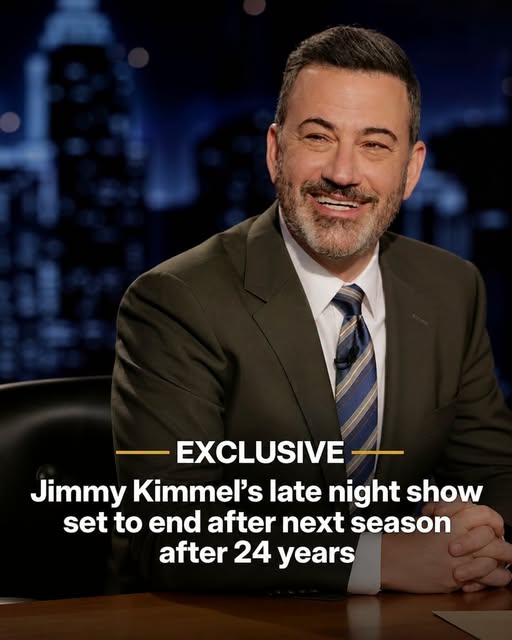
Kimmel’s reign might be ticking down to its final seconds.
Sources insist “Jimmy Kimmel Live!” could end after next season, with his ABC contract potentially reaching its final chapter. The network, however, is pushing back, calling the reports “inaccurate” and “speculative.” Behind the scenes, questions about budgets, ratings, politics, and the changing economics of late-night television are colliding in ways that could reshape one of ABC’s longest-running franchises.
After nearly a quarter century of monologues, celebrity interviews, pranks, emotional surprises, and increasingly aggressive political commentary, Jimmy Kimmel suddenly finds his late-night future being debated without him. Insiders claim ABC has quietly decided not to extend his year-to-year deal beyond 2027, even as the network publicly insists that no such decision has been made.
The timing only makes the speculation more explosive.
Rosie O’Donnell recently delivered a buzzy guest-hosting stint that attracted renewed attention to the program and reminded executives that the franchise could potentially survive without its longtime face. For a network facing pressure to reduce costs, that possibility may be impossible to ignore.
But people close to the situation insist the story is more complicated than politics.
Kimmel has spent years clashing publicly with Donald Trump, turning his late-night monologues into some of television’s sharpest political commentary. One particularly controversial on-air remark even contributed to a temporary disruption involving the show last year, fueling speculation that political pressure could eventually determine his fate.
Yet insiders reportedly point somewhere else: money and fatigue.
The economics of traditional late-night television have changed dramatically. Streaming has fractured audiences, advertising revenue has shifted, and networks are increasingly questioning how much they should spend maintaining expensive legacy programs. What once seemed like an automatic renewal can now become a difficult business calculation.
And Disney’s new leadership under Josh D’Amaro is reportedly examining costs across the company, with longtime television personalities potentially facing tougher decisions than they did in previous years.
Kimmel, now one of the last remaining hosts from late-night television’s old guard, could therefore find himself caught between two eras.
For years, his name has been inseparable from ABC’s late-night identity. He has hosted through presidential elections, scandals, cultural battles, celebrity controversies, and countless moments that dominated the national conversation the following morning.
But television has changed.
The question may no longer be whether Kimmel is still talented enough to host.
It may be whether ABC believes the economics of keeping him are still worth it.
If the rumors prove true, the final months of his contract could become a strange kind of countdown. Every monologue would carry an additional layer of meaning. Every celebrity guest could become part of the show’s unofficial farewell. And every political joke could be remembered differently if viewers knew they were watching the final season.
For Kimmel himself, however, there is reportedly no public sign that he is preparing to leave.
ABC continues to reject the idea that his future has already been decided, meaning the supposed ending remains speculation rather than confirmed fact.
That distinction matters.
Because if the network ultimately renews him, the entire controversy could disappear almost overnight.
But if ABC allows the deal to expire, the final episode in May could become something much bigger than another season finale.
It could become the closing chapter of an era.
After nearly 25 years behind the desk, Jimmy Kimmel may soon have to face the one question every longtime late-night host eventually confronts:
What happens when the audience is still watching—but the television business has decided it is time for something new?