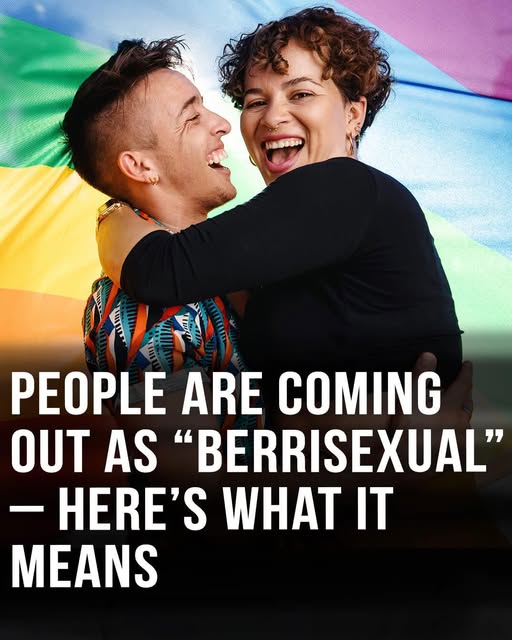
A linguistic revolution is emerging in the quiet, neon-lit corners of the internet, giving a name to a sentiment that millions of people have held for decades in silence. The conventional labels of “bisexual” or “pansexual” have always felt to many like a clothing that is just near enough to be useful but never quite fits the true shape of their hearts. Because their wants weren’t distributed in neat, equal percentages, they frequently felt like “failed” bisexuals and lived in the gray areas of attraction. The story is now being altered by a single, delicate word: Berrisexuality.
For many who identify as bisexual, it’s a long-overdue sigh of relief rather than just another catchphrase in an ever-expanding vocabulary. In particular, it describes a broad yet weighted pattern of attraction—the ability to be attracted to persons of all genders, but with a persistent, indisputable bias toward women, feminine-aligned individuals, and androgynous people. An attraction to men or people who identify as masculine is still a real and legitimate aspect of their experience, but it is like a softer, less common, or less central moon circling a much larger planet. For many years, people tried to “fix” or apologize for this imbalance in order to conform to a more symmetrical notion of queerness.
Radical recognition has been triggered by the term’s proliferation on Reddit threads, Discord servers, and LGBTQ wikis. The “Berrisexual epiphany” is defined by users as the realization that they weren’t “doing bisexuality wrong.” Having a title that respects the subtlety of a “lean” or a “preference” feels like a revolutionary act of self-honesty in a world that requires binary choices—either you are “this” or “that.” Because of their unique attraction patterns, it offers a haven for people who felt too queer for heteronormative settings but possibly not “queer enough” or “correctly queer” in others.
Crucially, Berrisexuality does not aim to eradicate or replace bisexuality as a whole. Rather, it refines a wide range into a distinct, identifiable shape by acting as a high-definition lens. It enables people to respect the precise geometry of their preferences without distortion. It recognizes that a predilection for femininity does not negate the ability to love masculine and that attraction is rarely a 50/50 split. It deals with the “center of gravity” in a person’s romantic relationship, offering a condensed version of a complicated internal reality that previously needed a drawn-out explanation.
This “tiny label” has a significant cultural impact. Berrisexuality presents an alternative viewpoint in a time when identity is frequently condemned for being overly segmented: that linguistic accuracy fosters a stronger sense of community. We grant something permission to exist in the light when we give it a name. For the thousands of people who are currently adopting this title, being understood at last is more important than being “special.” It is evidence of the fluidity, asymmetry, and exquisite complexity of human desire.
This modest movement conveys a potent message of consent as it spreads from the tiniest corners of the internet into the mainstream LGBTQ awareness. It assures the woman who loves women but is sometimes attracted to a particular man that she is not a liar. The non-binary individual who is drawn to the ethereal and feminine is informed that their experience has been mapped out and recorded. Berrisexuality provides the grace of the “tilt” in a world that constantly demands easy-to-understand solutions. It’s more than just a name; it’s a guide to a self that doesn’t have to apologize for how it loves.