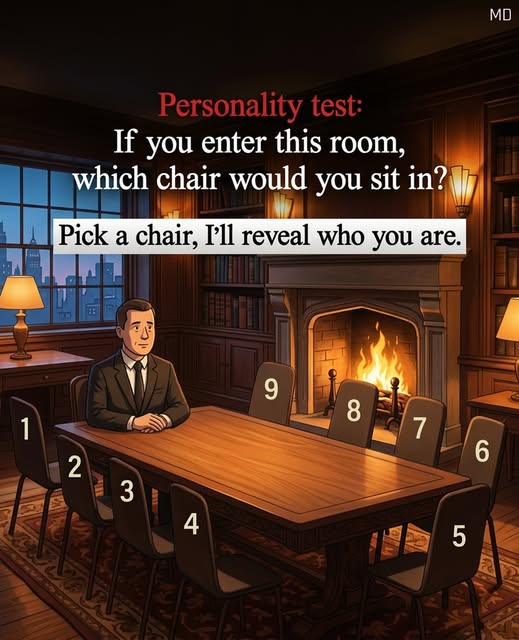
“Where are you going to sit?”
It seems like one of the easiest things to do before eating. Just a useful detail. The evening starts when you take out a chair, set down a plate, and take a seat. However, that seemingly insignificant decision actually has considerable significance. Your experience of the entire gathering is shaped by where you sit, not simply how you see the table.
Proximity is defined by a seat.
who you encounter, who you can talk to with ease, and who you find yourself listening to more than others. It affects the discussions you participate in, the ones you miss, and even your level of self-expression comfort. A table is more than just a place to eat; it’s a network of connections, and your place on it subtly directs how you navigate that network.
This deeper layer has always been present in meals.
People gathered around meals in far simpler ways long before formal settings, dining halls, or formal etiquette. Speaking freely, distributing food by hand, sitting close enough to hear each other, and around open fires are all examples of common areas. These get-togethers were about connection rather than just sustenance. They established a rhythm in which presence and discussion were just as important as the food.
That hasn’t altered.
Sitting together still has significance in many cultures. Long lunches in Italy can last for hours, with talk flowing as freely as the dishes being passed. In Morocco, sharing plates strengthens a sense of community by bringing people closer together. Respect and understanding of social dynamics are demonstrated in Japan through careful seating and layout. Meals in Mexico frequently bring people of different generations together, and seating naturally influences who speaks, who listens, and how stories are told.
Relationships are expressed on the table.
Not every seat in that room feels the same.
For instance, the head of the table frequently plays an unsaid function. Presence is more important than position. The tone of the gathering is inevitably influenced by the person seated there. With their enthusiasm, they may steer the discourse, provide subjects, or just establish the beat. It’s a function that occurs in most situations, whether or not it is recognized, although it can feel confining to some and comforting to others.
A new experience is provided by the seats along the sides of the table.
Instead of creating conflict, they establish alignment. Conversations that are quieter, more continuous, less formal, and more flowing are frequently the result of sitting next to someone. These positions facilitate tiny moments that enhance the experience without disrupting the main group, such as side conversations and shared reactions.
The chairs in the center come next.
At the table, these are frequently the most active positions. From this point on, a person is positioned between many personalities, discussions, and energy, making them a natural connector. Whether on purpose or not, it is a location that promotes involvement. Those who are seated here frequently find themselves attracted into several conversations, filling in the spaces between people who might not otherwise interact.
The role is dynamic.
It is always essential to the overall ambiance of the table, whether it is overwhelming or stimulating.
The sensation changes once again at the margins.
A different form of presence is provided by corner seats or locations that are a little out of the center. It gets easy to observe from this point on. The entire flow of the gathering is visible, including the rise and fall of talks, people’s leaning in and pulling back, and the subtle gestures that establish connection. These chairs are frequently occupied by people who listen more than they talk, interact in more subdued ways, but whose knowledge contributes something small but significant to the group.
None of these roles are superior to the others.
They merely present various viewpoints.
People frequently select them without understanding why.
Some are attracted to the center by contact and energy. Others like being on the periphery, where they can interact without drawing attention to themselves. Some people instinctively occupy the head of the table because they feel at ease with prominence and power. Some steer clear of it, favoring areas where they may move around the group more freely.
Both desire and personality are reflected in these decisions.
However, they also influence experience.
One may find themselves talking more if they are sat next to a noisy individual. A calm neighbor could promote introspection rather than reaction. While sitting next to someone fosters a common viewpoint, sitting across from them encourages direct communication. The way the event plays out is influenced by these minute variations.
Depending on where you sit, even the same table can feel different.
Because of this, the question is more than just practical.
It starts to play a role in the formation of connections.
Nevertheless, the seat itself is not the most crucial element in spite of all of this.
How you appear within it is more important.
You can sit on the edge and still be fully involved, or you can sit in the middle and stay detached. You can have a leadership position without directing anything, or you can sit quietly and still have an impact on the environment by being there and paying attention.
Position is not the only factor that determines connection.
It is molded by purpose.
The feeling of a seat is altered by its openness. The tone of a conversation is altered by willingness to listen. Where a chair is set is not as important as the ability to include others, recognize who hasn’t spoken, and make room for varied voices.
A table is a communal area.
It reacts to the input that individuals provide.
Depending on the energy present rather than how it is set up, a meeting can feel connected or disjointed, warm or formal, alive or far away. Depending on how people interact, the identical chairs and environment might result in completely different experiences.
This is what gives these times significance.
Not the framework.
Not the positioning.
However, the exchange.
No matter how basic, every meal has the capacity to grow into something more. A dialogue that changes viewpoints. A lingering shared moment. a bond that grows stronger without requiring definition.
And it all starts with something as simple as picking a seat.
However, it doesn’t stop there.
Because the seat vanishes after you’re seated at the table.
The trade is what’s left.
the existence.
how individuals interact with one another there.
It’s not about finding the ideal location in the end.
Making any location significant is the goal.