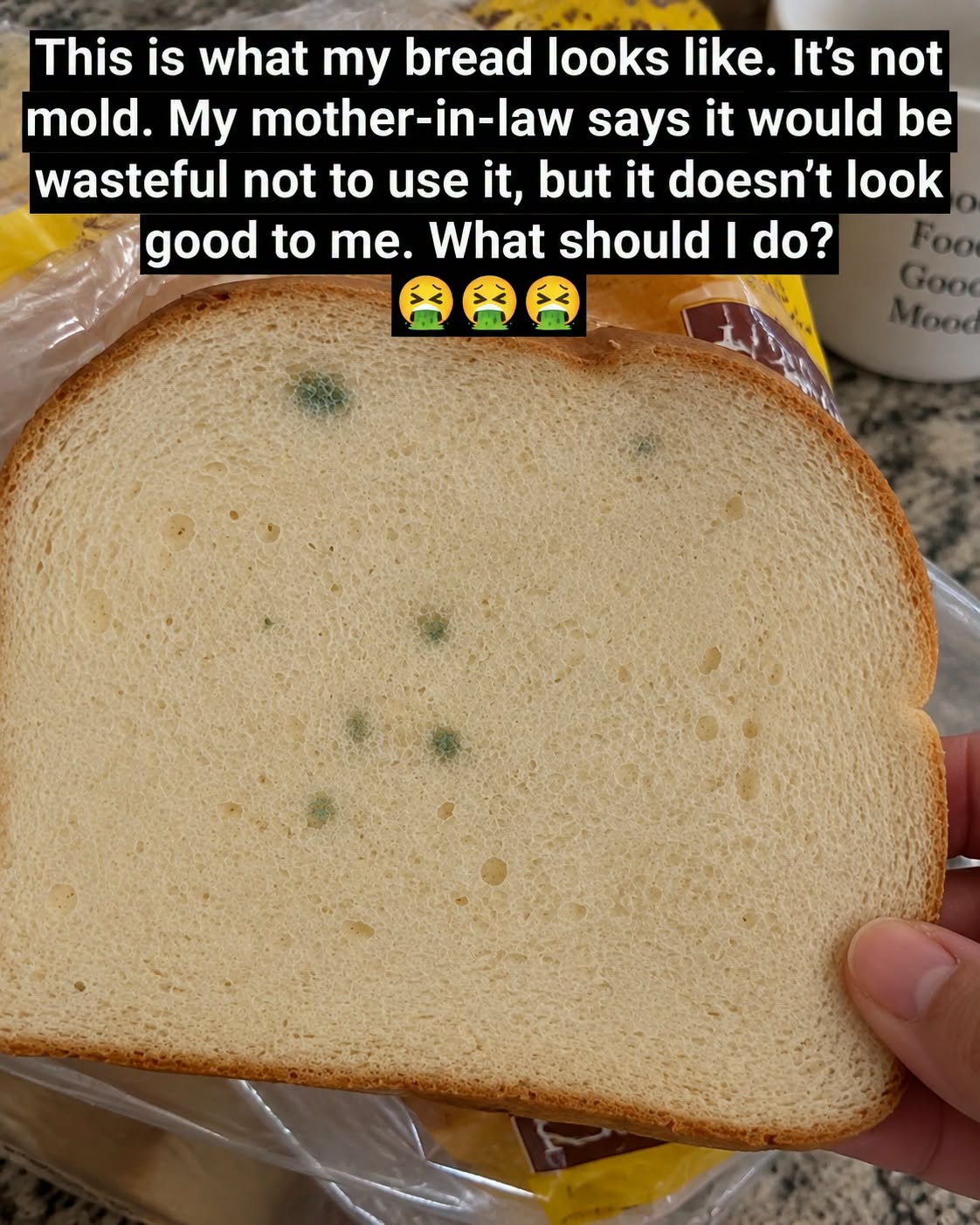
That innocent-looking loaf sitting quietly on your kitchen counter might not be telling the whole story. At first glance, it seems perfectly harmless—the same familiar bread you bought only a few days ago, soft enough to squeeze between your fingers and comforting enough to make an ordinary meal feel complete. But then, almost without warning, something changes. One day it is chewy, fresh, and satisfying; the next, the slices feel hard, dry, and strangely uninviting. You may find yourself staring at it and wondering whether it is simply old or whether something more concerning is happening beneath the surface. Is it still perfectly usable food, or has it quietly crossed a line into something that could make you sick? The answer is not always as simple as checking whether the bread feels hard. Understanding the difference between stale bread and spoiled bread can help you avoid unnecessary waste while also protecting your health, your family, and your peace of mind.
Bread does not simply become “bad” the moment it loses its softness. In many cases, what you are seeing is a natural process called staling. As bread sits, the starch molecules inside the loaf gradually reorganize themselves. That chemical and physical change affects the texture, causing once-soft slices to become firmer, chewier, drier, or noticeably harder. The crust may lose its original crispness, while the inside can become dense and less pleasant to eat. It may no longer taste like it did when it was fresh from the package, but that does not automatically mean it has become dangerous. Stale bread and spoiled bread are two very different things, and confusing the two can lead either to unnecessary food waste or, in the opposite direction, to taking an unnecessary health risk.
If the bread is simply stale but remains clean and free of visible contamination, there are plenty of ways to give it a second life. A loaf that seems too dry for sandwiches can become something completely different with a little creativity. Cut it into cubes, season it, and toast it until golden and crisp, and yesterday’s bread can become crunchy croutons for a salad or soup. Dry slices can also be processed into breadcrumbs for coating vegetables, chicken, fish, or other dishes. Even a loaf that feels unpleasantly firm can sometimes be softened by briefly warming it in the oven, restoring some of the texture that seemed to be lost. What looked like food destined for the trash can suddenly become a useful ingredient. In that sense, stale bread does not necessarily represent failure or waste—it can simply be bread in a different stage of its life.
The situation changes completely when mold enters the picture. A tiny fuzzy spot may look insignificant, especially when it appears on only one corner of an otherwise normal-looking loaf. It can be tempting to cut away the affected section, throw that small piece into the trash, and continue eating the rest. Unfortunately, bread is not a food where that approach is considered safe. Because it is porous and filled with tiny spaces throughout its interior, mold can spread below the surface in ways that are impossible to see with the naked eye. What looks like one isolated patch may therefore be connected to growth deeper inside the loaf. Removing the visible portion does not guarantee that the unseen contamination has been removed.
Mold can appear in different colors and forms, including fuzzy green, white, blue, gray, or black patches. Sometimes the growth is obvious, while other times it may appear as a small discolored area that is easy to overlook. You might notice something unusual on the crust, along the cut edge, or between slices that initially looks like flour or a harmless stain. Once you recognize that it is mold, however, the safest response is not to inspect every remaining slice hoping to find a clean section. The porous nature of bread means that contamination may have traveled farther than what your eyes can detect. That is why the old habit of simply cutting off the “bad part” is not a reliable way to make moldy bread safe again.
Your nose can also provide an important warning. Bread that has developed a musty, moldy, or unusually sour smell should not be treated as normal simply because you cannot immediately see anything wrong. A strange odor can be a sign that the loaf is no longer in good condition. You should also pay attention to unexpected changes in appearance, texture, or moisture, especially when they occur alongside an unusual smell. At the same time, there is no need to become alarmed every time bread becomes dry or loses its softness. Dryness by itself is generally a sign of staling, not automatically a sign of dangerous contamination.
The key is knowing where to draw the line. Hard, dry bread that is otherwise clean and smells normal may simply be stale and can often be repurposed. Bread with visible mold, suspicious discoloration, or a distinctly musty or abnormal odor is a different matter. When mold is present, the safest choice is to discard the loaf rather than trying to rescue the unaffected-looking sections. It may feel wasteful, particularly when most of the bread appears perfectly normal, but saving a few slices is not worth taking an unnecessary food-safety risk.
There is also a practical lesson hidden in all of this: learning how bread changes can actually help you waste less food. Instead of throwing away every loaf the moment it becomes firm, you can recognize staleness for what it is and find another use for it. At the same time, learning to recognize mold means you will know when trying to save the loaf has gone too far. The goal is not to fear old bread, but to understand it. Fresh, stale, and spoiled are not interchangeable conditions, and knowing the difference gives you more control over what ends up on your plate.
So the next time you reach for a loaf that has been sitting on the counter for a few days, pause before making a decision. Feel the texture. Look carefully for unusual growth or discoloration. Notice whether the smell is normal. If it is simply dry and stale, there may still be plenty of life left in it—perhaps waiting to become toast, croutons, or breadcrumbs. But if you see mold or detect a suspicious musty odor, do not gamble on appearances. When bread crosses that invisible line from stale to spoiled, throwing it away is the safer choice.
Bread can be one of the simplest and most comforting foods in the kitchen, but even something as ordinary as a loaf can teach an important lesson about food safety. Not every change means danger, and not every loaf that looks mostly fine is worth saving. Understanding the difference lets you protect your health without unnecessarily filling the trash with perfectly usable food. Sometimes yesterday’s bread really can become today’s secret ingredient. But when mold appears, there is no clever kitchen trick that makes the risk disappear. When in doubt, throw it out—and let a little wasted bread be the price of protecting the people you feed.